
A newsletter from The Wire | Founded by MK Venu, Pratik Kanjilal, Sidharth Bhatia, Siddharth Varadarajan, Sushant Singh, Seema Chishti, and Tanweer Alam | Contributing writers: Kalrav Joshi, Anirudh SK
If you like our work and want to support us, then do subscribe. Sign up with your email address by clicking on this link and choose the FREE subscription plan. Do not choose the paid options on that page because Stripe – the payment gateway for Substack, which hosts The India Cable – does not process payments for Indian nonprofits.Our newsletter is paywalled but once a week we lift the paywall so newcomers can sample our content. Today is that day. To take out a fresh paid subscription or to renew your existing monthly or annual subscription, please click on the special payment page we have created – https://rzp.io/rzp/the-india-cable.Snapshot of the day
May Day, 2026
Siddharth Varadarajan
Less than 72 hours after state Assembly and local polls in several states concluded, the Bharatiya Janata Party (BJP)-led Union government increased the price of the standard (i.e. 19-kilo) commercial LPG cylinder by Rs 993, effective Friday, despite the Modi government’s repeated claims that it was “working to ensure the West Asia war has minimal impact on India.” That’s an increase of around 40% and will lead to an increase in food prices at dhabas and restaurants. It had already hiked commercial LPG prices by Rs 144 and nearly Rs 200 in March and April, but this latest, much larger increase underscores the widening gap between rhetoric and reality, with citizens forced to bear the brunt of it. Domestic LPG cylinder prices remain unchanged, as do jet fuel prices for domestic flights, but an unspecified hike has been announced for foreign routes.
The move comes as oil prices have stayed on an upward trajectory and no end is in sight to the West Asia war or Iran’s retaliatory blockade of the Strait of Hormuz that has all but shut traffic along the conduit that is key to global energy security. Axios reported Thursday that the US military’s Central Command was to brief President Donald Trump about potential plans for more military action against Iran, including a takeover of part of Hormuz in order to open up commercial shipping.
Meanwhile, Pakistan has quietly engaged in another act of geopolitical balancing. As the US intensifies pressure on Iran through the Strait, Islamabad has opened six overland trade corridors, giving Tehran a crucial alternative route to keep goods moving and easing some of the economic squeeze from maritime disruptions.
Speaking of priorities, after a 42-month gap the external affairs ministry organised the 11th Heads of Mission conference in New Delhi involving Indian ambassadors and high commissioners around the globe to discuss the country’s diplomatic priorities at a time when it has faced challenges on multiple fronts, including the ongoing West Asia crisis and strained relations with the Trump administration. The ministry framed the conference, which took place between April 28 and 30, as being “centered around the theme ‘Reforming Indian Diplomacy for 2047’”. They also did yoga.
As a result of the crisis, India’s crude oil imports fell to 4.43 million barrels per day on average from five million before the US-Israeli attack on Iran. Its mix of sources too shifted in the month just passed, with Venezuela and Brazil displacing Iraq and the US to become among its top five exporters, Shubhangi Mathur reports citing Kpler data. Iraqi oil in particular fell to zero. The top three exporters were Russia, Saudi Arabia and the UAE. Russian oil cargoes decreased 16.7% month-on-month.
This comes even as India’s textile production recorded a sharp decline in March, with key segments such as readymade garments and cotton goods facing mounting pressure as a consequence of the US-Israel war on Iran. Rising input costs for raw materials, packaging and chemicals have further squeezed manufacturers, while disruptions linked to the Iran war have hit shipments and driven up freight expenses, reports the Economic Times.
If you thought March and April were tough, brace yourself for May madness. With US President Trump set to meet the Chinese President this month, India – caught between two of its biggest trading partners – could be heading into an even more volatile phase, warns Menaka Doshi.
Examine the full, 2 hour-36 minute-long audio recording in the ‘Manipur tapes’ case and analyse whether the voice alleged to be former chief minister N. Biren Singh’s is actually his, the Supreme Court directed the National Forensic Sciences University in Gujarat on Thursday. Feeling some deja vu? You’re not to blame: the case has gone on in court for a while now and just in the last hearing, the bench had said that “we are still not getting an answer” despite the clip being sent to two forensic institutions. The NFSU had said it could not confirm whether the voice is Biren Singh’s because the clip given to it had been edited; the petitioners had said that is because the whistleblower edited their own voice out. It is alleged that Biren Singh is heard implicating himself in Manipur’s lethal and protracted ethnic strife in the audio. Conveniently enough, every road from here appears to run through Gujarat.
Dhaka on Thursday summoned Indian acting high commissioner Pawan Badhe to lodge a protest against Assam chief minister Himanta Biswa Sarma’s recent remarks about Bangladesh. The Daily Star reports that Badhe was told Sarma’s remarks were “disparaging” to bilateral ties, and Prothom Alo writes that Dhaka ‘urged Indian political leaders to refrain from making comments in the future that could affect relations between the two countries’. Sarma had told ABP News on April 15 that he “always prays to God that relations between India and Bangladesh do not improve”. He had also endorsed his government’s policy of expelling (not deporting) people across the border. The summoning underlines the challenges that incoming Indian envoy Dinesh Trivedi – who incidentally belongs to the same BJP that rails against ‘Bangladeshi infiltrators’ – will face in office.
The Supreme Court has granted anticipatory bail to Congress leader Pawan Khera in connection with the Assam police’s case against him over the party’s allegations against the Assam chief minister and his wife. These allegations and Sarma’s counter-allegations “appear to be politically motivated … rather than disclosing a situation warranting custodial interrogation”, the bench said, holding that any deprivation of the right to personal liberty “must be justified on a higher threshold” in such circumstances. The Gauhati high court had dismissed Khera’s plea for anticipatory bail. Prior to the Assam elections the Congress – in particular Khera – had brandished documents alleging that Sarma’s wife Riniki Bhuyan was a citizen of multiple countries and that Sarma did not disclose some of her assets, but serious doubts have been raised on their veracity.
Repolling will take place Saturday in 15 West Bengal booths – 11 in the Magrahat Paschim and four in the Diamond Harbour constituencies that voted on Wednesday, the Election Commission has announced. This is the first time repolling is taking place in this set of assembly elections. Meanwhile, West Bengal chief minister Mamata Banerjee showed up at the counting centre of her Bhabanipur constituency yesterday night amid allegations of tampering. The state’s chief electoral officer in a presser amid the high drama said that postal ballots were being opened according to rules and all political parties had been informed.
The Calcutta High Court said today that there was nothing illegal in the Election Commission’s decision to appoint only Union government or PSU employees as counting supervisors in West Bengal, prompting Mamata Banerjee to approach the Supreme Court with a plea that state government employees cannot be excluded. The matter will be heard Saturday.
“Germany already sells military equipment such as rifles, explosives and ammunition to India, but the submarine deal would mark its first major sale of a flagship weapon system to New Delhi in decades,” reports Nikkei Asia, as both countries deepen strategic ties. Meanwhile, Japan is also exploring a collaborative partnership with India for the manufacture of its modern Mogami warships.
A new working paper published in the National Statistics Office (NSO) journal Sarvekshana has revealed that India does not produce pulses in adequate amounts to meet the nutritional needs of its population. Moreover, other items such as vegetables, milk and protein foods are also failing to reach Indian dinner plates in adequate quantities. Production of dry fruits is also below the quantity needed to meet Indian Council of Medical Research (ICMR) norms and while the recommended consumption is 1.05 kg per person per month for vegetarians, most rural states record consumption figures between 0.08 and 0.25 kg.
After the Competition Commission of India issued Apple an ultimatum to submit its financial information so that a penalty can be calculated against it for allegedly abusing its dominant position in the app store market, the tech giant has moved the Delhi High Court. The CCI’s “decision to schedule a final hearing represents an escalation in its efforts to usurp the Hon’ble Court’s authority,” Aditya Kalra cites Apple as saying in its filing, marking another escalation in the issue. The firm argues that since it has challenged the way penalties are calculated in India, the CCI ought to wait before demanding its financials.
The BJP is taking advantage of a rift in Adivasi society. Nolina Minj reports that a law meant to empower Adivasis is being used to target Christians in Chhattisgarh.
Thou shalt not visit the premises wearing “half-pants, bermudas, mini skirts, or western outfits such as jeans and tops”, the Baghpat Digambar Jain temple has told women visitors. “The decision has been taken to promote a sense of devotion and discipline among devotees,” a temple committee member told PTI. Digambar Jain monks do not wear any clothes as a mark of their total asceticism.
Two officials were booked earlier this week for allegedly allowing Uttarakhand minister Khajan Dass’s son to hold large-scale wedding preparations at the Sureshwari Devi temple in the core area of the Rajaji Tiger Reserve. Speaking to the Hindustan Times‘s Amit Bathla, the reserve’s acting director denied that permission was sought for the event. The minister, who claimed otherwise, has not faced any action.
On history and its confrontations, read this excerpt from historian Romila Thapar’s upcoming memoir Just Being, published by Seagull Books. [See also Watch Out]
May Day under surveillance in New India
May 1 is May Day – a day that marks the celebration of the labour movement across the world, as workers’ protests erupt globally over rising energy costs linked to the US-Israel war on Iran. But in Noida, which recently witnessed serial widespread protests by frustrated industrial workers against the harsh realities of the Indian labour regime of long hours and low wages, May Day arrived under the shadow of the state.
Gautam Buddha Nagar Police are on high alert, invoking Section 163 of the Bharatiya Nagarik Suraksha Sanhita to ban unlawful assemblies across the district from 30 April to 8 May. More than 1,700 police personnel have been deployed, with drones monitoring over 50 locations and round-the-clock CCTV surveillance in sensitive industrial areas, including the Hosiery Complex.
Solar is not enough, data shows what India needs is more efficient grid integration
India’s peak electricity demand hit an all-time high of 256 GW on April 26, surpassing the previous record in January, but the country curtailed – i.e. wasted – over 30 GW of renewable energy (RE) in the first three months of this year, highlighting the need to address grid efficiency and integration challenges, according to this analysis by Centre for Research on Energy and Clean Air (CREA).
The researchers note that the losses, particularly during high renewable generation hours, point to constraints in the grid. “Without investments in battery storage, transmission upgrades, flexible thermal operations, and demand-side management, a rising share of clean electricity risks being wasted even as RE capacity continues to expand,” they noted. This issue is especially significant as India is expected to experience an above-average number of heatwave days in May, which is likely to further drive up electricity demand and intensify pressure on the power system.
India has lost its place in AI?
The Indian market has had a turbulent run in 2026, hit by tariffs, rising energy prices and sustained foreign capital outflows. Market analyst Ruchir Sharma says one major reason for growing investor indifference is India’s weak position in artificial intelligence, arguing that the world today has a “mono-maniacal focus” on AI winners and losers. Speaking at Express Adda, Sharma said that unlike the 1999–2000 tech boom, “most foreigners have taken the view that India is a loser in the AI context,” adding that countries such as Japan and Taiwan are currently seen as better placed in the global AI race.
The Long Cable
Before the Vote, the Verdict: A Communal Campaign and a Tilted Playing Field in West Bengal
Apoorvanand
Voting for the new legislative assembly in West Bengal is over and the results will be declared on May 4. But before that, a consensus is being engineered that suggests Mamata Banerjee has already lost the election. Given the clinical manner in which this exercise was orchestrated, such an outcome may appear natural, even inevitable. While not making any guesses about the verdict, what we can do is to look back at the election campaign and try to understand what its conduct portends for the future of Bengal and the Indian Republic.
The election was, ostensibly, a duel between the Bharatiya Janata Party and the Trinamool Congress. Yet, the Election Commission acted less as a neutral arbiter and more as a logistical auxiliary of the BJP, placing its vast institutional resources at the disposal of the ruling party at the Centre. The Supreme Court, too, by endorsing everything that the Commission did, provided a silent endorsement of this profound imbalance. If the people accept this model of managed democracy, our elections risk devolving into the hollow rituals once seen in the former Soviet Union — where the destination is determined long before the first step is taken.
Sections of the press characterised this as the ‘toughest battle’ for Mamata Banerjee. It was certainly a ‘war’ if one considers the staggering, almost siege-like deployment of the Central Armed Paramilitary Forces. Observers ironically noted that only the Air Force and Navy were not mobilised. This deployment had less to do with the peaceful conduct of the elections and more to intimidate the Trinamool workers and exert psychological pressure on the electorate. The conduct of these forces was transparently partisan; the act of turning away voters simply for wearing a lungi was a visceral manifestation of a political culture that seeks to “identify people by their clothes.”
The EC had signalled its intent early through a series of menacing proclamations, smoothening the path for the BJP by removing every perceived structural hurdle. Under the guise of ‘purifying’ electoral rolls, over 27 lakh living citizens were disenfranchised. The Commission’s primary interest lay not in the integrity of the vote, but in the surgical excision of an electorate deemed inconvenient to the BJP. The logic used to justify these mass deletions was so convoluted that even the Supreme Court found it “unprecedented and irrational.” Yet, the court displayed no urgency in restoring these fundamental rights, dismissively asking, “What disaster will befall if they cannot vote in this election?” This judicial indifference to the looting of the democratic rights of citizens is surely a bad omen for what lies ahead.
Even polling officials found their own names struck from the lists. To the apex court, this was a mere triviality. They were told to conduct the polls today and worry about their own franchise in the next cycle. It did not go unnoticed that the names deleted were disproportionately Muslim, particularly in constituencies where their presence can be decisive.
Simultaneously, central investigative agencies were unleashed upon the professional firm managing the TMC’s campaign. The objective was a calculated paralysis of the party’s machinery. This was confirmed when, immediately following the final phase of polling, the arrested persons were granted bail without opposition from the Enforcement Directorate. The relentless punitive action against TMC cadres was so brazen that the Calcutta High Court was forced to restrain the Election Commission twice. Yet, the arrests continued. The institutions tasked with safeguarding democracy left no stone unturned to make the task easy for the BJP. It was a race where one contestant’s hands were tied behind their back—a spectacle that some find deeply worrying, but which many others, alas, seem to relish.
The BJP’s slogan of Parivorton (‘change’) served as a thin veil, much like ‘Sabka Saath Sabka Vikas’ once masked its communal core. Behind this rhetoric, the term used with the most violent frequency was ‘infiltrator.’ Amit Shah repeatedly framed Mamata Banerjee as the patron of these ‘outsiders,’ vowing to oust them ‘one by one.’ The subtext was clear to all.
Shahjahan Sheikh, the TMC leader accused of land-grabbing and violence in Sandeshkhali, was labelled an ‘infiltrator.’ He could have been termed a criminal, but the Home Minister deliberately chose a communal category to reinforce the narrative that the Muslim is an eternal outsider. This was complemented by the convenient emergence of Humayun Kabir, whose rhetoric regarding the Babri Masjid provided the BJP with the perfect excuse to speak about Muslim dominance. Amit Shah seized upon this immediately, declaring that “as long as a single BJP worker is alive,” such a project would be thwarted. In the political geography of Bengal, many suspect Kabir to be a tactical plant of the BJP itself—a tool to provoke the very majoritarian mobilisation the BJP thrives upon.
All BJP leaders kept promising the Uniform Civil Code. We know what it means.
Narendra Modi, in his trademark coded vocabulary, accused Banerjee of obstructing Durga Puja for the sake of “vote-bank politics.” The Chief Minister of Uttar Pradesh shouted that Urdu would not be allowed to become the language of Bengal, which, apparently, the TMC rule would do. He accused the TMC of conspiring to make Bengal ‘Hindu-shunya’. BJP leader and Assam CM Himanta Biswa Sarma framed the contest as a civilizational struggle of the ‘indigenous’ against the ‘intruder.’
The local face of the BJP, Suvendu Adhikari, anchored his campaign in the slogan of ‘Jai Shri Ram’, explicitly weaponizing the act of worship: “I am offering puja, Mamata is doing Namaz.” The attempt to polarise the electorate required no further explanation.
The BJP contested this election entirely in the vocabulary of Hindutva, seeking to ‘save’ Hindus from a manufactured Muslim threat. It was a campaign that did not seek the Muslim vote; it sought to consolidate the Hindu vote against them. This communal blitzkrieg, sanctioned by the partisan conduct of the Election Commission, has left the thinking citizens of Bengal in a state of profound anxiety. If a government is inaugurated on the back of such a campaign, the nature of its future reign is not difficult to imagine.
(Apoorvanand teaches Hindi at Delhi University.)
Reportedly
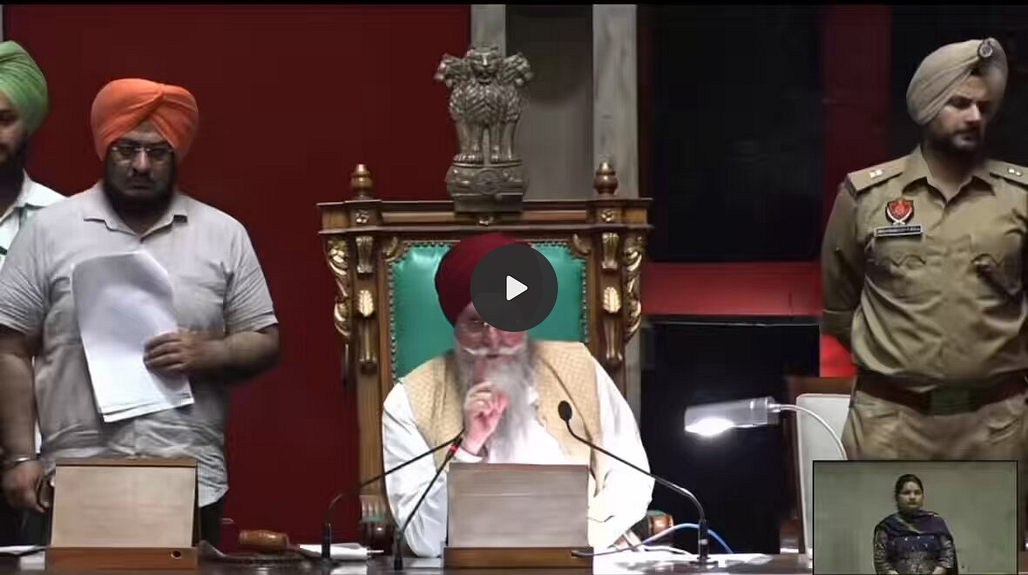
The trigger is the allegation that Punjab Chief Minister Bhagwant Mann came to the House drunk but if the leader of the opposition in the Punjab assembly has his way, the desks of legislators may eventually come equipped not just with voting buttons but breathalysers.

Drawn and quartered
Deep dive
Now that swathes of people find themselves out of West Bengal’s voter rolls, what lies next for them? “If Assam is any indication,” cautions co-director of the Citizenship and Immigration Law Clinic Darshana Mitra, “it will be the beginning of a long journey through arbitrary procedures and towards exile”.
Prime number: 40%
The Public Transport Forum and Greenpeace India audited 231 bus stops in ten of Delhi’s 13 districts and found that 40% of them did not have any seating arrangements. Avinash Chanchal of Greenpeace rattles off more discomfiting numbers: “9 out of 10 have no ramp, 8 out of 10 have no pedestrian crossing, and two-third have no lighting. In a city facing extreme heat, 17% of bus stops don’t even have a roof.”Opeds you don’t want to miss
On the Modi government’s proposed amendments to the IT Act, which might just obliterate the free internet as we know it – pushing us deeper into self-censorship – Arman Khan writes that “the stakes are particularly high for Muslims like me, who face constant pressure in Mr. Modi’s Hindu-chauvinist India to prove our patriotism even as the ruling party weakens our voting rights and otherwise marginalizes us. When I share a political post on Instagram, it is nearly always followed by a panicked call from my parents, worried about the legal repercussions. Every word I write, including in this essay, is tinged with fear. Like many others, I have become less vocal on social media. With each passing day, our voices are diminished.”
The rupee’s weakness amid global turmoil and capital outflows may limit RBI’s policy stance, raising risks of rate hikes as inflation, currency pressure and external shocks reshape India’s monetary outlook, notes Andy Mukherjee.
Rishabh Kachroo argues that India’s once-vital ideal of scientific temper—championed by Nehru as a democratic ethic—has hollowed into rhetoric amid misinformation and cultural nationalism. Reviving it, he contends, requires rebuilding institutions and public spaces that enable questioning, reasoning, and democratic deliberation.
Kerala’s “consensus” rests on broad social welfare, local democracy, and cross-community equality, built through participatory governance and decentralization, writes Kushanava Choudhury. Rather than a fixed ideology, it reflects a shared commitment to social protection and inclusion—showing that empowering citizens to shape policy can sustain equitable development across caste, class, and religion.
Writing about the Great Nicobar controversy, Bharat Bhushan argues that the Modi government is using the ‘commercial worth’ and ‘strategic’ nature of the project to bypass scrutiny. He warns of severe ecological damage and geopolitical fallout, urging transparent parliamentary oversight and a wider public debate.
The government has systematically weakened environmental safeguards to fast-track corporate projects, treating nature as expendable, writes Gurdeep Sappal. Rapid clearances, he contends, have driven deforestation, pollution, and climate stress, prioritising industrial growth while leaving citizens to bear mounting ecological and public health costs.
Listen up
On The Mishal Husain show, Amitav Ghosh says that India is struggling to find its role in the world amid continental competition from China, Russia and Iran.
Watch out
“Some things I might have done a little differently. I don’t regret anything I’ve done, which I suppose is an arrogant comment, but then a whiff of arrogance is almost necessary to keep one going in these times,” says Romila Thapar in this interview to Hartosh Singh Bal, reflecting on her well-lived life.
Over and out
New York authorities have returned over 657 looted antiquities, valued at $14 million to India. And though Mayor Zohran Mamdani drew praise from some quarters for telling reporters that he would ask King Charles to return the Kohinoor diamond to India if he happened to meet the British monarch, the process of seizure of stolen artifacts in New York began before Mamdani was elected!
In this guide, Anuj Behal maps Delhi’s queer heritage spaces, tracing sites of belonging and resistance in a city where living openly can still be challenging amid deeply entrenched social mindsets.
As Ahmedabad launches its first monkey census amid rising attacks, the much-hyped ‘Gujarat Model’ now seems to include urban chaos so advanced that even monkeys have joined the development story.
That’s it for today. We’ll be back with you on Monday, on a device near you. If The India Cable was forwarded to you by a friend (perhaps a common friend!) book your own copy by SUBSCRIBING HERE.