
A newsletter from The Wire | Founded by MK Venu, Pratik Kanjilal, Sidharth Bhatia, Siddharth Varadarajan, Sushant Singh, Seema Chishti, and Tanweer Alam | Contributing writers: Kalrav Joshi, Anirudh SK
If you like our work and want to support us, then do subscribe. Sign up with your email address by clicking on this link and choose the FREE subscription plan. Do not choose the paid options on that page because Stripe – the payment gateway for Substack, which hosts The India Cable – does not process payments for Indian nonprofits.
Our newsletter is paywalled but once a week we lift the paywall so newcomers can sample our content. Today is that day. To take out a fresh paid subscription or to renew your existing monthly or annual subscription, please click on the special payment page we have created – https://rzp.io/rzp/the-india-cable.
Editor’s note: This post may be cut off in your inbox due to length. Click on the title above to read it in full on Substack.
Snapshot of the day
October 23, 2026
Anirudh S.K., Kalrav Joshi
It’s been exactly a month since the Indian Express published its landmark investigation exposing serious dysfunction within the Election Commission over the special intensive revision of the voter rolls, and in its wake two things have stayed constant: chief election commissioner Gyanesh Kumar remains missing in action, and public anger against the CEC and the SIR – as well as the Modi government’s concomitant crackdown on dissent – has continued to simmer. Despite this crackdown involving widespread detentions, rough treatment at the hands of motley security personnel and prohibitory orders, several hundreds of protesters returned to Delhi’s streets on Friday to press their demand for Kumar’s resignation. Given the ruling dispensation’s proclivity to respond to peaceful protests by turning the heart of the capital into a fortress, demonstrators tried and failed to reach an amply barricaded Nirvachan Sadan, following which some of them were again shoved into detention buses.
And the Modi government does not intend to dismantle this fortress anytime soon. Wary of “flash protests by political and other outfits”, the home ministry has for the second time extended the deployment of 273 Central Armed Police Force companies in Delhi, now until October 31. These include 39 companies of the Indo-Tibetan Border Police whose job is to guard the border with China where, as you’ll read below, not all is well.
In the first official confirmation of the scale of tensions along the eastern sector of the Line of Actual Control, Indo-Tibetan Border Police director-general Shatrujeet Kapur said yesterday at an ITBP event that Indian and Chinese troopers have faced off at several locations in Arunachal Pradesh over the last few days. We do not know where these several locations are but Vijaita Singh cites government sources as saying that the two sides have been engaged in a standoff at Asaphila near Arunachal’s Taksing, which has been in the spotlight since local communities made allegations of Chinese encroachment starting four months ago.
Asked about Kapur’s remarks at its regular press briefing, the external affairs ministry deferred to North Block for details but said that the situation at the border becomes “disturbed from time to time when Chinese forces diverge from established patrolling patterns”. Spokesperson Randhir Jaiswal added that
“Both sides continue to use existing diplomatic and military mechanisms to resolve outstanding issues and avoid misunderstanding and miscalculation along the Line of Actual Control … I would also like to emphasise that the maintenance of peace and tranquility in the border areas is essential for the overall development of bilateral relations.”
In June, the Nah Welfare Society said that the Chinese Army had expanded its presence into areas traditionally used by local communities around Taksing, and a fact-finding team formed by the opposition People’s Party of Arunachal said in August that Chinese troops have denied access to Indian soldiers to a patrolling point in addition to expanding control over lands traditionally used by locals.
Around the same time there were also reports of disquiet along the LAC. However the Army, Arunachal chief minister Pema Khandu and Union minister Kiren Rijiju denied allegations of Chinese encroachment into Indian territory. This is something that residents of Taksing dispute: see these two video reports from the area for instance, where locals press their allegations of Chinese encroachment despite the official stance.
Congress MP Jairam Ramesh hit out at the government in light of Kapur’s statements, alleging that its “calibrated concessions to China continue” while Prime Minister Narendra Modi maintains a “deafening silence” on the matter. He also recalled how Modi had told an all-party meeting after the deadly Galwan clash in Ladakh six years ago that there were no Chinese incursions into India.
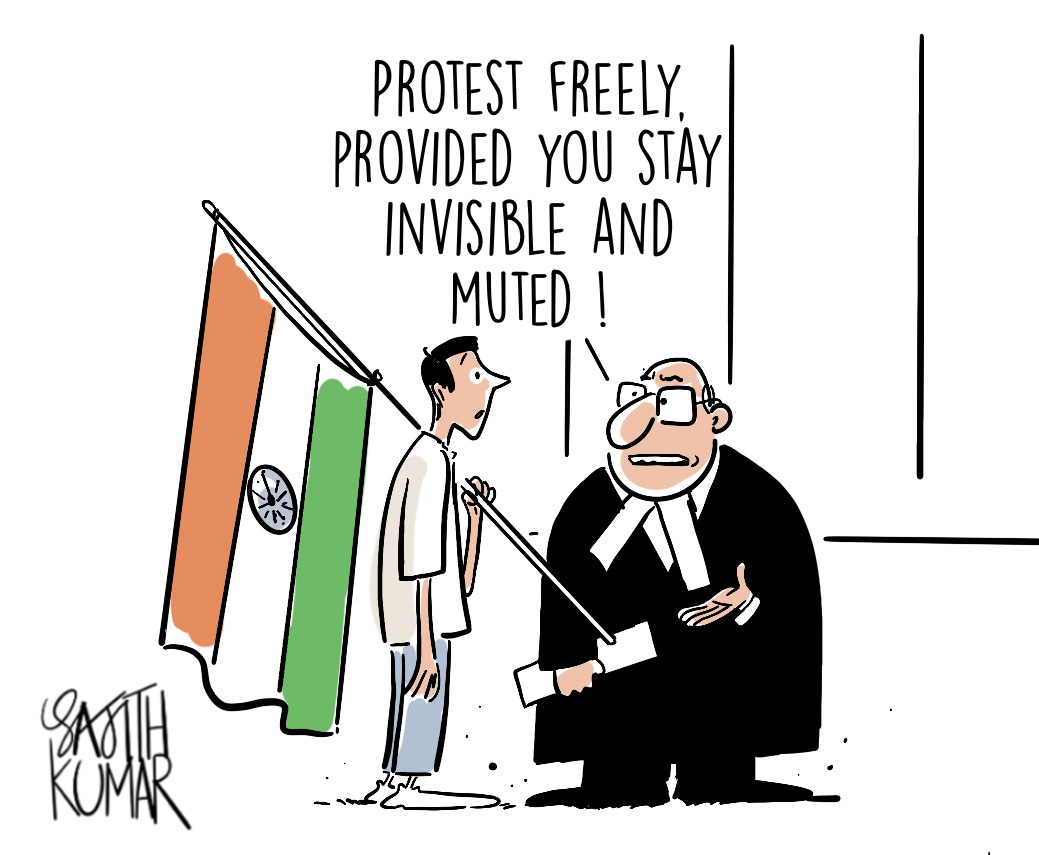
The Delhi high court dismissed All India Students’ Association president Neha Bora’s petition challenging a special executive magistrate’s notice, issued after their attempt to reach the “Lehra Do Tiranga” march in the capital on October 16, asking them to furnish a personal bond of Rs 10,000 and one surety to “maintain peace during the period of inquiry” against them. The court also ordered the SEM to furnish all the material to Bora which they will rely on for their inquiry. The academic Apoorvanand has pointed out that such proceedings are premised on the preposterous idea that exercising one’s right to protest peacefully amounts to breaching the peace and are just ploys to suppress this right.
A group of Indian scientists working around the world, meanwhile, have written an open letter calling for the scrapping of the SIR, arguing that it has led to the mass exclusion of eligible voters, disproportionately affecting the poor, migrant workers and marginalised communities. They have demanded transparency and accountability in the process, “the immediate restoration of the names of all eligible voters wrongfully excluded and effective safeguards to ensure that no citizen is arbitrarily deprived of the right to vote”.
Elections to five graduate seats and six teacher constituencies of Uttar Pradesh’s legislative council took place today and among the voters registered to exercise their franchise were the individuals ‘Ram Ne Yadav Ko Maara’ (Ram Killed Yadav), son of Moorkh (Fool) Chandra Yadav; multiple people named ‘Takkar Marna’ (colliding/confronting); one ‘Mohd Pagal Rehan’ and one Narendra Yadav whose father bears the name ‘B.Com’. The Samajwadi Party has brought these bizarre entries to the notice of the state’s chief electoral officer, who ordered an inquiry. The voter rolls for these constituencies were prepared by the state election commission. The BJP too has raised some complaints over the rolls: it has said there are around 4,000 duplicate entries, with one saffron party official alleging that most of these pertain to Muslim and Yadav names (incidentally these communities are not considered a traditional BJP vote bloc). Akanksha Kumar reports.
The run-up to local body elections in Andhra Pradesh has been marred by violence, with workers of the Telugu Desam Party allegedly preventing candidates backed by the opposition YSR Congress from filing their nominations in several districts. The latter had approached the Supreme Court, which earlier this week asked the Andhra state election commission to hold off on publishing the final list of candidates for urban local body elections until Sunday. The state poll body has now extended the nominations window in four urban local bodies – Kadapa, Tirupati, Rajampet and Mydukur – through Saturday.
External affairs minister S. Jaishankar is in Baku, Azerbaijan, where his opposite number Jeyhun Bayramov acknowledged that the two sides have had their differences in the recent past but added that today’s bilateral talks have put ties on “a very serious way of developing … to higher levels” – something the Jaishankar concurred with. His visit marks one more step forward in building relations that became knotty given Baku’s support for Pakistan during and after Operation Sindoor last year. There are also economic and energy considerations in pursuing a reset of Indo-Azerbaijani relations.
Representatives of the Union home ministry were to meet with members of the Leh Apex Body and the Kargil Democratic Alliance in Delhi yesterday but no meeting took place. It doesn’t help that the two sides have been at a persisting impasse over the constitutional safeguards Ladakh ought to be granted; inventor-activist and LAB member Sonam Wangchuk yesterday said that the Ladakhi groups will not settle for anything less than a Union territory-level legislature. Though the two sides reached an in-principle understanding in May that Ladakh was to get such an elected body, the administration – which gets its orders from New Delhi – has since said that neither statehood nor a UT-level legislature are on the table. Delhi is citing national security for denying statehood to Ladakh but if that is a valid premise then Arunachal Pradesh should never have become a full-fledged state, Wangchuk argued.
How much progress has the government made on fencing the border with Myanmar over two and a half years after it controversially scrapped the free movement regime with the neighbouring country? As far as Manipur is concerned, the answer is not very much at all. Bikash Ranjan reports citing a source that of the restive state’s 398-kilometre border with Myanmar, just ten kilometres have been fenced, near the Moreh crossing.
Following weeks of backstage talks the Shiromani Akali Dal (Badal) and the BJP are all set to join hands ahead of the assembly elections in Punjab that are due by February, and have finalised the outlines of an alliance, Maneesh Chhibber reports. A few differences remain unresolved but the BJP has reluctantly agreed to be the junior partner in this alliance, which would take on a more-or-less steady incumbent in the Aam Aadmi Party. The tie-up between the two parties may be a necessity but it doesn’t mean they have a cakewalk ahead of them, because the SAD (Badal) is still unpopular among voters, especially among the rural Jat Sikh peasantry, notes Chhibber.
What does the Trump administration’s move to suspend employment-based permanent residency applications from several tech companies – including Tata Consultancy Services, Wipro, Infosys, HCL Technologies and Microsoft – mean for Indian workers and these companies themselves? The BBC’s Rachita Prasad takes stock.
With the Pakistani-Afghan conflict continuing to smoulder and occasionally flaring up – despite attempts by China, Russia, Turkey, Saudi Arabia and Qatar at mediation – Elian Peltier reports for the New York Times that now Pakistani military and intelligence officials have met anti-Taliban armed groups in recent months to discuss potential support. Given Kabul’s alleged backing for the Pakistani Taliban, it seems the conflict may be developing a proxy dimension to it, and what we have on our hands then is a situation that’s “progressing from a low-grade confrontation to an entrenched conflict that has the potential to spiral out of control”, political scientist Amira Jadoon told Peltier. The conflict has killed or displaced thousands on either side of the Durand Line.
In some good news in an otherwise gloomy newscycle, the Delhi police has now granted permission for singer Diljit Dosanjh’s concert at the Jawaharlal Nehru Stadium on October 30, a day after it reportedly denied it citing ‘security concerns’.
Wary (again) of American sanctions, India stops Iran’s Mahan Air from collecting medicines
Though it had allowed the Iranian Mahan Air carrier to collect medicines from India even after direct flights between the two countries stopped in view of the US-Israeli war on Iran, New Delhi has since August frozen this arrangement fearing the impact of American sanctions, reveals Devirupa Mitra. In July Washington sanctioned an Indian company for being a sales agent for Mahan Air, and over the last two months has threatened to cut off from the dollar system firms, airports, ground handlers and fuel suppliers that provide services to various Iranian airlines. The Indian government, Mitra reports citing an official source, told Tehran it could instead charter flights from non-Iranian airlines to collect the medicines and take them to Armenia or Azerbaijan, from where they could be taken to Iran by road. But Tehran has persisted in its push for direct flights.
‘Now a new government is in power and we will ensure you abandon Christianity’: Bengal families recount horror
Madhu Sudan Chatterjee reports from West Bengal’s Paschim Medinipur on the ordeal of Christian villagers who allege that Bajrang Dal members barged into their homes, beat them, tore their clothes, threatened them with death if they did not convert to Hinduism and pressured them into performing Hindu rituals at a Durga Puja pandal. “Now, they [the Bajrang Dal workers] said, a new government had come to power, one that supported Hindutva, and the Bajrang Dal would ensure that we abandoned our religion,” one of the victims told Chatterjee. Local police have lodged an FIR based on her complaint but have yet to arrest anybody.
When teachers become election officials, students pay the price
Children in government-run and aided schools across Karnataka have gone months without seeing several of their teachers, many of whom have been deployed as booth-level officers for the highly rushed SIR. Speaking to The Hindu’s Rishita Khanna, students say that what initially felt fun, with more free time in the absence of their teachers, has now turned into a source of anxiety.
Reportedly
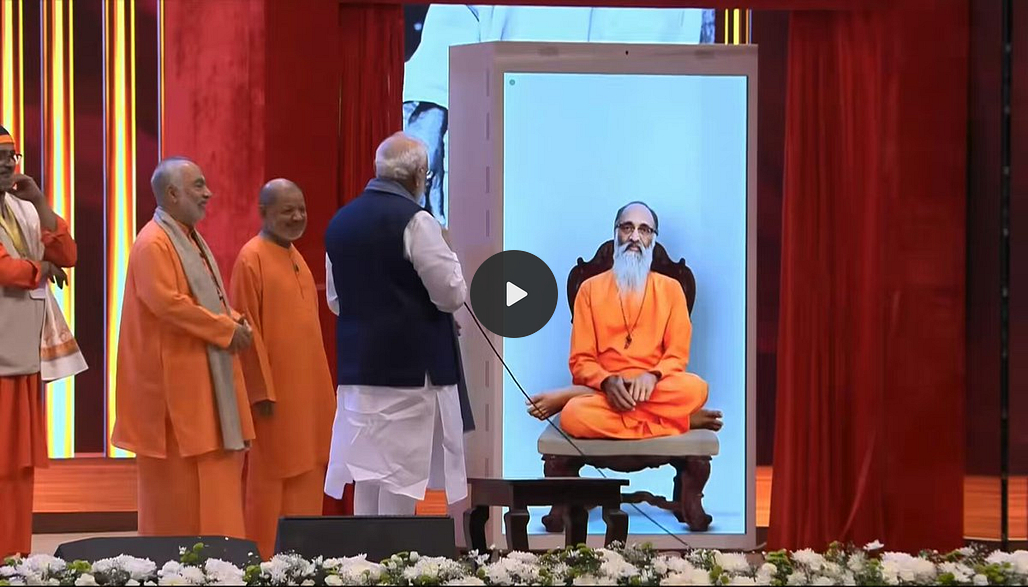
It takes a non-biological being to know another one. What a time it is to be alive for we are actually able to witness two such entities interact with one another. Plus, if there was any doubt that India is lagging behind in AI, this video should have the added benefit of putting an end to such anti-national thoughts head on:

Drawn and quartered
Deep dive
The number of narcotics cases lodged in Bihar has climbed, going up from 1,822 in 2022 to 1,905 in just the first five months of this year. The number of people seeking help from Union government-run deaddiction centres too rose from 1,487 in 2022-23 to 29,429 in 2024-25. Officials, reports Himanshu Harsh in a two-part investigation for the Indian Express, say that addiction is a growing problem in Bihar, with alcohol prohibition generating demand for cheaper, longer-lasting highs. “Without community participation to build societal resistance against narcotics, mere police action will not suffice,” a senior police officer noted.
Prime number: 100/122
According to the 2026 Global Hunger Index, India ranks 100th out of 122 countries, with a score of 24.1, placing it in the “serious” category. India fares worse than both the South Asian regional average of 23.5 and the global average of 18.1. Bangladesh (84th) and Nepal (72nd) rank ahead of India, while Pakistan is placed 106th. The pace of improvement has also slowed down: India’s score improved by just 1.7 points between 2018 and 2026, compared with an 8.2-point improvement between 2006 and 2012.
Opeds you don’t want to miss
Former election commissioner Ashok Lavasa writes that while the EC’s rollback of certain SIR decisions is welcome, accountability on a host of other decisions remains pending and must be seen through. At this stage, “the matter … rests on collective will and individual sense of propriety,” he says.
The Economist says Indians’ rights have been chipped away for decades, but “interfering with the sanctity of elections is a step too far” by the Modi government. The British magazine warns that India’s constitutional safeguards act as safety valves against public discontent: “It is to prevent precisely such an explosion that India’s founders added safety valves to the constitution. To block them all is not just dangerous. It is foolish.”
Bengal’s festive season under the BJP has “become a battleground over ideology, identity and freedom of expression”, writes Shikha Mukerjee.
The Deccan Chronicle in its editorial calls for Union minister Hardeep Puri’s resignation, arguing: “Waiting for a controversy to disappear is not governance. It is evasion. And that is why Mr Puri should quit pending a credible, independent examination.”
Tarique Rahman’s election earlier this year has put Indo-Bangladeshi ties back on the rails but they remain hobbled by mutual suspicion. What’s the way out? Mohammed Ayoob says it does India no good to harp about its role in the Liberation War – that will only make Bangladesh more insecure – nor should Dhaka believe that counterbalances to Delhi can act as a substitute for stable relations with it. Fixing these is the only way the two sides can move on, he argues.
Every now and then we hear about people losing their faith in the judiciary or of judges demanding that we keep it. But is faith the right thing to cultivate in the bar and the bench? The public, Govind Manoharan points out, “should have confidence in the judiciary, not faith”:
“The fundamental problem with faith is that it can be demanded. Public confidence, on the other hand, needs to be earned and built. When judges and lawyers demand faith in the system (or decry the erosion of it), the public’s relationship with the court is centred around an unquantifiable notion.”
Listen up
Why does Cockroach Janta Party founder Abhijeet Dipke defy stereotypes of Dalit leadership, and what challenge does this pose to BJP? Harish Wankhede unpacks this in a fascinating interview with Sravasti Dasgupta. Listen – or watch – here.
Watch out
Watch AISA’s Neha Bora discuss protests, police detention, CEC Gyanesh Kumar and the Modi government in their conversation with Karan Thapar.
Over and out
Ever since BEST began plying AC buses on their routes, a number of fisherwomen say conductors have refused them entry or forced them out allegedly because they smell like fish. But not going to the market isn’t an option, so some of them are coping – with being excluded from public transport in India’s largest city – by shelling out more money for carpools or changing into different sarees, writes Ishika Gupta.
Author Arundhati Roy spoke to Amy Goodman on Democracy Now! about the recent youth protests and the Modi government’s brutal crackdown.
That’s it for today. We’ll be back with you on Monday, on a device near you. If The India Cable was forwarded to you by a friend (perhaps a common friend!) book your own copy by SUBSCRIBING HERE.