
A newsletter from The Wire | Founded by MK Venu, Pratik Kanjilal, Sidharth Bhatia, Siddharth Varadarajan, Sushant Singh, Seema Chishti, and Tanweer Alam | Contributing writers: Kalrav Joshi, Anirudh SK
If you like our work and want to support us, then do subscribe. Sign up with your email address by clicking on this link and choose the FREE subscription plan. Do not choose the paid options on that page because Stripe – the payment gateway for Substack, which hosts The India Cable – does not process payments for Indian nonprofits.
Our newsletter is paywalled but once a week we lift the paywall so newcomers can sample our content. Today is that day. To take out a fresh paid subscription or to renew your existing monthly or annual subscription, please click on the special payment page we have created – https://rzp.io/rzp/the-india-cable.
Snapshot of the day
July 31, 2026
Siddharth Varadarajan
Its government failed to suppress the Jantar Mantar protest with brute force and eventually agreed not to prosecute any of the protestors, but a vengeful Bharatiya Janata Party is still looking for ways to get even with Gen Z. On Friday, the Noida police filed a case against a young woman, Ruchika Singh, for using “abusive language against Narendra Modi” and pro-government media has begun the process of demonising her.
The young woman used abusive language but the charges are ridiculous – Sec 352, 353(1), and 356(1) of the BNSS. The first two criminalise ‘intentional insult’ and ‘public mischief’ but require “the intent or knowledge that the provocation will cause a breach of the public peace” or “that cause or are likely to cause fear or alarm to the public, or incite people to commit offences against the state or public tranquility.” None of which apply. The third charge is criminal defamation, but it is the defamed person who surely needs to file such a case and not the police or some third party.
Nevertheless, the intent is clear: To purge from the public domain any evidence or memory of the contempt with which the protesters spoke of Modi. Social media companies have been served takedown notices, their executives are also being threatened with criminal cases, and the publicity Big Media is giving to Ruchika Singh’s case is intended to get young people across India to scrub their feeds of anything critical of the prime minister.
“Every generation invents its own tongue, and Gen Z’s happens to be foul-mouthed, sarcastic,” Anand Teltumbde has noted in a perceptive piece in defence of the protesters’ profanity. In fact, their willing to use abusive language against Modi is “one of the reasons this movement won – because vulgarity, deployed with intent against sacred power, has a much older and much more successful political career than most respectable commentary is willing to admit.” In a nutshell, he notes, “the crude and the political are so often the same weapon: they strip the reverence on which entrenched authority depends.”
That is the reason this irreverence is not being allowed to stand. Late on Friday night, Modi dropped a patronising reel on Instagram, aimed at accomplishing the same goal:
“Hi friends, today I feel like talking only to you. The country and the world witnessed what happened at Jantar Mantar; some mischievous youngsters hurled vile abuses. Words were used that do not behoove civilised society—directed not just at me, but even at my late mother.”
He went on to say it was shocking that “daughters” had used abusive language but that “I want to forgive them” for their youthful indiscretion “and I hope society accepts this”.
This last caveat is what will allow him to have his cake and eat it too: appear personally magnanimous, and blame ‘society’ for filing cases against young protesters. At the time of releasing the India Cable, there is no indication that Noida Police or Delhi Police—which has taken over investigation of Ruchika Singh’s ‘crime’—have moved into ‘forgive’ mode. If Modi is serious, he has to ensure the FIRs against her and others are withdrawn.
A second prong of the BJP’s damage control strategy of rewriting the Jantar Mantar narrative is to get the families of police personnel to address a press conference about the violence of the protesters and demand justice.

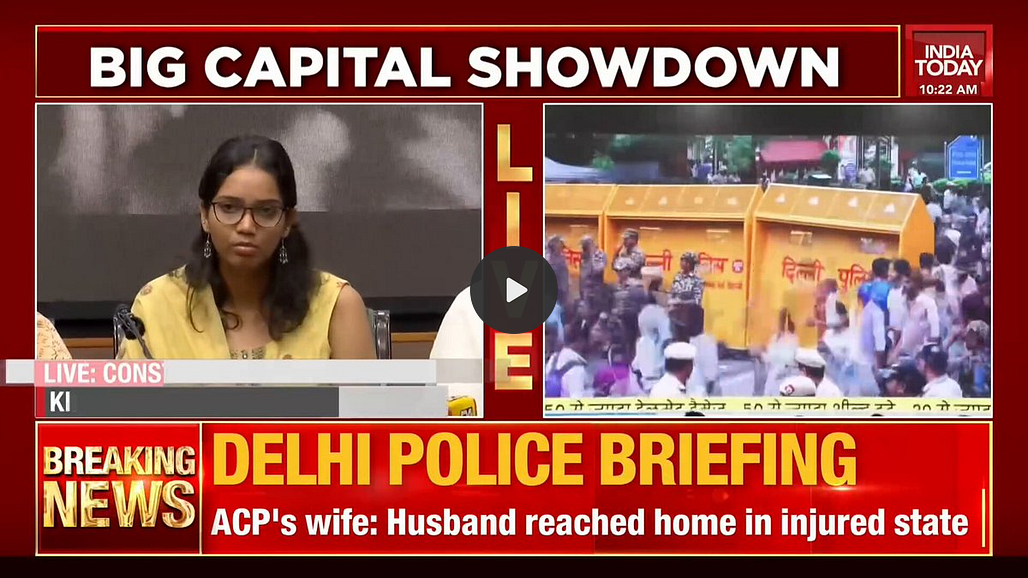
Apart from showing the Union home minister’s stewardship of security in poor light – after all, he cannot even ensure the safety of policemen in the national capital – the demand for justice cuts both ways. So far, the Cockroach Janta Party (unlike the Congress) has not foregrounded the demand for the punishment of those in uniform who hit peaceful protesters with lathis and fired pellet guns at them. But the time for that is bound to come.


A third element in the ruling establishment’s strategy is much more sinister. A digital mob of government supporters has doxxed and issued rape threats to a number of women protesters who turned up at Jantar Mantar. Other prominent right-wing handles are openly advocating violence against AISA leader Neha Bora.
Authorities in India have been well aware of the risks of deploying the so-called ‘less lethal’ pellet guns, well before the Rapid Action Force fired them at protesters marching to parliament last week. As early as 2011, reports Praveen Swami, an expert group formed by the Union home ministry had warned that pellet guns “were found to be causing lethal effects” (despite their name) and risked serious injuries to the eyes and head, warranting “urgent replacement with better and modern kinetic energy munitions”. A task force convened by the Bureau of Police Research and Development in 2011 – a year after security forces controversially used pellet guns against Kashmiris – did not name the gun in its list of non-lethal weapons that could be used against protesters, says Swami. “The recommendations have lurched from committee to committee, however, with little on-ground implementation,” he writes.
The deployment of pellet guns in Delhi – notably injuring a 19-year-old in the eye – has also brought back a 2018 study from Kashmir back into focus. Conducted by the Government Medical College in Srinagar on 380 pellet gun victims from the 2016 unrest, it’d found that 260 of them had suffered eye injuries, of which a full 30.4% reported suffering from depression and 11% from PTSD. A majority (65%) of those who sustained grievous pellet injuries too reported having depression. Peerzada Ashiq reports.
The rupee has required another rescue operation. The Reserve Bank of India sold about $7 billion last Friday to defend the currency, Bloomberg reports, in one of its largest direct interventions in months as the rupee neared its record low. The RBI intervened in both onshore and offshore markets and followed up with further dollar sales over the next two sessions, helping pull the currency back from the edge. The rupee traded at 95.50 to the dollar on Thursday.
India’s credit boom is beginning to show its bill. The Indian Express reports that a TransUnion CIBIL study has found rising consumer indebtedness, more financially stretched borrowers, slowing borrower growth and fewer first-time borrowers entering the system. The share of over-leveraged consumers tripled from 5% in FY17 to 18% in FY24, easing only marginally to 15% in FY26 after industry intervention. The Modi government has long sold credit-led consumption as confidence. The data suggests something less triumphant: households borrowing harder in an economy that has not made earning easier.
‘Twenty years of praising India is not a China strategy,’ writes Stephanie Campbell, arguing that an industrially strong India matters more to the West than an obediently aligned one. The flattery economy has done well; the manufacturing one, less so.
New Delhi’s battery recycling push shows why. Nikkei Asia reports that dry-cell makers must collect 60% of batteries sold three years earlier by March 2027, rising to 70% the following year, but actual collection is often below 10%; Panasonic pilots managed just 1%-2% in most cases. If the waste misses formal channels, it will likely be burnt or dumped, poisoning air, soil and water.
Former World Bank chief economist Kaushik Basu, meanwhile, is blunter. After more than six weeks in Delhi studying the economy, he wrote on X that India is in “poor shape”: youth unemployment is “sky high”, education is “in a mess”, global confidence is low, net FDI is at zero and pollution is at record levels “with no action” while “all energy is spent on politics and little on actual policy.”. His only note of hope is the country’s youth, which, he says, has “realized this”.
Nikkei Asia reports that Japanese carmakers are tapping cheaper overseas labour, especially in India and Thailand, to build vehicles for sale back home, pushing “reverse imports” to a record – up 38% to 72,330 units. In 2025, average monthly wages at Japanese-operated plants in India were about Rs 37,073, against roughly 316,000 yen in Japan. Suzuki’s surge has been powered by the made-in-India Jimny Nomade, a reminder that India’s advantage in the global auto chain still rests less on high-value industrial leadership than on cheap factory labour.
The South China Morning Post asks: ‘Can a Brics invite mark a new chapter in India-Bangladesh ties?’
Communal violence broke out in parts of the Madhes, or terai, region of Nepal, “after participants in the annual Bolbam pilgrimage passed through the market playing loud music,” the Kathmandu Post reports. “Members of another community objected to the volume, leading to a verbal altercation that quickly escalated.” So far, three persons have died in police firing. Himal Khabar’s editorial, अतिवाद हटाउन दलहरू अग्रसर होऊ (‘Parties should take the lead in eliminating extremism’), says:
“In Madhesh (Plains), Mukesh Kumar Sah, a pracharak and Koshi Province head of the Hindu Swayamsevak Sangh; Laxman Yadav, a pracharak and Janakpur division in-charge; Prahlad Regmi, a pracharak and organizational secretary of the Vishwa Hindu Parishad; Nitesh Kumar, a Koshi Province member of the Hindu Swayamsevak Sangh, Nepal; and Krishna Yadav, vice president of the Hindu Samrat Sena, along with others are calling for violence against minority communities under the pretext of ‘protecting religion,’ through social media. Activists of these organizations are also seen on the ground to incite mobs. The Home Administration is well aware of these facts, yet it remains silent because powerful individuals are involved in these extremist organizations. For instance, Purushottam Bhandari, a former Supreme Court justice, is the president of the Vishwa Hindu Parishad, while Kalyan Timsina, a former AIG of the Nepal Police, is the national sanghchalak (president) of the Hindu Swayamsevak Sangh Nepal.”
As the Supreme Court yesterday heard challenges to the Modi government’s law on appointing the chief election commissioner, solicitor general Tushar Mehta said that if the prime minister is not to be trusted then an external figure ought to have a say in cabinet appointments as well. To this, Justice Dipankar Datta replied that the question at hand is not about a lack of trust in the PM, but about “justice not only being done, but shown to be done”: “The issue is that the composition of this committee tilts in favour of one side [of the executive],” the judge noted. Though the apex’s court 2023 Anoop Baranwal judgment brought in a panel comprising the PM, the Lok Sabha LoP and the CJI to select the CEC, the Modi government soon afterwards replaced the CJI with a cabinet minister, tilting the balance decisively towards the executive.
Marking an about-turn in its stance, Kerala’s UDF government has said it will go ahead with the PM-SHRI scheme that aims to modernise schools, but which the alliance had vigorously opposed during its tenure in the opposition, citing among other concerns the saffronisation of the state’s schools. UDF convenor Adoor Prakash claimed yesterday that the previous LDF government had already signed an MoU with the Union government and said the state is in need of funds. Now a cabinet subcommittee will see if there are ways to enter the scheme without accepting some of the Union’s conditions, or exit entirely. Meanwhile the issue has already opened up a fissure within the ruling coalition.
Earlier this week the Union government issued its seventh draft notification on declaring areas in the Western Ghats as ecologically sensitive zones where new constructions and industries will be restricted. There have been so many notifications because the governments of the states where the mountain range passes through have refused to reach a consensus over their objections to the restrictions that ESZs would entail.
Bloomberg reports that India’s national grid wasted about 11% of its solar power during the hottest months of the year, even as air-conditioning demand pushed electricity use to record highs. More than 8 billion kilowatt-hours of solar could not be absorbed between April and June, against 63 billion kilowatt-hours that reached the grid, according to renewable energy and power minister Shripad Yesso Naik. Curtailment peaked in May, just as the heat did.
Assam land rights activist locked up under NSA after securing bail in questionable case
Right after an Assam court granted bail to land rights activist Pranab Doley, who has agitated against plans to build a five-star hotel near the Kaziranga National Park, the state government yesterday invoked the draconian National Security Act against him in an apparent bid to prevent his release. In its NSA order, the Assam government cited Doley’s alleged assaults on public servants and receipt of allegedly suspicious funds – however the sessions court had already addressed these in its bail order on Wednesday. It had noted that although the police accused him and others of attacking police personnel at the hotel site with deadly weapons, the footage it supplied did not show protesters attacking the police. There also seemed to be nothing wrong with Doley’s receipt of funds, the court said.
The court also had some sage advice for the state government: “In matters where ecological preservation intersects with indigenous survival, the standard apparatus of criminal law cannot be used to suppress local anxieties. True public order is achieved not by silencing the affected, but by listening to them.” Aathira Perinchery has the report.
As death toll of Indian sailors mounts, Jaishankar talks tough. To Ukraine, not US or Russia.
Attacks on commercial shipping in the Black Sea are “absolutely unacceptable” regardless of who perpetrates them, External Affairs minister S. Jaishankar tweeted after speaking to his counterpart in Kyiv, Andrii Sybiha, yesterday, days after New Delhi summoned the Ukrainian ambassador in connection with an attack on a vessel that killed one Indian seafarer.
The language in Jaishankar’s tweet is notably stronger than what he put out after the US Navy killed three Indian sailors in the Persian Gulf in June. “Such lethal actions against commercial shipping are not justified,” Jaishankar posted after speaking to US Secretary of State Marco Rubio.
The Forward Seamen’s Union of India had attributed the attack on the MV Omorfi, to a Ukrainian drone strike but Kyiv has not acknowledged any role in it; Sybiha yesterday spoke of the “consequences of Russian aggression [extending] far beyond Ukraine’s borders”. Four other Indian mariners were killed in the Black Sea in a Russian drone attack, while two others are missing.
These deaths come on top of the Indian casualties in West Asia due to the conflict there. The external affairs ministry said in parliament yesterday that 16 Indians have been killed in West Asia, among whom were ten seafarers. Some of their families are calling on the Modi government to lodge a complaint with the UN, and are demanding $5 million in compensation from both the US and Iran.
E20: Mileage down, heat up
Union road transport and highways minister Nitin Gadkari has been in the firing line over E20, with calls for his resignation even as he has told the Bombay High court that the ethanol-blending programme does not fall under his ministry. The Ayushi Kar of the Reporters’ Collective calculates that Indian motorists paid an estimated Rs 88,234 crore in additional fuel costs between April 2023 and March 2026 because of the mileage penalty from E20 petrol; for FY2025-26 alone, the figure is put at Rs 37,843 crore.
Ethanol produces less energy than petrol when burnt – about a third less – which means vehicles consume more fuel for the same distance. The Modi government acknowledged the mileage question in reports, then tried to drown it in green rhetoric, Kar notes.
The Long Cable
From Silent Guardians to Cyber Tigers: How Partisan Veterans Are Eroding the Military's Apolitical Ethos
Rajesh Kalia
In democratic statecraft, few principles are held as sacred as the apolitical character of the armed forces, where institutional credibility relies heavily on maintaining a non-partisan stance. However, the emergence of digital platforms like X and WhatsApp groups has fuelled a troubling shift, giving rise to a new generation of ‘cyber tigers’ among retired brass.
A growing number of military veterans, seeking post-service relevance, have enrolled as commentators to peddle partisan narratives, shifting away from the stoic traditions of the armed forces to engage in polarised online commentary.
The degradation of public discourse among senior military veterans was starkly illustrated in a recent series of viral exchanges on X (formerly Twitter). Rather than reflecting the intellectual rigour and institutional dignity traditionally associated with higher command, these digital interactions exposed a growing inclination towards a particular narrative-building, and public grandstanding.
This shift not only reflects the democratising—and often sensationalising—nature of social media platforms, but it also underscores a broader shift within the veteran community. As former officers increasingly trade quiet, dignified restraint for immediate online visibility, the boundary between professional military critique and populist commentary becomes dangerously blurred.
Gone are the days when distinguished military leaders refused to reinvent themselves as vocal preachers on social media, after hanging up their boots. Having contributed immensely to the armed forces during their active service, they chose to let their legacies speak for themselves, weighing in publicly only during extreme situations that truly warranted their expertise. When they did choose to pen their thoughts, their writings were highly regarded, as their insights consistently focused on the genuine betterment of the armed forces rather than chasing public attention.
In one recent instance, a veteran faced public pushback after tweeting congratulations to a Bollywood actor on his ‘holy’ marriage while wishing him “many more to come,” prompting a fellow veteran to publicly remind him that such behaviour was not becoming of a three-star general of the Army.
Self-promotion among military veterans hit a dangerous low recently when a retired three-star general posted a photograph on ‘X’ revealing the identity of a soldier involved in the Uri surgical strike. The post was probably aimed at driving publicity for his book. However, in his rush to promote his work, the veteran bypassed standard security practices. Protecting the identities of Special Forces operators is a non-negotiable global protocol designed to shield operatives from hostile targeting. Compromising an operator’s anonymity for book sales sets a reckless precedent for retired military leadership.
The public exchange triggered by the controversy around the movie Satluj (formerly ‘Panjab 95’), highlights a growing faultline within veteran military discourse. The sharp clash between a decorated retired major and a prominent three-star general, famed for his catchphrase “Kitne Ghazi Aaye, Kitne Ghazi Gaye” (‘KGAKGG’,) underscores how public commentary by former officers often intersects with hyper-nationalist rhetoric.
By questioning why state-directed operational narratives differ so starkly between conflict zones like Kashmir and the North East, critics point out that while punchy slogans effectively bolster civilian morale, they often act as a substitute for nuanced strategic transparency, packaging complex military realities into simplistic public relations bites.
Beyond social media sparring, defence strategists warn against a far more dangerous institutional fallout: publicising the arbitrary operational deadlines during counter-terrorist operations.
A prime case study is the 100 hour deadline for security forces to eliminate the perpetrators of the 2019 Pulwama attack in the lead-up to the high-profile press briefing where the ‘KGAKGG’ phrase was popularised.
Imposing rigid timeframes on counter-terror operations severely restricts tactical flexibility on the ground. When deadlines demand instant results, field commanders and junior leadership are under immense pressure to rush assaults rather than await optimal conditions. This operational haste drastically elevates the risk of tactical missteps, avoidable fatal or non fatal casualties, compounding collateral damage and risks allegations of fake encounters—ultimately compromising long-term stabilisation for short-term narrative victories.
While serving officers are legally forbidden from political posturing, retirement removes these statutory boundaries. Historically, an unwritten code of ethics dictated that veterans maintain dignity, offering objective strategic critique rather than partisan soundbites. Today, television panels and digital feeds feature retired commanders acting less like defence analysts and more like political spokespersons who uncritically echo political party lines.
This allure of post-retirement rehabilitation—whether through contesting elections, securing gubernatorial roles, or landing think-tank appointments—mirrors the famous observation made by the late Arun Jaitley regarding judges. Warning against the compromise of institutional independence, Jaitley famously stated that “pre-retirement judgements are influenced by a desire for a post-retirement job,” adding that “post-retirement jobs impinge on independence” and pose a direct threat to the integrity of public institutions.
The digital footprint of retired military commanders presents a complex, double-edged dynamic that directly impacts modern civil-military relations and public perceptions. Constructive digital engagement by former officers serves a vital purpose. By leveraging their substantial platforms, veterans can articulate core national security priorities, defend the dignity and morale of active-duty soldiers, and counter viral misinformation regarding ongoing operations. In an era of rapid digital information warfare, these efforts help bridge the widening civil-military divide, providing the public with authentic operational context while bringing attention to critical issues like welfare of troops, veterans and veer naris.
However, this constructive role is increasingly eclipsed by a trend of digital self-aggrandisement, partisan posturing, and public squabbling. When retired military personnel descend into online ‘feuds’, push promotional agendas, or align themselves with hyper-partisan political rhetoric, they compromise the very foundation of military ethics.
The armed forces remain one of the nation’s most trusted public institutions precisely because the uniform stands strictly above the political fray. By converting operational memories into media catchphrases or engaging in public mudslinging, senior veterans risk reducing complex national security challenges to mere entertainment, thereby eroding the institutional dignity and apolitical standing of the armed forces.
The long-term institutional fallout of this trend extends far beyond social media optics. When retired commanders act as political operatives or narrative-chasers, they invite retrospective skepticism regarding their active-duty service—leading citizens to question whether critical command decisions were made out of operational necessity or to signal political compliance for post-retirement careerism.
Even more dangerously, this behaviour sends a corrosive message down the chain of command. Junior and mid-career officers closely observe their former leaders; if post-retirement prestige and media visibility appear to reward political sycophancy over professional integrity, it risks breeding a culture of conformity. In times of national crisis, civilian leadership relies on military commanders who offer candid, unvarnished, and uncomfortable truths. If the incentive structure favours narrative management over hard reality, the quality of strategic decision-making inevitably degrades.
While democratic discourse undoubtedly benefits when seasoned military minds offer sharp, independent, and constructive strategic analysis, senior veterans must recognise the weight of their ‘former’ ranks. From silent guardians to digital provocateurs, institutional dignity in veteran discourse has definitely eroded.
Retired commanders must step back from acting as partisan provocateurs or self-promoting commentators, returning instead to their essential role as mature guardians of professional objectivity, tactical discipline and institutional integrity.
(Rajesh Kalia, a former Colonel in the Indian Army, served as Defence Public Relations Officer in the 3&4 Corps and 14&15 Corps of the Indian Army. His operational background includes service in Siachen, Jammu and Kashmir and Sri Lanka (as part of the Indian Peace Keeping Force). He retired in January 2025.)
Reportedly
Gitanjali J. Angmo, wife of Sonam Wangchuk, once called for the word ‘secular’ to be removed from the Indian constitution. Under fire on social media for promoting the ideological agenda of the very party whose government attacked protesting students and had earlier incarcerated her husband for nearly six months, the educationist has doubled down on her position. The Constitution was secular in substance before the S word was added, she writes. But even if Indira Gandhi’s decision to add the word ‘secular’ to the Preamble of the Constitution in 1976 “was, philosophically, a tautology”, surely she knows that deleting the word now – as the Sangh parivar would like to do – would rob India of more than just seven letters.

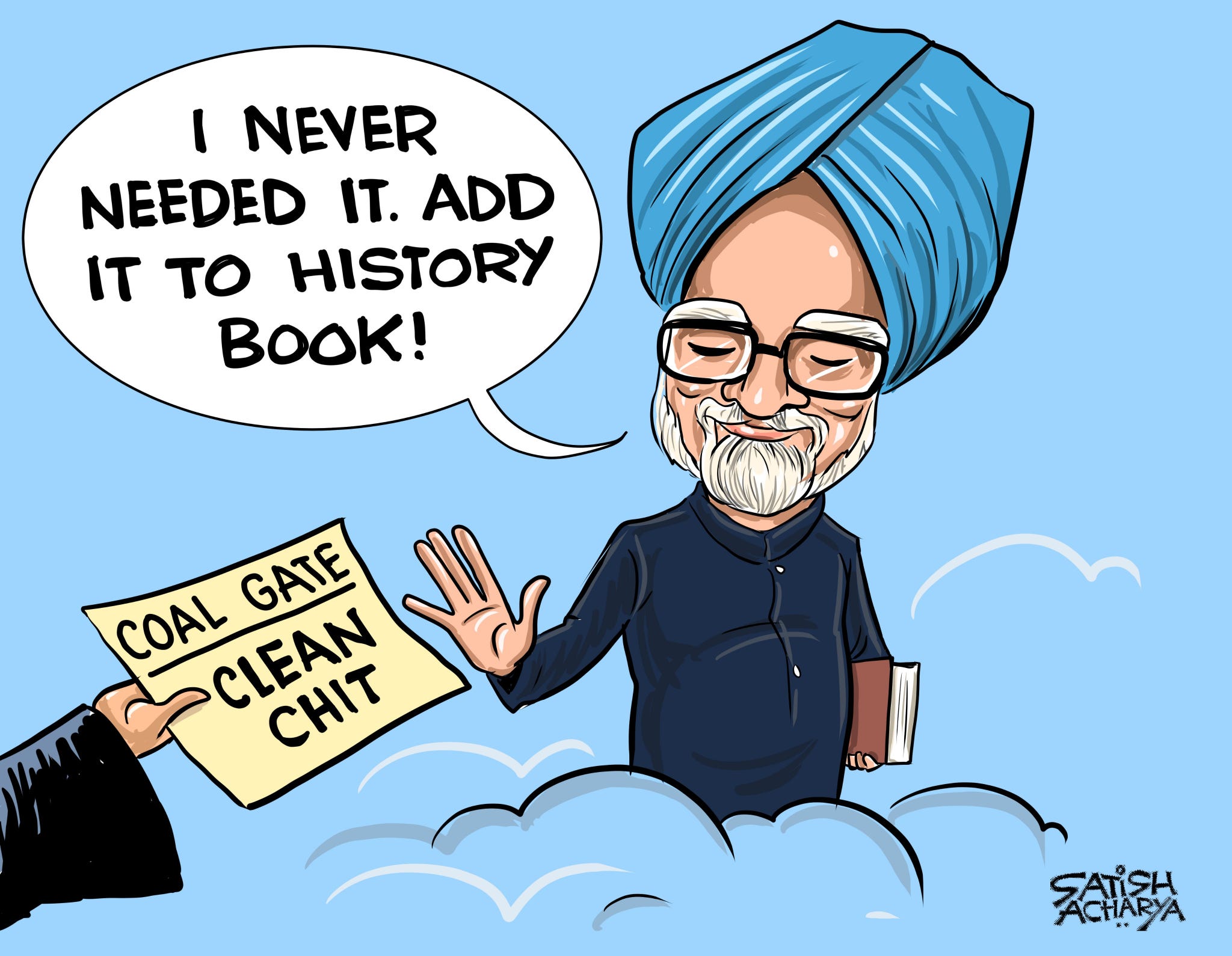
Drawn and quartered
Deep dive
The Economist writes that Modi’s proposed plans to “fix the system” are “more show than substance” and are unlikely to address the deeper weakness of the education system. The British magazine notes:
“It is in its desire to clamp down on free speech that Mr Modi’s party is most itself. The government initially blocked the protest movement’s X account in May. It then blocked mobile internet around the protest area in central Delhi for several days, as well as a peer-to-peer messaging app. It told social-media networks to take down anti-Modi posts. A parliamentary committee has called a meeting with the main platforms to discuss, among other things, how to ensure “the government’s public order”.
There is, however, one new move in the government’s response. It has realised that Instagram, where the protest movement gathered momentum, is the dominant social-media network of the day. On July 23rd Mr Modi posted his first-ever reel, or short-form video, on the platform. As Indians made mocking memes of the video, pliant media boasted that it had set “a new world record for the most views [of] an Instagram Reel within 24 hours”. Mr Modi has instructed ministers to enhance their presence on the platform. The party wheeled out a 42-year-old MP to give a speech to parliament in which she “borrowed Gen Z language” to say that Mr Modi “clocked” the problem. Young people describe the act of putting visible effort into appearing cool on social media as “aura farming”. It is a guaranteed way to have no aura at all.”
More troubling than the exam-paper leaks themselves is the increasingly central and lasting role these examinations play in young Indians’ lives. Many continue to compete within this unstable system because opportunities in the wider job market are even more limited. As the magazine observes, repairing the examination process alone will therefore not address the deeper problem.
Prime number: 3 months
It took three months for the Union government to acknowledge and respond to a letter sent jointly by three UN rapporteurs – Nicolas Levrat, special rapporteur on minority issues, Irene Khan, special rapporteur on freedom of opinion and expression and Nazila Ghanea, special rapporteur on freedom of religion or belief – regarding the large-scale removal of names from voter lists during the Special Intensive Revision of electoral rolls.
The letter dated May 1, 2026, flagged how the Muslim community was particularly impacted by the SIR process in states like West Bengal, arguing that the “discriminatory rhetoric by politicians and senior public figures” could amount to incitement to discrimination under Article 20(2) of the International Covenant on Civil and Political Rights, which India ratified in 1979, and may run counter to India’s obligations under the International Convention on the Elimination of All Forms of Racial Discrimination.
Opeds you don’t want to miss
“If you are looking for the point when the protests turned into a national movement it was not when the Cockroach Janata Party called for Dharmendra Pradhan’s resignation … [or] when Sonam Wangchuk started a hunger strike,'“ writes Vir Sanghvi. “It was when the police were told by the government to use force to shut the protests down. From that point the police stopped being protectors of citizens and upholders of the rule of law and were transformed into the government’s stormtroopers.”
India’s Gen-Z protesters taught Narendra Modi a lesson, says Sanjay Ruparelia in the Globe & Mail while in the New York Times, Kapil Komireddi writes that Modi has been “spectacularly humbled” by “young Indians” who have handed “the world’s largest democracy another chance at survival”.
“It is clear from the overall scheme of these amendments that the state seeks to eliminate organisations active in the educational, cultural, environmental, and charitable sectors on account of certain deep-seated prejudices.” PDT Achary, former Secretary, Lok Sabha, on the ‘sledgehammer’ provisions of the Foreign Contribution (Regulation) Amendment Bill, 2026.
India’s abstention from the ILO convention on “Decent Work in the Platform Economy” tells lakhs of gig workers exactly where they stand in the Viksit Bharat queue. More than 400 delegates backed the world’s first binding international framework for platform workers’ rights, including China, Brazil, Germany, France, Japan and South Africa whereas India sat it out. Growth may be digital; the protection for those delivering it remains analogue. “Viksit Bharat will remain a distant dream unless economic growth goes hand in hand with the dignity of labour,” reminds the Deccan Herald in an editorial.
The Union government must be prepared to act if the rains fail this year, writes Santhosh Kumar PK. “For a country that imports more than half its edible oil and a fifth of pulses, a failed season inflates the forex bill. India’s food inflation now lives in perishables, too. It’s a supply problem that monetary tightening can’t solve. We must plan for more such troubled seasons.”
How ‘eternal’ or ‘timeless’ is the religion many modern day Hindus label as Sanatan Dharma? The modern political imagination of ‘Sanatan Dharma’ emerged not in ancient times, but in the colonial 19th century as a conservative response to reform, modernity, and social change, says Devdutt Pattnaik.
Listen up
‘Is Modi’s time up?’ Alastair Campbell and Rory Stewart examine the youth-led protests that swept the country last week on the Rest is Politics.
Watch out
On Democracy Now!, Amy Goodman and Anjali Kamat speak with Neha Bora, a doctoral student at Jawaharlal Nehru University and national president of the All India Students’ Association, and writer and artist Shuddhabrata Sengupta about the Modi government’s “massive crackdown” on the youth-led protest against the education minister.
Over and out
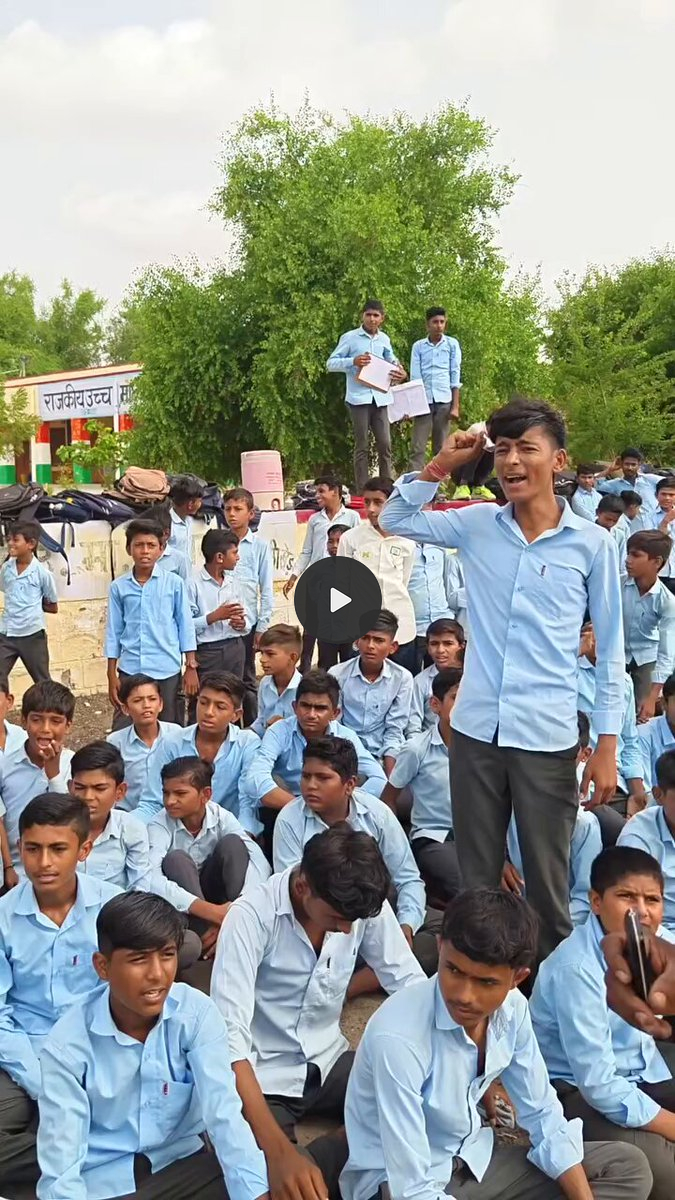
Gen Alpha are busy claiming their rights….

That’s it for today. We’ll be back with you on Monday, on a device near you. If The India Cable was forwarded to you by a friend (perhaps a common friend!) book your own copy by SUBSCRIBING HERE.
All cases must be withdrawn and action needed to be done on those who used force against peaceful protesters. If no action is initiated against them then they will use ‘their pallet guns’ and that will harm more to our nation as it is a sign that they are loosing morale that justice is possible in this country.