
A newsletter from The Wire | Founded by MK Venu, Pratik Kanjilal, Sidharth Bhatia, Siddharth Varadarajan, Sushant Singh, Seema Chishti, and Tanweer Alam | Contributing writers: Kalrav Joshi, Anirudh SK
If you like our work and want to support us, then do subscribe. Sign up with your email address by clicking on this link and choose the FREE subscription plan. Do not choose the paid options on that page because Stripe – the payment gateway for Substack, which hosts The India Cable – does not process payments for Indian nonprofits.
Our newsletter is paywalled but once a week we lift the paywall so newcomers can sample our content. Today is that day. To take out a fresh paid subscription or to renew your existing monthly or annual subscription, please click on the special payment page we have created – https://rzp.io/rzp/the-india-cable.
Snapshot of the day
July 17, 2026
Sidharth Bhatia
It has been a difficult day for the Republic when Inquilab Zindabad – ‘Long Live Revolution’, the iconic slogan first raised by Maulana Hasrat Mohani in 1921 before becoming a rallying cry of India’s freedom struggle against British rule – can be treated as suspect at Delhi’s Jantar Mantar.
The offence, apparently, is now the slogan, at least according to the Godi media. There, the Cockroach Janata Party protest has entered its 28th day and the hunger strike its 20th. Protesters, led in large part by young people, are demanding reform of the education system over alleged irregularities in the National Eligibility cum Entrance Test and also the resignation of education minister Dharmendra Pradhan. The Godi media ecosystem, having already embarrassed itself by airing and then quietly deleting claims of China links to the CJP, has now found another objection: to the iconic freedom-struggle slogan that remains one of the loudest cries against power and the system.
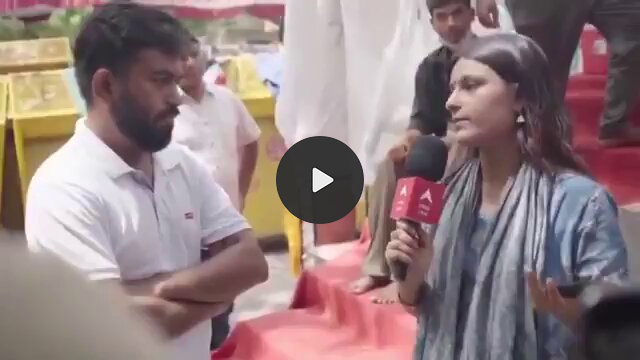
Instead of asking why the Modi government remains impervious to national outrage, or why the education minister has still not spoken, an ABP News reporter – in what will be a first for the country – chose to question the expression itself, in yet another ridiculous attempt to discredit a protest it has been forced to cover because the narrative is slipping out of Modi government’s control with growing nation-wide support.

Sonam Wangchuk, meanwhile, is making no retreat. Doctors have warned that his prolonged fast has entered a dangerous phase, with possible organ damage if it continues, but the educator and climate activist says his resolve remains intact after nearly three weeks of indefinite hunger strike. “I am weak from the outside but very strong inside,” he said, urging people to gather for the July 20 peaceful march to Parliament, where the protesters plan to place their plea before what he called the “temple of democracy”. Then, with the grim humour of a man bargaining with his own body, he added that “I will stay alive till 20 July at any cost. If you don’t come and 20 July is not successful, I will come back as a ghost.”
Alongside the Magsaysay awardee, three student activists – Neha, Manish and Aameen – associated with the All India Students’ Association have also completed 20 days of an indefinite hunger strike, with doctors warning that their health has deteriorated significantly as they continue protesting. At one ‘referendum’ booth on whether Pradhan should resign, one protester told Rohit Kumar, tongue firmly in cheek, “Here at least people can vote without having to worry whether they are on a list or not.”
Why does India still turn to the hunger strike, asks BBC. “In a world of self-interested politics, they stand out as acts of self-sacrifice. As the protester’s body weakens, the moral and political pressure on those in power grows,” Sayantan Saha Roy, an anthropologist at the University of Connecticut told Soutik Biswas.
Earlier today, Congress leader Pawan Khera met Wangchuk and urged him to end his indefinite hunger strike, citing concerns over his deteriorating health, while accusing the Centre of being “insensitive” to democratic protests. Khera said he was concerned not only about Wangchuk but also about the three student activists on hunger strike. His visit came a day after Sonia Gandhi reminded Congress MPs at the party’s parliamentary meeting that Indira Gandhi had flown to Leh in 1984 to persuade Wangchuk’s father, Sonam Wangyal, to end his hunger strike demanding Scheduled Tribe status for Ladakh.
Opposition parties across the spectrum, including the Left parties active at Jantar Mantar, have expressed concern over the deteriorating health of the protesters – whether by visiting the site or speaking out online. The protest, meanwhile, appears to be spreading beyond the capital, even as pages such as AntiCJP continue to spread misleading, out-of-context clips to discredit the mobilisation that refuses to die on command.
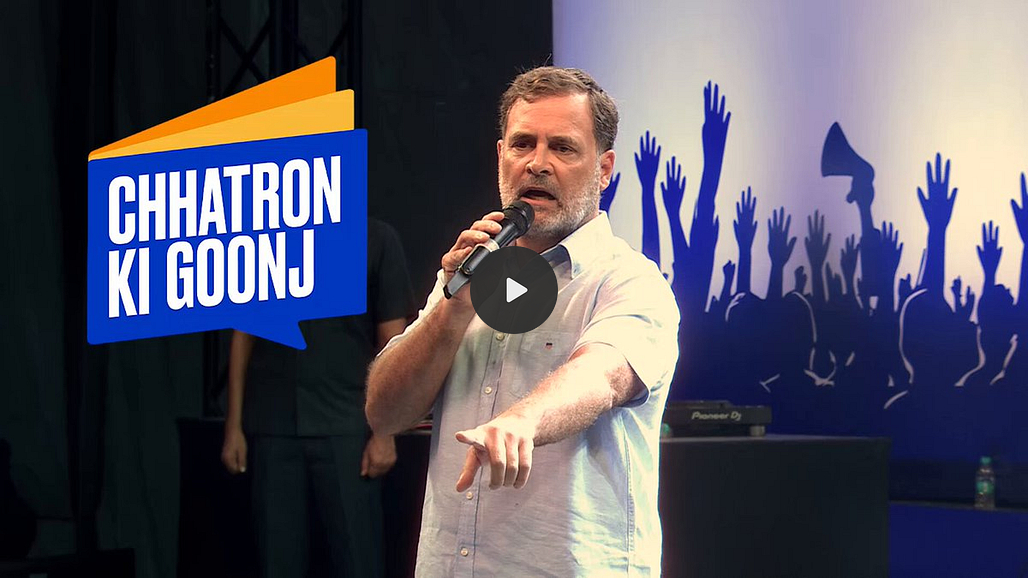
Even as the Modi government refuses accountability, Leader of Opposition, Rahul Gandhi is trying to build a pan-India grassroots movement around examination scams. At the second “Chhatron Ki Goonj” rally in Dehradun on Friday, the Congress leader attacked the lack of action over paper leaks, saying that “not a single person has been punished” so far. Gandhi claimed that 7.5 crore students had been affected, with 152 cases but no convictions, and argued that India needed to move from a “government-centric examination system” to one that is student-centric, flexible, secure and insulated from political influence.

Even as anxiety mounts over deteriorating health of the protestors, academics, including retired professors from Jawaharlal Nehru University, artists and public figures have in a “heartfelt” appeal urged to Wangchuk to end his fast, calling him “too precious to lose”, and pressed the Modi government to open dialogue to “honour the spirit of public service that Sonam Wangchuk represents”. Among the signatories are Abhijit Banerjee, Amitav Ghosh, Arundhati Roy, Anita Desai, Zoya Akhtar, Mira Nair, Kiran Rao, Vikramaditya Motwane, Payal Kapadia, Nandita Das, Freida Pinto and Jim Sarbh.
The echo of solidarity has also travelled 640 km from the capital. Wangchuk has found support in Madhya Pradesh’s Chhatarpur, where activist Amit Bhatnagar is on the 16th day of his own fast in support of people affected by the Ken-Betwa river-linking project. “Our struggles are the same, and we stand with him completely,” Bhatnagar told Khabar Lahariya.
Delhi Police, which falls under the jurisdiction of the Ministry of Home Affairs, has received its own message from above. In a sudden move, it removed commissioner Satish Golcha and appointed Anurag Kumar in his place. The Indian Express reports that the handling of the CJP protest at Jantar Mantar was among the factors that had upset home minister Amit Shah, along with corruption cases and other law-and-order concerns. Golcha’s exit, then, has the look of an unceremonious boot out the door.
Speaking for the first time on the ongoing hunger strike by climate activist and educationist Wangchuk, actor Aamir Khan has said that while he, like everyone is also concerned about Wangchuk’s health and life, but has bluntly denied any link between Wangchuk and the engineering-student figure in 3 Idiots. But an archival video from a 2008 CNN-IBN event shows, as told by Wangchuk – a full year before the film’s 2009 release. The clip does not merely revive an old inspiration debate; it raises the more awkward question of what now compels Khan’s silence.
And where is Prime Minister Narendra Modi in all this? Travelling, inaugurating, campaigning and ofcourse, attacking opponents. Modi was in Haryana, Chandigarh and Punjab earlier today, rolling out projects worth thousands of crores before Punjab goes to polls next year in February.
America struck Iran’s Chabahar again today, razing what seems to be a maritime control tower in the city. The external affairs ministry said that the Shahid Beheshti terminal of the Chabahar port did not suffer any damage. India began developing the port in 2018 but did not make any budgetary allocation for the project this year, having expedited the completion of its $120 million investment commitment amid the threat of sanctions by the Trump administration.
After Iran and the US signed their interim peace deal, India was among the top applicants for permits from Iran to transit the Strait of Hormuz through its designated routes. Sukalp Sharma reports that it accounted for 20% of requests to exit the Persian Gulf via the strait (second only to China’s 21%) and for 21% of requests to enter it (India is the top country in this regard). The data underlines the strait’s importance for India – during peacetime, 90% of its LPG imports and over half of its crude oil and LNG inflows came through it.
A 21-year-old construction worker from Jharkhand was killed yesterday after a block of concrete fell off the Silkyara-Barkot tunnel in Uttarakhand in which he was working. Notably this is the same tunnel where 41 workers became trapped three years ago after a portion of its ceiling collapsed and blocked their only way out. All of them were rescued after a 17-day effort that enlisted an Australian expert and a number of ‘rat miners’.
Uttar Pradesh’s police have submitted to the Supreme Court that they found no evidence to substantiate the allegation that former Union minister Ajay Mishra ‘Teni’ and his son Ashish intimidated a witness in which the 2021 Lakhimpur Kheri violence case, where the younger Mishra is the main man accused of mowing down protesting farmers. Baljinder Singh, a witness in that case, has alleged that Ashish tried to bribe and threaten him to get him not to depose in court; last year the apex court had pulled up the state police for not acting on Singh’s complaint on the dubious grounds that he did not come to the police station to record his complaint in person.
A senior external affairs ministry official’s explanation for why PM Modi avoids press conferences – namely that he simply prefers to speak directly to voters – is “deeply flawed” and amounts to little more than “glib platitudes”, the Editors’ Guild of India has said. “Scripted, one-way communications, largely through social media channels, are not a substitute for public interaction with independent media,” the guild pointed out, writing that statements like those of the MEA official “only serve to have a further chilling effect on free speech and media freedom”.
While hearing petitions alleging violations of the Supreme Court’s 2024 judgment against the arbitrary and retributive demolition of buildings, the top court yesterday issued a ‘standard order’ transferring the pleas to the relevant high courts. “Whether there is contempt or not would itself be a disputed question … Besides, if there is a violation of this judgment throughout the country, as you allege, can everybody come directly to the Supreme Court?” Justice V. Mohana asked.
Forty-four-year-old Assam resident Mumtaz Begum was expelled to Bangladesh last month – but on what basis? Rokibuz Zaman reports Begum’s lawyer alleges that one of the state’s foreigners’ tribunals ordered her arrested in May even though it does not have the power to do so. Before this, the tribunal had heard her case again after being pulled up by the Gauhati high court, and even in this second instance failed to consider her claims as directed by the bench, Zaman writes. The consequence is that Begum, whose ordeal with the state’s controversial tribunal system began in 1998, is now missing in a foreign land she was ‘pushed’ into.
Noida violence: Plagiarised tweets, pro-Palestine protest figure in police’s bid to detain scribe
On what grounds did the Noida police bid to preventively detain journalist Satyam Verma for the violent labour protests of April? Akanksha Kumar finds that one annexure the cops submitted contained material plagiarised off of a far-right X account. One of these in turn attempts to draw a link between the labour agitation and a pro-Palestine protest attended by the CPI(M)’s Sitaram Yechury and Brinda Karat, Kumar reports. The police also seemed to suggest that Verma’s background in Marxism, which per its report “instead of directly inciting for violence [creates a mindset] so aggressive that an individual becomes violent”. Ultimately Gautam Buddha Nagar (i.e. Noida) magistrate and Chief Election Commissioner Gyanesh Kumar’s daughter Medha Roopam approved Verma’s detention under the draconian National Security Act.
Japanese minister accuses India of ‘sheer recklessness’ over bullet train project; MEA responds
Though the Mumbai-Ahmedabad bullet train project that is funded in significant part by Japan was once touted as having a 2023 due date, it has still not been inaugurated. Against this backdrop, a former Japanese vice minister named Hideki Makihara earlier this week had some unflattering things to say about his Indian partners. “What stood out in international meetings and negotiations,” he wrote on X, “was the sheer recklessness of the Indian side,” accusing Indian officials of reneging on their promises and relentlessly pursuing their own self-interest. “I feel 100% that the reason this hasn’t moved forward is entirely on the Indian side,” Makihara declared.
This prompted a rejoinder by the Ministry of External Affairs in Delhi today, which deemed Makihara’s remarks to be “at considerable variance with facts”. India will proceed with an indigenous train on select sections of the line because Japan’s E10 bullet train will be ready only by the early 2030s, spokesperson Randhir Jaiswal said.
How an antibiotic was fully discovered in India and got US FDA approval
Menaka Doshi interviews Wockhardt founder-chairperson Habil Khorakiwala on Zaynich, India’s first domestically discovered antibiotic to secure US FDA approval. The drug, built to treat complex urinary tract infections, is the result of a 15-year, roughly $300 million bet that many companies would have walked away from. Khorakiwala says he managed the risk “like cricket” - not by chasing a century, but by playing “one ball at a time”.
The Long Cable
Aspiring to Ramarajya? The Valmiki Ramayana Has Some Insights For Our Times
Naina Dayal
I have turned to the Ramayana of Valmiki in difficult times for over 40 years. When I was unable to sleep for months after the 1984 anti-Sikh violence, waking up in a sweat every night on hearing gunshots in my nightmares, my father’s aunt, a Sanskrit scholar and tennis player who played and won a match or two at Wimbledon in the 1930s, taught me half a verse from the Ramayana which, she told me, had been the mantra she recited before matches, during phases of debilitating illness, and indeed, every day. She assured me it would help me fight fear. Since then, yatra ramo bhayam natra nasti tatra parabhavah (where there is Rama, there is neither fear nor defeat) has been my mantra, too.
The Ramayana’s poetry has captivated me, and I have a quote from the text for all occasions – even earthquakes, for those occur, the Ramayana tells us, when the mighty elephants Virupaksha, Mahapadma, Saumanasa and Bhadra, who support the earth, get tired and shake their heads for a moment to relieve their weariness.
So, does the Valmiki Ramayana contain insights on the burning issues of our time – the dharma of those who rule a realm and the character of those who lead religious establishments? It does.
For these insights, we need to turn to the Uttarakanda, the seventh and last book of the Valmiki Ramayana. The sixth book, the Yuddhakanda, culminates in Rama’s long-delayed ascension to the throne of Kosala, and contains a few verses about the perfection of Rama’s reign. We are told that there was no fear of disease or poisonous snakes, the old never had to perform the funeral rites of their children. No one heard the wailing of widows. Everyone lived for a thousand years. Everyone was content. Trees yielded fruit and flowers all year. The rains always came at the right time, and the touch of the wind was always pleasant. Everyone was devoted to dharma. Rama’s subjects adhered to their own occupations and were satisfied with their own duties. People followed Rama’s example and did not harm one other. But we learn virtually nothing of what Rama actually did as ruler. What, for instance, were his judicial acts as king that make us long for the re-establishment of Ramarajya?
We learn something about the administration of justice during Rama’s rule in the Uttarakanda. This book contains the controversial Shambuka-vadha episode. When a brahman boy died in childhood during Rama’s reign, the boy’s grieving father accused the king of a transgression that resulted in his son’s untimely death. When the sage Narada informed Rama that the child’s death was the result of a shudra performing austerities, Rama immediately swung into action – he went in search of the culprit, located Shambuka and cut off his head. Shudras were not entitled to practise austerities, and Shambuka’s tapas was a threat to the dharma of Rama’s kingdom. The beheading of Shambuka restored dharma and the brahman boy came back to life. This episode has shaped the reception of the Uttarakanda, and indeed, the Valmiki Ramayana as a whole, from pre-modern times, and its story has been repeatedly challenged by low-caste groups who have criticised the upper-caste ethics that allow Rama to kill Shambuka. Justice for the brahman and maintenance of the varna hierarchy trump Shambuka getting a full and fair hearing.
But another episode of the Valmiki Ramayana suggests that even the lowliest creature was treated fairly during Rama’s reign. Two prakshipta sargas or interpolated cantos of the Uttarakanda can be cited here. The two sargas do not appear in some editions of the text or are explicitly marked in them as interpolations, but they are well known, and versions of the episode they recount feature in later Ramayanas, such as the medieval Sanskrit Ananda Ramayana. In these prakshipta sargas of the Valmiki Ramayana, the absence of grievances among Rama’s subjects is highlighted, for Ramarajya meant that there was no adharma anywhere, and no one was discontent. People did not suffer from mental and physical ailments. Everyone lived long, happy lives. Everything was governed in accordance with dharma, so the king had no complaints to deal with. Rama sent Lakshmana again and again to find someone, anyone, with a matter that needed adjudication by the king. Finally, Lakshmana located a crying, injured dog with a grievance -- he had been beaten without reason by a brahman mendicant. The dog entered Rama’s assembly hall hesitantly, for dogs are degraded creatures and he did not wish to do anything above his station. Once in the assembly hall, he spoke eloquently of the duties of the king – protection of his subjects and protection of dharma. Then he told Rama that he had been thrashed mercilessly by a brahman named Sarvarthasiddha. Sarvarthasiddha was summoned and admitted that he had committed an offence. The aggrieved dog suggested that the culprit be made the head of a religious establishment in Kalanjara as punishment, and Rama appointed Sarvarthasiddha to the position. Sarvarthasiddha was delighted, and Rama’s ministers were astonished by the judgement, which seemed like an honour rather than a punishment. The dog then explained that leadership of a religious establishment is a curse rather than a boon. In his past life, he had headed one. He had been righteous, pious and devoted to the welfare of all beings, he had guarded the wealth of the gods scrupulously, yet he had been reborn as a dog. Sarvarthasiddha, on the other hand, had already abandoned dharma, was cruel and violent, and his conduct would surely lead several generations of his family to hell. The dog concluded that a position of authority with respect to gods, cows and brahmans has dire consequences. And whoever siphons off donations to gods falls into hell after hell. The wise dog, who had been defiled merely by leading a religious sect, then fasted unto death in Varanasi.
In Rama’s realm, therefore, a dog got a fair hearing, though a shudra did not. Heading a religious establishment resulted in a low birth. Misappropriating the property of deities could keep one in hell indefinitely. But that was the Tretayuga.
What of the Kaliyuga? Who is entitled to justice in our times? Humans of all kinds? Dogs and other creatures? And which Rama should we choose? The one who helps us fight fear, or one whose name instills fear?
(Naina Dayal teaches history at St. Stephen’s College, University of Delhi.)
Reportedly
No sooner than there is something that deserves to be made fun of, some memester steps forward and creates memes that quickly go viral. One such is a series of conversations between Donald Trump and Nitin Gadkari — pronounced Gadakari — mainly about Ethanol being added to Petrol. In one, Trump asks Gadkari about the “space technology” the latter uses to build roads. Gadakari gives an answer that floors Trump — literally. There are many similar ones, which we leave for readers to check out, but they are all uniformly funny and sharp.
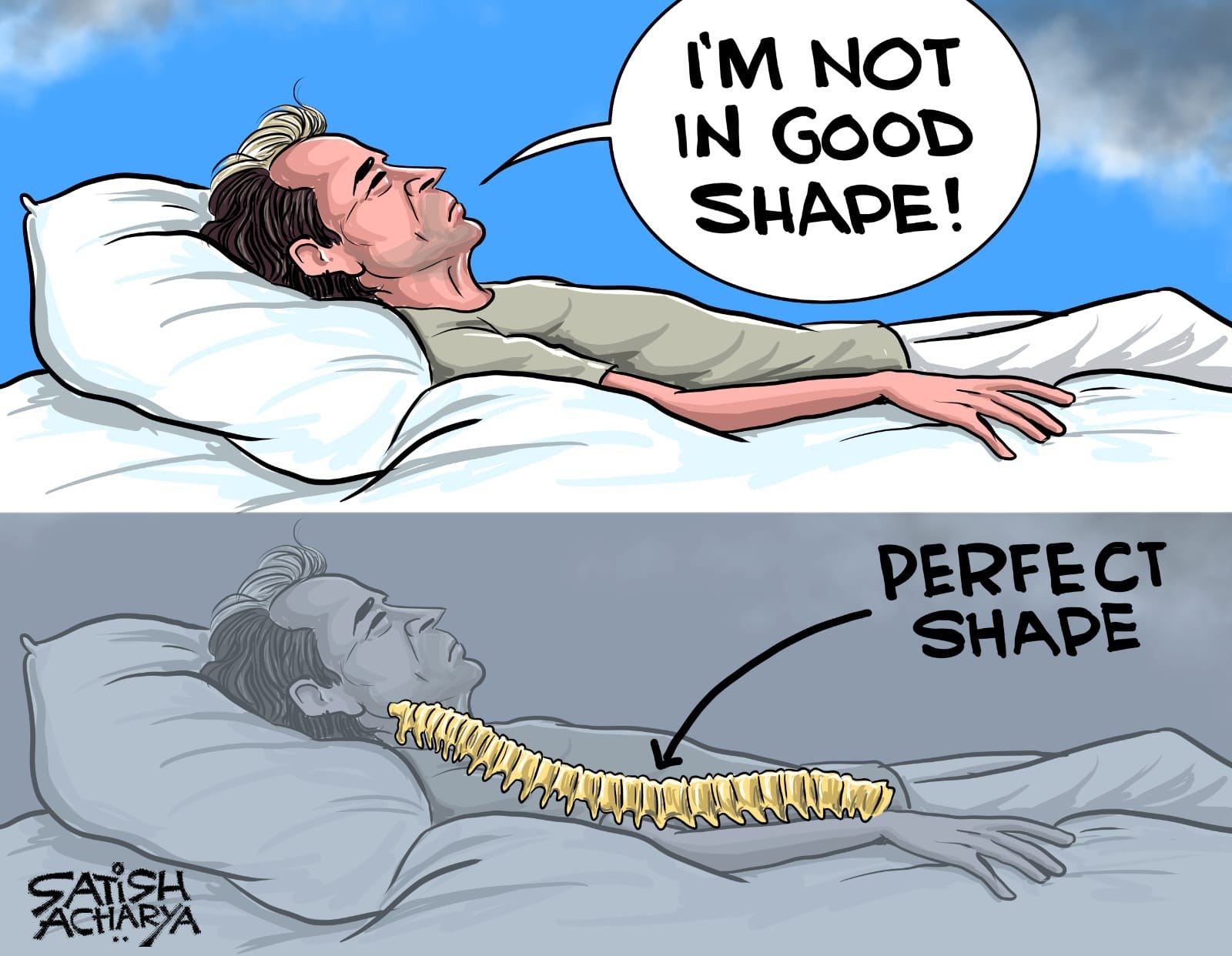
Drawn and quartered
Deep dive
Accusations of sacrilege have become common in Punjab today. These, explains Prabhjot Kaur Jossan, have deep roots in grievances against the state, and the spectre of sacrilege allegations is “making rural society more suspicious and on the edge”.
Prime number: >9,900
Over that number of schools in Maharashtra do not have functioning toilets for boys and girls, according to the latest UDISE data (the lack of functioning toilets for girls is a major reason why some of them drop out of school). More than one lakh schools are connected to the electricity grid but 930 of them do not have a functional power supply. Ardhra Nair reports.
Opeds you don’t want to miss
The Modi government’s silence on Sonam Wangchuk’s fast reflects an apathy worse than that of the British themselves, says S.N. Sahu.
We live in a world where bad things like war, paper leaks and air pollution simply ‘happen’ – who made them happen is not named and, therefore, never called to account, Pratap Bhanu Mehta observes. “Perhaps this is why Wangchuk’s demand is important,” he writes. “His insistence on a resignation is not simply about one minister or one examination … Before institutions can be repaired, we must acknowledge who specifically broke them.”
Gautam Bhatia argues that the Supreme Court’s recently concluded adjudication of challenges against the SIR lies “at the confluence of a number of modern-day judicial trends in India”, namely “judicial evasion, executive constitutionalism, stealth overruling” and what he calls “Franken constitutionalism”.
Bharat Bhushan explains why and how the Ram Mandir embezzlement scandal can reshape Uttar Pradesh’s political map ahead of the assembly elections next year. “Since the Ayodhya temple was central to the RSS and the BJP’s rise to political power, it is doubtful people will accept that the breach was merely local and routine,” as the saffron party has argued, he writes.
Globally, Indian migrant workers are being recruited for insecure, low-paid and dangerous jobs, write Ashok Danavath and Praveen Kolluguri. One needs to look within India at its “caste structures, landlessness, and the systematic informalisation of work.”
Listen up
Is there any merit to the contention that south Indian artists are overlooked in the grant of national awards? Historian A.R. Venkatachalapathy and musician T.M. Krishna put forth their views.
Watch out
What’s up with the Modi government’s silence over Wangchuk’s indefinite fast? The answer, this viral animated video argues drawing from a Bob Dylan song, is blowing in the wind for us all to hear.
Over and out
We know about the arrival in India of Tenzin Gyatso, the 14th and current Dalai Lama, but his predecessor Thubsten Gyatso had also travelled here seeking asylum 49 years prior in 1910. Pursued by the Qing Dynasty, he’d come to Darjeeling and then to Calcutta, where he attempted to press his case with the British while his connections lobbied the Russians for help. Ajay Kamalakaran shines a light on how this lesser-known exile played out before ending with the Lama’s return to Tibet in 1911.
That’s it for today. We’ll be back with you on Monday, on a device near you. If The India Cable was forwarded to you by a friend (perhaps a common friend!) book your own copy by SUBSCRIBING HERE.