
A newsletter from The Wire | Founded by MK Venu, Pratik Kanjilal, Sidharth Bhatia, Siddharth Varadarajan, Sushant Singh, Seema Chishti, and Tanweer Alam | Contributing writers: Kalrav Joshi, Anirudh SK
How to subscribe to The India Cable
To subscribe for free: Click this link, enter your email address and select the FREE subscription plan.
Important: Do not select any of the paid options on Substack. Stripe, its payment gateway, does not process payments for Indian nonprofits.
To take out a paid subscription: Visit our dedicated Razorpay payment page to make your payment.
To renew an existing subscription: Use the same Razorpay payment page to renew your monthly or annual subscription.
Want to sample our newsletter? The India Cable is normally paywalled, but we lift the paywall once a week so that new readers can sample our content.
Editor’s note: This post may be cut off in your inbox due to length. Click on the title above to read it in full on Substack.
Snapshot of the day
November 9, 2026
Siddharth Varadarajan, Anirudh S.K.
You can’t make this stuff up. At the end of October, the Bharatiya Janata Party lost control of a crucial milk cooperative in Maharashtra – the Gokul milk union of Kolhapur – when the alliance backed by Congress leader Satej Patil won 13 of the union’s 25 seats. Instead of using this setback to accuse the Congress of crying wolf with its ‘vote chori’ campaign, the Devendra Fadnavis government in the state did exactly what the Opposition has been accusing the BJP of doing: It promulgated an ordinance giving four unelected, government-appointed ‘directors’ voting rights and thus seized control of the politically important union!
Congress leader Rahul Gandhi raised a stink about this vote theft in a social media post and now Kolhapur is witnessing a really massive protest:

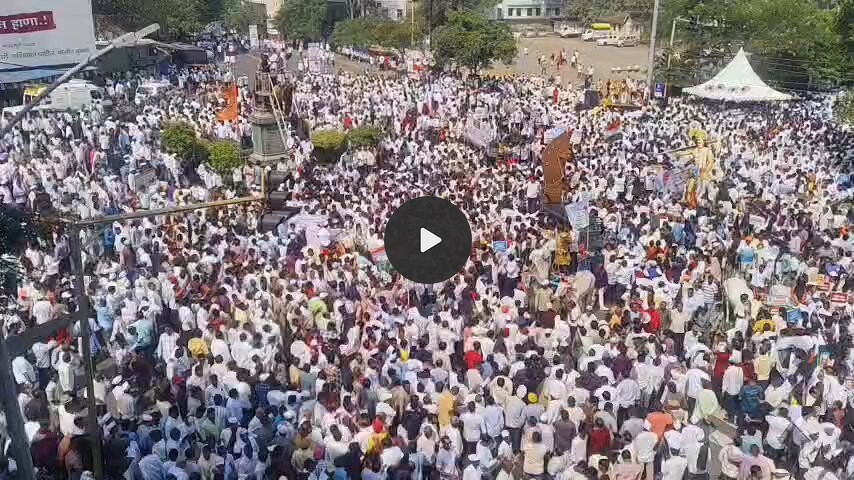
The political significance of what is happening in Kolhapur was summed up well by the Cockroach Janata Party’s Abhijeet Dipke: “Imagine, if they’re this desperate to steal the mandate of even a dairy cooperative, what they must be doing in state elections with the help of Gyanesh Kumar.”
Notwithstanding – or perhaps as a result of – the loud, bright and clear signs of discontent with the status quo under his 12-year-rule, Prime Minister Narendra Modi is in no mood to stop branding dissent and opposition as a threat to the country. He once again repeated his ‘dimagi (mental) Naxal’ jibe against his critics, this time in an address in Bastar over the weekend to armed police forces personnel hitherto involved in battling actual armed insurgents. The Naxals (Maoists) “are finished,” said Modi, “but the threat hasn’t passed yet.” “Armed Naxals have been eliminated from the jungle, but dimagi Naxals have captured various organisations,” he warned. Their modus operandi: “To stoke people against the country and the Constitution” by “infiltrating political parties and organisations”. “We must recognise them, we must defeat them and we must save the country,” he declared.
Modi’s message was clear from the optics of the event – that the government now needs to use coercive power to quell protests which may appear peaceful but are actually dangerous. That when uniformed personnel are used against peaceful demonstrators in the heart of New Delhi, they are continuing their solemn struggle against insurgent Maoism because the
