
A newsletter from The Wire | Founded by Sidharth Bhatia, Siddharth Varadarajan, Sushant Singh, Seema Chishti, MK Venu, Pratik Kanjilal and Tanweer Alam | Contributing writers: Kalrav Joshi, Anirudh SK
If you like our work and want to support us, then do subscribe. Sign up with your email address by clicking on this link and choose the FREE subscription plan. Do not choose the paid options on that page because Stripe – the payment gateway for Substack, which hosts The India Cable – does not process payments for Indian nonprofits.Our newsletter is paywalled but once a week we lift the paywall so newcomers can sample our content. Today is that day. To take out a fresh paid subscription or to renew your existing monthly or annual subscription, please click on the special payment page we have created – https://rzp.io/rzp/the-india-cable.Snapshot of the day
February 13, 2026
Siddharth Varadarajan
Nikhil Gupta, the Indian national accused of conspiring to assassinate a US-based Sikh separatist on behalf of India’s external intelligence agency, pleaded guilty in court today to the charges brought against him. This means there will be no messy trial but it also means Gupta could face up to 24 years in jail if the judge throws the book at him. The other Indian named by US investigators in the plot to kill Gurpatwant Singh Pannun is Vikas Yadav, a former officer at the Research and Analysis Wing. So far, the US has not pressed for his extradition.
Tarique Rahman will be Bangladesh’s next prime minister with his Bangladesh Nationalist Party having won 209 or over two-thirds of the total 299 seats in the country’s (for now) unicameral parliament, per unofficial results released by the Election Commission in Dhaka. If confirmed in the national gazette this would mark the BNP’s biggest tally to date – as well as that of the Jamaat-e-Islami, which as against its previous high of 18 seats has won 68 constituencies (its allies including the student-led National Citizen Party won nine) in an election that appears to have seen a 60% turnout. The latter alliance raised allegations of tampering and abnormalities during the counting process but Jamaat ameer Shafiqur Rahman was more measured in his remarks. Two erstwhile ruling parties, the Jatiya Party and the now-banned Awami League, will be absent from parliament. Prime Minister Narendra Modi congratulated Rahman on his “decisive” victory and became the first world leader to speak to the prospective PM after his victory – seen as extending an olive branch to the new government. The United States and Pakistan also congratulated the BNP on the election victory.
As for the referendum on the constitutional reforms proposed in the July Charter, the ‘yes’ option won 65.3% of votes. The mood on the streets, reports Devirupa Mitra from Dhaka, was unusually calm.
Among the victorious BNP candidates are two Hindus – Nitai Roy Chowdhury, who won from the Magura‑2 constituency, and Gayeshwar Chandra Roy, who won from Dhaka-3. They have touted their win as a sign that Bangladesh’s Hindu minority can trust the BNP to preserve equal rights, Mitra reports. Both were careful in assessing ties with India, which has repeatedly taken issue with what it says is Bangladeshi minorities’ insecurity under Muhammad Yunus’s interim government, although Roy said the upcoming government would expect New Delhi to respect Bangladesh’s sovereignty. In a statement sent after polling stations closed, the ousted Prime Minister Sheikh Hasina denounced the election as a “carefully planned farce” and called for the results to be cancelled.
Prime Minister Narendra Modi has congratulated Rahman and hoped for better bilateral relations but his party’s members seem blissfully unaware of their government’s policy. Here’s a video of BJP Youth Wing members vandalising a Bangladesh stall at an international food festival in Pune.
An anchor in the Adani-owned NDTV channel felt compelled to issue a statement regretting any misunderstanding caused by her trying to make light of BJP minister Hardeep Puri’s contacts with Jeffrey Epstein by insisting he was not just a convicted sex offender but also “a power broker”.
Reliance Industries Ltd (RIL) shares were in news in Friday’s trade amid a report by Reuters, which quoting two sources suggested that the United States has issued a general licence to the oil-to-telecom major to buy Venezuelan oil directly without violating sanctions. This comes as India is actively diversifying its sourcing and increasing purchases from West African countries such as Nigeria and Angola, as well as the US, aiming to secure supplies from more than 40 countries.
The Ministry of External Affairs (MEA) yesterday again did not explicitly deny US claims that India will stop buying Russian oil as part of a broader India-US interim trade agreement. This comes a day after US Assistant Secretary of State S Paul Kapur reiterated the remarks made by President Donald Trump and US Trade Representative Jamieson Greer, saying India will reduce Russian oil imports as part of the broader trade arrangement. Not answering in a firm yes or no, Randhir Jaiswal said that “the joint statement is the framework and remains the basis of our mutual understanding in the matter. Both sides will now work towards implementing this framework and finalising the interim agreement,” Jaiswal said at his weekly media briefing.
Meanwhile, thousands of farmers from across India have started conducting nationwide protests against the proposed trade agreement with the US, arguing that the deal could open the door to imports that may adversely impact domestic agriculture, reports Bloomberg. Leader of Opposition in the Lok Sabha, Rahul Gandhi, met representatives of various farm unions at Parliament House today, where farm leaders voiced strong opposition to the proposed US-India interim trade agreement, warning that it could pose serious risks to farmers’ livelihoods.
Highlighting another pressing concern, journalist Dan Strumpf writes evocatively about the capital’s worsening air quality: “A gloom descends as the haze obscures the sun, at times making it hard to see across the road. There is also a more figurative darkness, as the pollution gets under the skin and inside the head.” He notes that months of deadly smog in New Delhi are intensifying public anger over a pollution emergency that many feel the Modi government has struggled to address.
Modi inaugurated the Seva Teerth complex, a newly constructed building that now houses the Prime Minister’s Office, the National Security Council Secretariat, and the Cabinet Secretariat. Apart from the fact that the building’s name is inscribed only in Devanagari and not in English or any other Indian language, what drew particular attention during the inauguration was that the PMO staff, including the National Security Adviser (NSA), appeared in coordinated attire for the occasion.
The Defence Acquisition Council, chaired by Defence Minister Rajnath Singh, approved the Acceptance of Necessity for purchasing 288 Russian S-400 missiles worth Rs 10,000 crore, The Hindustan Times reports, citing officials. This will replenish stocks used in Operation Sindoor and enhance air defence. The AoN reportedly includes 120 short-range and 168 long-range missiles, to be acquired via Fast Track Procedure.
Meanwhile, India has withdrawn from a lithium project in Mali backed by Russia’s state nuclear corporation Rosatom, citing mounting security risks, months after the announcement initially made major headlines. The development had earlier been projected as a significant strategic move in securing critical mineral resources.
The Supreme Court on Friday sought a status report from the Central Bureau of Investigation (CBI) on the progress of the cases related to the violent clashes that took place in Manipur in 2023. A bench of Chief Justice Surya Kant and Justice Joymalya Bagchi proposed that the Gauhati and Manipur High Courts could monitor the conduct of trials in these cases. During the proceedings on Friday, advocate Vrinda Grover argued that in one case, the family of a woman killed during the violence in the state were not informed that a chargesheet had been filed. There were also instances where the accused in the matter and the CBI did not appear for trial, she added.
Ahead of Tamil Nadu assembly elections scheduled later this year, Chief Minister M K Stalin on Friday announced that Rs 5,000 has been credited in advance to 1.31 crore women beneficiaries under the state’s Kalainagar Women’s Rights Scheme. While Rs 3,000 was for the months of February, March and April (Rs 1,000 per month), a special summer aid of Rs 2,000 has also been credited into their accounts.
Mewar University in Rajasthan has suspended 33 Kashmiri students who protested their institute’s lack of mandatory approval from the state and national nursing councils, saying this has put their career plans in limbo. The Jammu and Kashmir Students’ Association, reports Hamza Khan, has expressed its “grave concern” at the development.
Under the Modi government’s new consumer price index series, retail inflation last month was 2.75%. The new series uses an upgraded base year of 2024 as opposed to 2012, covers more goods and services with new weights and collects data from more markets. Year-on-year inflation can only be measured for last month since values for earlier are not readily available, T.C.A. Sharad Raghavan notes, although the statistics ministry has said it is “following international practice to give a linking factor so you can calculate the index as far back as 2013”.
The Modi-led central government spent Rs 119.79 crore on print advertisements in the financial year 2024-25, across 1,052 newspapers. However, more than half of this amount went to just 10 major media groups, reports Newslaundry.
Imran Khan’s lawyer has informed the Pakistani supreme court that the cricketer-turned-politician has lost 85% of the vision in his right eye and that he had complained to jail authorities of poor sight starting in October to no avail. The top court has set a February 16 deadline for the authorities to allow the former prime minister to meet his personal doctor who is to report on his condition, Asif Shahzad notes.
In a move that has left many educators scratching their heads, a recent directive from the Gujarat Commissioner of Schools has asked teachers in government and grant-in-aid schools to carry out a count of stray dogs in and around their premises across the state. The circular seeks data on the number of stray dogs frequenting these locations, their movement patterns and related observations in surrounding areas. While officials say the exercise is in line with Supreme Court guidelines, teachers are questioning why educators have once again been pressed into service for tasks far removed from classrooms.
The office of the Chief Justice of India (CJI) has received 8,630 complaints, regarding corruption, sexual misconduct, or other serious impropriety, against sitting judges in the last ten years, the government informed the Lok Sabha on Friday.
One of the two nurses in West Bengal’s Barasat who suffered a Nipah virus infection died on Thursday. The other nurse recovered and is out of the hospital. Earlier this month another individual across the border in Bangladesh died of the highly dangerous disease, although the WHO has determined that the two clusters are not related.
A Kanpur court yesterday granted bail to a tobacco tycoon’s son, Shivam Mishra, hours after he was arrested for crashing his Lamborghini into pedestrians on Sunday. The 24-year-old Mishra, who argued his own case, was released on a personal bond of Rs 20,000, with the court citing ‘no due legal process was followed’ by the police in pursuing the matter.
Observers trying to make sense of South Asia’s strained and often dysfunctional ties need only examine the region’s cricketing rivalries, notes The Economist.
The median age for marriage among Indian singles has risen from 27 to 29 over the past decade, while the number of people seeking a second marriage has increased by “43%”.
From BBC in London to Le Monde in Paris, the world’s press has taken note of Mohammad Deepak’s defiance against the hateful mob. The BBC framed it starkly — “The Hindu who stood up for a Muslim and became a hero”. Meanwhile, after a “report on the collapse of Hulk Gym’s membership from 150 to 15 members, the legal fraternity, comprising 15 Senior Advocates of the Supreme Court, has stepped up to help sustain Deepak Kumar’s livelihood,” reports The Indian Express.

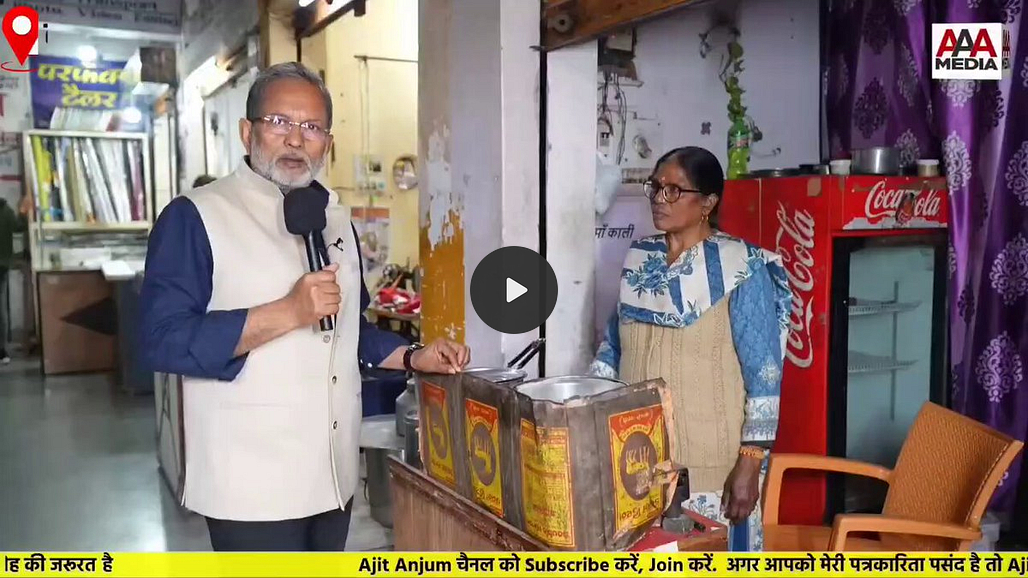
More on the hope in these absolutely dark times: in Telangana, after some hatemongers tried to scare a Muslim vendor invoking the meaningless but divisive term, “food jihad”, several locals have rallied and hit back, in his support.
A French journalist, Valentin Henault, spent a month in jail for having attended a Dalit rally in Gorakhpur. He has now written “an explosive book about prison conditions, Islamophobia and caste oppression in Yogi’s UP.”
Arundhati Roy pulls out of Berlinale
Author and activist Arundhati Roy has announced she will not attend the Berlin International Film Festival, where a film she wrote the screenplay for 36 years ago, In Which Annies Gives It Those Ones, is going to be screened. In a statement issued today, Roy said she was shocked by comments made by members of the festival jury regarding Gaza, particularly the suggestion that movies should not be political – a phrase jury chair Wim Wenders used. The jury had already covered itself in ignominy by suggesting that film makers should not get entangled in politics, drawing sharp criticism.
Roy minced no words when she said, “Let me say this clearly: what has happened in Gaza, what continues to happen, is a genocide of the Palestinian people by the State of Israel. It is supported and funded by the governments of the United States and Germany, as well as several other countries in Europe, which makes them complicit in the crime. If the greatest film makers and artists of our time cannot stand up and say so, they should know that history will judge them. I am shocked and disgusted. With deep regret, I must say that I will not be attending the Berlinale.”
Note: Wim Wenders has in the past said exactly the opposite, that films should be political.
India’s decision to buy 114 more Rafale fighter jets raises tough questions
Although the air force, the government and a swathe of the media are celebratory about the defence ministry’s approval to buy 114 Rafale fighter jets, in reality the move ‘underscores a harsh reality’ and has a bitter irony about it, Rahul Bedi points out. This latest procurement, which will cost India some $30-35 billion, comes ten years after Narendra Modi scuttled the planned acquisition of 126 Rafales for $10-12 billion, as well as on top of New Delhi’s stop-gap purchase of 36 Rafales for $8.8 billion in 2016. Rahul Bedi writes:
“What is presently being projected as fresh momentum in the Rafale buy, under the Multi Role Fighter Aircraft (MRFA) procurement programme, underscores a harsher reality: years were squandered, costs climbed, squadron strength eroded, and the same solution was rediscovered after a full bureaucratic loop in what can only be qualified as zero foresight.
“If the MMRCA programme had been executed as originally structured, the IAF would by now, almost certainly have been operating a sizeable fleet of domestically-built Rafales, backed by deeper industrial participation and genuine technology absorption to augment domestic military aviation capability.”
When arguments run dry, buckets fly: historian Irfan Habib attacked during speech at DU
After many years of mobs bullying people to try and ensure adherence to Hindutva politics and going uncontested on the streets, there is now pushback and resistance clearly visible. Professor S Irfan Habib had water, a bucket and a waste paper basket hurled at him at Delhi University when he was at a people’s literature meet. Habib is an expert on the history of science and Bhagat Singh and modern Indian nationalism. He stayed the course after water was hurled and completed his speech, saying “despite all this, the struggle has to continue.”
The Long Cable
Rafale Déjà Vu: Fast-Tracked Approval Rekindles Old Fears Over India’s Fighter Procurement
Amit Cowshish
Ahead of French President Emmanuel Macron’s imminent three-day visit to India beginning February 18, the Defence Acquisition Council (DAC), chaired by Defence Minister Rajnath Singh, has fast-tracked the Acceptance of Necessity (AoN) for acquiring 114 Rafale fighter aircraft from France for around ₹3.25 lakh crore. Around 12–18 aircraft are likely to be bought in fly-away condition, with the rest to be manufactured in India via transfer of technology. Their indigenous content is projected to rise to about 60 percent by the time deliveries conclude around the mid-2030’s.
For the Indian Air Force (IAF), grappling with steadily shrinking fighter squadrons, down from a sanctioned combat strength of 42 to merely 29-30, this should be long overdue welcome news. Yet, ironically, it also evokes a strong sense of uncomfortable déjà vu.
The last comparable AoN, accorded on June 29, 2007, involved the acquisition of 126 Medium Multi-Role Combat Aircraft (MMRCA) for an estimated ₹42,000 crore. Of these, 18 were to be delivered off the shelf and 108 built locally by Hindustan Aeronautics Limited (HAL) under a transfer-of-technology arrangement. Instead of resolving IAF’s problem, this approval turned out to be the beginning of a long, convoluted procurement saga marked by shifting requirements, protracted negotiations, cost escalations, and eventual scrapping of the tender -lessons that continue to cast a long shadow over the proposed procurement.
Following the 2007 AoN, a Request for Proposal (RfP) was issued in August that year, drawing bids from six global manufacturers — Dassault’s Rafale, Eurofighter’s Typhoon, Lockheed Martin’s F-16IN ‘Super Viper’, Boeing’s F/A-18IN ‘Super Hornet’, Saab’s Gripen, and RAC MiG’s MiG-35. What followed was one of the most elaborate evaluations the IAF has ever conducted, assessing rival contenders against over 600 operational and technical parameters.
After trials across multiple environments and commercial evaluations based on life-cycle costing, Dassault was declared L1 or lowest bidder in January 2012. However, just when price negotiations appeared to be nearing closure, governments changed and the new dispensation at the centre cancelled the procurement process in July 2015.
More than a year later in September 2016 the government opted for a faster inter-governmental agreement (IGA) to acquire 36 Rafales in fly-away condition for ₹59,000 crore, with a 50% offset obligation, requiring the vendor to reinvest half the contract value back into India through defence manufacturing, materiel sourcing, technology transfers, and related programmes.
At the time, the French fighter purchase was explicitly described as a ‘stop-gap’ or ‘intermediate’ measure to arrest the steady erosion of IAF squadron strength. However, to address the larger requirement, a fresh Request for Information (RfI) for 114 multi-role fighter aircraft (MRFA) fighters was issued only three years later in April 2019. That RfI is the one which forms the conceptual basis of the proposal that has received AoN before President Macron’s arrival.
But this AoN stage should not be mistaken for closure, as it is merely a formal in-principle approval by the Ministry of Defence (MoD) to begin the tendering process and all that that follows. From thence onward lie the most delay-prone phases in any military equipment purchase that include drafting and dispatching the RfP, technical and commercial evaluations, price and contract negotiations, and approval for awarding the contract which, in the instant case, will be accorded by the Cabinet Committee on Security.
It is not known whether acquisition of 114 MRFA will follow the usual procedural route or take a short cut, but in retrospect, a larger Rafale order could likely have been concluded around 2014–16 when commercial and contractual negotiations with Dassault had already reached a near-final stage. That would almost certainly have been more cost-effective and slowed the downward slide in the IAF’s fighter squadron numbers.
Be that as it may, arguably the most complex question confronting the IAF now is not which fighter it will select — having decided already on the Rafale- but how the bulk of the fleet- some 108-112 of them will be manufactured in India.
In May 2017, the MoD had adopted a Strategic Partnership Model (SPM) to build long-term domestic private-sector manufacturing capacity across fighters, helicopters, submarines, and armoured vehicles. The model envisaged selection of Indian companies with proved advanced engineering capability, manufacturing depth and financial solvency as strategic partners, who would collaborate with overseas original equipment manufacturers (OEMs), selected by MoD via a parallel process, for technology transfer, local production, lifecycle support and upgrades.
In practice, however, this template has moved glacially, weighed down by complex eligibility filters, procedural layering and bureaucratic caution over choosing from among competing private-sector contenders. The SP model has produced more process than platforms, as not a single major SPM project has fully matured in nearly a decade, one of the core difficulties being the risk inherent in selection of the strategic partners.
The SPM was a more complex version of the earlier ‘Buy and Make’ category under which MoD entered into contracts with foreign OEMs for off-the-shelf purchase of a limited number of platforms, followed by local production via nominated Indian Production Agency (IPA) to meet the bulk of the requirement. These procurement programmes went through more smoothly as long as the IPA was a nominated DPSU like HAL. But things got complicated when it came to nominating an IPA from the private sector.
Even the ‘Make I’ category -an offshoot of the original ‘Make’ category- intended to support prototype development by Indian industry with limited government funding, has struggled due to difficulties in shortlisting Development Agencies (DAs) and structuring risk sharing. The task of shortlisting an Indian company as an SP, IPA or DA is fraught with the risk of being blamed for acting under bias that has repeatedly stymied pragmatic decisions.
But the good news is that a practical workaround already exists. A contract signed in 2021 by the MoD with Airbus Defence and Space for 56 C-295 transport aircraft -16 to be acquired off the shelf and 40 to be manufactured in India- to replace the Hawker-Siddeley HS-748 ‘Avro’ aircraft broke this logjam by allowing the European OEM to select its own Indian partner- Tata Advanced Systems Limited- instead of requiring it to tie up with an MoD-nominated IPA. The tender also deliberately excluded HAL, despite pressure from vested interests, and ended up creating India’s first parallel military aircraft manufacturing programme in the private sector.
Though the contract took time to finalise, the resulting structure proved workable in execution. This ‘Avro replacement model’ has entered procurement folklore but curiously it does not seem to have ever been replicated. This reluctance reflects the system’s enduring discomfort with delegating partner selection to OEMs and stepping away from bureaucratic control, even when experience shows the approach can deliver more efficient and faster results.
In effect, a rare procurement success has become an exception rather than a template. Applying this template to the 114-fighter programme could significantly compress timelines. It would require the MoD to allow Dassault to choose its Indian production partner, subject to oversight safeguards, and save itself from a politically and administratively fraught internal selection exercise.
A structured tripartite contract, involving the government, Dassault, and the Indian production partner of Dassault’s choice, could enforce technology transfer, indigenisation targets, lifecycle support, and upgrade obligations. If speed, capacity creation, and fighter squadron augmentation are the real objectives, replicating that simpler ‘Avro replacement model’ may prove more effective than persisting with a feeble framework that is yet to deliver at scale.
Amit Cowshish is a former financial advisor (acquisitions), Ministry of Defence.
Reportedly
It is intriguing how the ruling party is able to secure footage of events as they transpire in parliament which is very different from what other MPs are given access to. In fact, opposition microphones are shut down and cameras asked to not focus on them in the House. But where propaganda for the Modi government is concerned, images are always forthcoming. Times Now had shared a video on February 4 stating ‘Congress MPs held protest inside the Lok Sabha Speaker’s chamber against the Speaker for allowing Nishikant Dubey to speak about a book related to Nehru’. Now the same video is shared by Union minister Kiren Rijiju, with the claim ‘Congress MPs in the Speaker’s Chamber ‘Threatened and abused PM’. The opposition is clearly biting.
Drawn and quartered
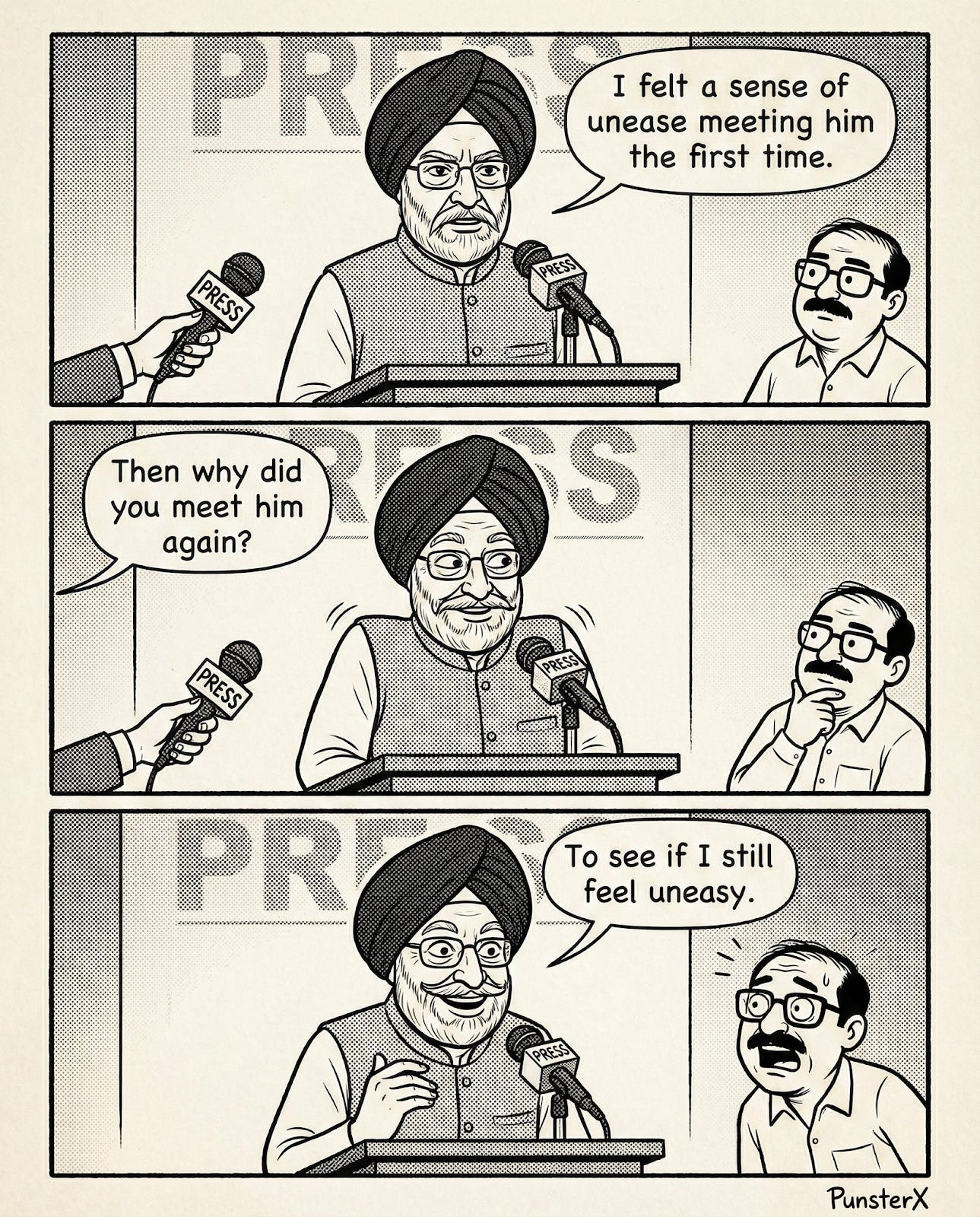
Deep dive
AI governance at the edge of democratic backsliding, a report by the Internet Freedom Foundation IFF and the Centre for the Study of Organised Hate (CSOH) does some important context setting. The AI Impact Summit is to be held in New Delhi from February 16. This report “offers a concise background on the contemporary discourse in the run-up to the Summit, while highlighting key concerns raised by civil society.”
Prime number: Rs 350 crore
Shah Rukh Khan remains India’s highest-paid actor. As per Hollywood Reporter, he tops the list after making more Rs 350 crore from his profit share in Pathaan.Opeds you don’t want to miss
When the home ministry mandates singing all six verses of Vande Mataram in attention before Jana Gana Mana, it “ignores what the Constituent Assembly deliberately chose [to have only the first two verses sung]. It disregards Article 51A [elevating the anthem above the song] … It violates the principles in Bijoe Emmanuel [where the apex court said that standing up for but not signing the anthem was not disrespectful],” Sanjay Hegde points out.
National security was indeed germane to the president’s address and although MPs are restricted from citing material not related to the business of the House, “the absence of an absolute ban and the provision for members to quote from written material if they authenticate the content should have served as a go-ahead for Gandhi” to read from Four Stars of Destiny, says the Deccan Herald. Plus, speaker Om Birla’s “ensuring the prime minister’s absence from the House was not the appropriate response”.
Excluding domestic workers from wage protection amounts to constitutional abdication, writes Sanjiv Kumar:
“The argument that domestic labour is merely an extension of household responsibilities—and therefore resistant to legal valuation—rests on deeply gendered assumptions. What is unpaid within a family cannot, by constitutional logic, be deemed unworthy of remuneration when performed by another woman for survival. Such reasoning invisibilises skill, effort and risk, and normalises wage theft under the guise of informality. The Constitution does not permit such distinctions.”
After Ajit Pawar’s passing, the BJP has new compulsions in Maharashtra, says Sunil Gatade:
“Post-Ajit Pawar, the BJP’s attempt is to totally dominate the politics of the state. A weak and rudderless NCP allows the BJP to advance its agenda while marginalising its other ally, the Shiv Sena led by Eknath Shinde, who has his own mind and is signalling that he must be counted. In fact, the politics of Maharashtra has come to a crossroads, and the nimble-footed BJP is making all attempts to turn itself into a “double engine” by speedily taking along the feeble post-Ajit NCP, in a shrewd move aimed at gobbling it up.”
Apoorvanand reflects on why India’s youth are not reading and when they read what they read.
Author Manjushree Thapa, who helped orchestrate the multi-year effort of her father and Nepali diplomat Bhekh Bahadur Thapa’s memoir, explains why it is a good idea to get our elders to document their lives, big or small. Doing so allows us to “truly know them as individuals” as well as to generate a “proverbial first draft of history” and “build up collective memory”.
Manmohan Bahadur discusses the need to combine HAL’s expertise with private sector capabilities. “The idea of locating strategic infrastructure close to the border should not be repeated as in the C-295 aircraft factory at Vadodara, Gujarat. Production of the AMCA must be in the hinterland, well connected to, and not far from, India’s mecca of aviation — HAL’s Bengaluru airfield.”
Despite the myriad challenges of Indian train travel, the journeys are pleasurable and affordable, not to mention sustainable, writes Rahul Bhattacharya in this love letter to the Indian railways.
Listen up
Academics Louise Tillin and Yamini Aiyar excavate the real meaning of “double-engine governments” and their relationship with growth and development.
Watch out
There is such little conversation happening publicly between India and Pakistan, that a conversation on even a grim subject like nuclear flashpoint is exciting. In two new papers from Carnegie’s Nuclear Policy Program and the Nautilus Institute, experts on India and Pakistan’s approach to nuclear policy and the tension examine the question. First, there is Moeed Yusuf and Rizwan Zeb’s, “A Quarter Century of Nuclear South Asia: Nuclear Noise, Signalling, and the Risk of Escalation in India-Pakistan Crises”, Second, Rakesh Sood’s “Escalation Dynamics Under the Nuclear Shadow – India’s Approach” . Yusuf, Zeb and Sood join George Perkovich, Sitara Noor, Sushant Singh and Sadia Tasleem for a conversation on how India and Pakistan manage nuclear escalation.
Over and out
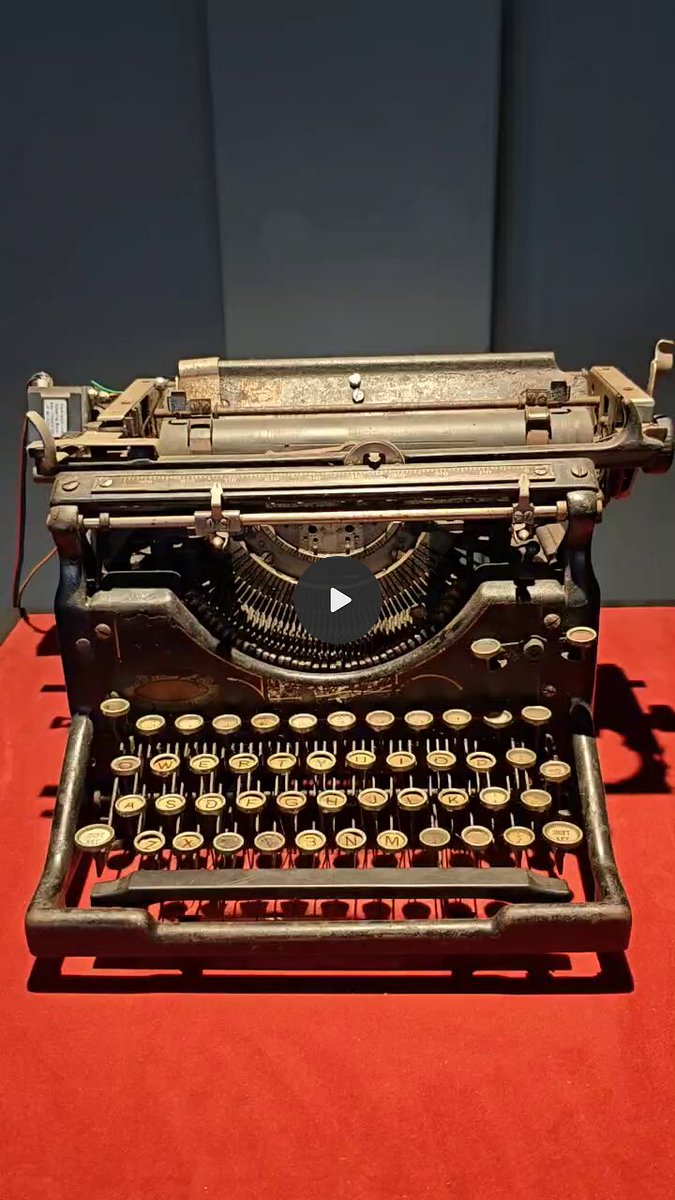
The Berlinale may have tied itself in knots about not being political and paying a price, but the Kochi biennale is clear. Suparna Sharma writes that it is “fabulously political. From Ghulammohammad Sheikh’s retrospective to Ali Akbar PN’s sculptures, they tell a story of an India divided yet united. But the work that will haunt me forever is Moonis Ahmed Shah’s typewriter that keeps typing names of disappeared Kashmiris.”

His song, India’s national anthem, is under attack by the Modi government, but Prague has a street named after Rabindranath Thakur. Tagore visited Prague twice in the 1920s (1921 and 1928), writes Paperclip, and was widely seen in the erstwhile Czechoslovakia “as an emissary of peace and international understanding, especially in the face of rising fascism in Europe. He publicly condemned Nazism and expressed solidarity with Czechoslovakia after the Munich Crisis in 1938. His name lives on in Prague’s Thákurova Street (named for him), a bust in the city commemorates his connection.”
Jaya He is a great line to end today’s The India Cable on.
That’s it for today. We’ll be back with you on Monday, on a device near you. If The India Cable was forwarded to you by a friend (perhaps a common friend!) book your own copy by SUBSCRIBING HERE.