
A newsletter from The Wire | Founded by MK Venu, Pratik Kanjilal, Sidharth Bhatia, Siddharth Varadarajan, Sushant Singh, Seema Chishti, and Tanweer Alam | Contributing writers: Kalrav Joshi, Anirudh SK
If you like our work and want to support us, then do subscribe. Sign up with your email address by clicking on this link and choose the FREE subscription plan. Do not choose the paid options on that page because Stripe – the payment gateway for Substack, which hosts The India Cable – does not process payments for Indian nonprofits.
Our newsletter is paywalled but once a week we lift the paywall so newcomers can sample our content. Today is that day. To take out a fresh paid subscription or to renew your existing monthly or annual subscription, please click on the special payment page we have created – https://rzp.io/rzp/the-india-cable.
Snapshot of the day
May 29, 2026
Siddharth Varadarajan
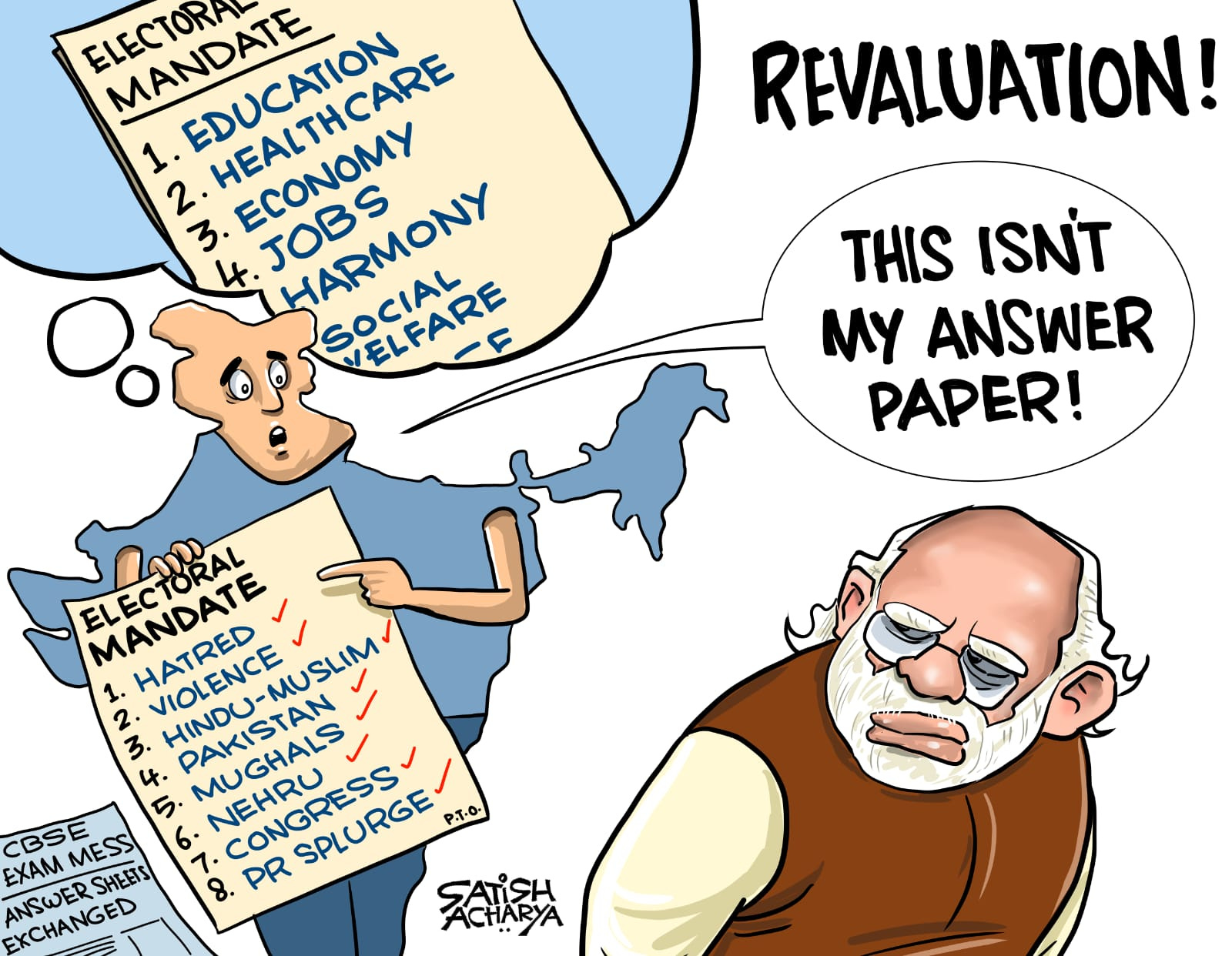
The scandal surrounding the Modi government’s conduct of centralised exams continues to swirl with Congress leader Rahul Gandhi amplifying the exposé by a 17 year old student of the manner in which the Central Board for Secondary Education appears to have rigged the tender process for the contract for evaluation of its exams so that a Hyderabad-based firm, Coempt Eduteck, would emerge the winner. Students have complained of mix-ups in answer sheets and an ethical hacker has gone public about major security flaws in CBSE exams portal. The CBSE, of course, has denied any suggestions of impropriety in Coempt’s selection.
NEET is the other exam (for entrance to medical colleges) that’s been messed up and today the government told the Supreme Court that “PM Modi is personally supervising NEET paper leak issue”. Prompting Rahul Gandhi to tweet, tongue presumably in cheek, “PM Modi also personally supervised the NEET paper leak.”
The Cockroach Janta Party’s X account will remain withheld in India in compliance with the Modi government’s orders as the Delhi high court today declined to provide interim relief. Although counsel appearing for CJP founder Abhijit Dipke pointed out that the outfit is a work of satire and asked the bench to consider having its X account restored while perhaps leaving specific posts withheld, Justice Purushaindra Kaurav said he would need to hear the government before passing orders. The judge also asked the Union government’s review committee to examine the blocking order against the CJP’s X page and granted liberty to Dipke to appear before it virtually from his residence in Boston. The Modi government reportedly invoked national security to block the youth-led satirical outfit’s account.
The Aam Aadmi Party has raced ahead of the Congress and every other party to win nearly half of all the municipal wards in Punjab. The BJP came in fifth, after the Congress, Independents and the Akali Dal.
Propelled by a fall in oil prices as a plan to extend the US’s ceasefire with Iran waits at President Donald Trump’s desk, as well as by the RBI’s dollar sales, the rupee registered its best day since April 2 today when it jumped above 95 to the dollar. It eventually settled at the 95-mark. Next week the RBI’s monetary policy committee will meet and decide whether to change its repo rate – Reuters’s poll suggests economists think the central bank will hold it at 5.25%. Meanwhile India’s foreign exchange reserves in the week ending May 22 fell by $7.5 billion to $681.4 billion, the lowest in over a year. TCA Sharad Raghavan reports that India’s Balance of Payments “stood at a deficit of $30.8 billion in 2025-26, showing that total outflows including trade and investments, exceeded inflows by that much — a 6x increase over the previous year.” What’s hurting India on the capital account are “payments made in advance for imports and an increase in funds parked abroad”, he notes.
“India is seeking to diversify its sourcing network for new-age manufacturing for which it has set ambitious targets,” reports Saurav Anand, “but China’s grip over India’s clean-energy and advanced manufacturing supply chain is only getting stronger.”
India’s digital payments story is often told as a triumph of technology under the Modi government, with Unified Payments Interface driving rapid adoption across the country. Yet beneath that narrative lies a striking contradiction: cash in circulation has surged to a record Rs 42.86 trillion. Even as UPI transactions continue to boom, cash usage is rising alongside it. This paradox sits at the centre of a report by Manojit Saha which suggests that India may even be heading toward the introduction of plastic currency notes.
El Nino may weaken the monsoon more than expected earlier, with the IMD now forecasting that India will receive 90% of its long-term average monsoon rainfall this year – its previous prediction was 92%. Reuters reports that this would mark India’s lowest rainfall in 11 years.
The rains are expected to hit peninsular India next week, later than the May 26 date that was anticipated, so we are to bake in the heat for sometime longer. That includes those of us in Haryana, which has seen temperatures exceed 43°C this summer, but the authorities in the state – which has India’s lowest forest cover – have stopped distributing free saplings citing poor upkeep by recipients. “A complete halt on free sapling distribution is not justified. Instead of stopping public participation, the focus should be on better monitoring,” a forest official told the Times of India. Of course, when we figure out the bug, we make it a feature.
The Wall Street Journal reports that India is offering large subsidies to attract Google’s AI data centers, but nearby communities are facing worsening water shortages questioning whether the benefits of the tech boom outweigh the local environmental costs.
India’s attempt to diplomatically sideline Pakistan has not worked as planned and has instead “backfired” on the Modi government, writes Saif Khalid. The report suggests that Pakistan is currently enjoying stronger international engagement, with attention and outreach from the US, China and several countries in West Asia, despite India’s efforts to limit its standing. Analysts quoted in the piece argue that these developments reflect strategic missteps by the government led by Modi.
The Delhi high court today ordered Shamita Yadav aka The Ranting Gola to take down a tweet of hers from December where she mocked BJP spokesperson and Supreme Court lawyer Gaurav Bhatia for appearing on a TV news debate in a kurta but not very much below it. If Yadav’s tweet stays online it will cause prejudice and injury to Bhatia, said Justice Mini Pushkarna, orally calling Yadav’s remarks in ‘bad taste’ and suggesting that her lawyer Vrinda Grover would have made different arguments ‘if the genders were swapped’.
An investigation has found that Pernod Ricard’s India withheld the real composition and age of its Scotch whiskies, potentially to reduce tax liabilities in the market, reports Reuters. The company is now dealing with multiple probes in India over its business practices. Earlier, its Indian arm was also drawn into a formal antitrust inquiry over claims it secured exclusive retail deals in New Delhi to favour its brands. This adds to another ongoing investigation into alleged collusion with retailers to expand its market share in the capital – allegations the company has denied.
Remember union minister for Road Transport and Highways Nitin Gadkari had dismissed concerns about ethanol-blended petrol last year, challenging critics to cite a single vehicle affected by the rollout of E20 fuel (petrol blended with 20% ethanol), and insisting there have been no complaints while citing approvals from SIAM and ARAI. But a LocalCircles survey offers a more scathing counterpoint: 1 in 2 petrol vehicle owners with cars purchased in 2022 or earlier report a noticeable drop in mileage in the past nine months since the E20 rollout.
An industry that was closed down in Europe due to severe contamination caused by PFAS – per- and polyfluoroalkyl substances (often called “forever chemicals” because they persist in the environment) – is reportedly now operating in India using the same equipment and continuing similar production processes. Communities in Maharashtra are protesting the environmental and health risks, while India still does not have dedicated regulations specifically governing PFAS chemicals, says the Guardian.
The Economist asks whether Vaibhav Sooryavanshi – who has already become the first IPL player to score 500+ runs in the powerplay – could go on to be one of the greatest batters in cricket history. It notes that “it is hard to think of an athlete in any sport who has been so dominant at such a young age,” highlighting how extraordinary his early impact has been.
Santiago Martin’s rise – from selling lottery tickets at a tea shop to building a lottery business worth $2.2 billion across India and then stepping into politics – shows how closely money, business, and political power are often interwoven in the country, says Bloomberg.
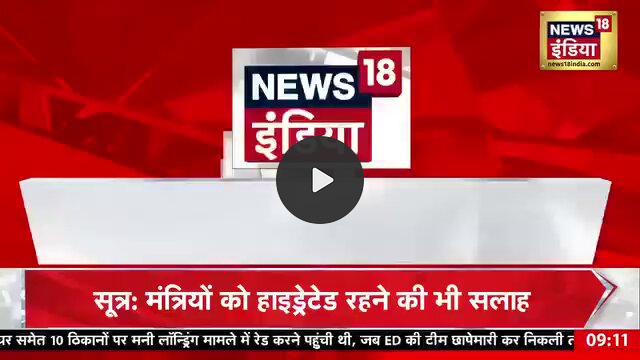
It’s amazing what passes for Breaking News for India’s breathless anchors: Prime Minister Modi chaired a meeting of the cabinet and urged his ministers to drink water as a way of beating the summer heat!

Toolkit Janata Party?
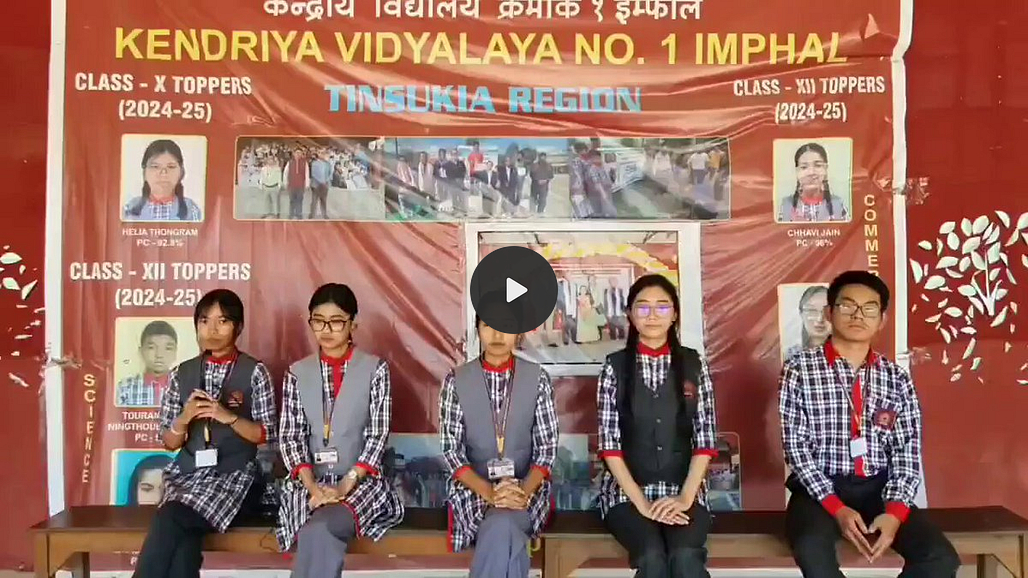
As complaints over technical failures in the Central Board of Secondary Education’s On-Screen Marking (OSM) system mount, hundreds of school principals were sent a social media playbook this week, directing them to boost the board’s rapidly deteriorating image amid widespread backlash, reports Hindustan Times. Following the directives and closely mirroring the language mentioned in the circulated document, multiple schools, including government-run Kendriya Vidyalayas and Jawahar Navodaya Vidyalayas, posted videos defending the digital evaluation process, predominantly Instagram reels. See exhibit here.
The controversy gained attention after a social media user inquired why students from earlier batches were appearing in promotional clips.

VFS under the scanner
Lighthouse Reports-led investigation finds that 11 European and Schengen states flagged over 150 concerns over visa processes of VFS Global, including possible EU norm violations in various countries, including India, reports the Indian Express for data errors, document mishandling, IT failures and alleged slot selling. Following which, a 20-member EU delegation visited India to address the mess.
Myanmar president to visit India
Min Aung Hlaing, who became president of Myanmar last month after a neither-free-nor-fair election and before that military ruler of the country after snatching power from the elected government, will pay a five-day official visit to India starting tomorrow. He will meet Prime Minister Modi, participate in a business forum and travel to Bodh Gaya. The National Unity Government in exile has flagged its ‘deep concern’ over the visit and Myanmar opposition groups based in India have said they will hold protests. Asked today at its weekly press briefing about the Myanmar military’s dark human rights record – Human Rights Watch notes that it has illegally attacked civilians and is driving the country into a ‘humanitarian catastrophe’ – the external affairs ministry dodged the questions with boilerplate answers. The Modi government’s ties with the junta in Naypyidaw too are a subject of international scrutiny.
The Long Cable
The Prime Minister Walked Away. Indian Journalism Followed.
Shyam Tekwani
The suppression of journalists rarely looks like suppression. It looks like a press conference that is never scheduled. A question that is never asked. An editor who already knows which stories will not be commissioned and does not need to be told twice.
Anyone who has spent time covering governments that perform democracy more readily than they practise it knows this. It took a Norwegian journalist, arriving fresh, to say it out loud.
Her name is Helle Lyng Svendsen. She is in her twenties, covers labour markets and local policy for the Oslo newspaper Dagsavisen, and was in the Norwegian capital last week covering her prime minister’s bilateral summit with Narendra Modi. As the two leaders finished their joint appearance and began to leave, she called out: “Prime Minister Modi, why don’t you take some questions from the freest press in the world?”
He walked away without answering. Since becoming prime minister, Modi has not held a full press conference in India; abroad, he has only rarely submitted to unscripted questioning. In Oslo, then, his silence was not news.
What happened next was.
Within hours of Modi leaving Norwegian soil, Svendsen’s Instagram and Facebook accounts were suspended, triggered, she believes, by a coordinated wave of complaints from Indian users. Indian television studios devoted prime time to her impertinence. She was branded a foreign spy, a Congress proxy, a George Soros agent. At a subsequent briefing, a senior Indian diplomat lectured her for 11 minutes about India’s invention of zero and chess.
The question she asked – why does India’s prime minister not face the press? – was never answered. It was not even addressed. It had already been replaced by a more manageable question: who does this Norwegian girl think she is?
That replacement did not happen by accident. It did not require instruction. It required only a media culture that has spent over a decade learning to protect power from scrutiny by redirecting attention toward the person who exercises it.
It is worth being precise about what this is and what it is not.
It is not censorship in the way censorship is usually understood: the midnight knock, the seized press, the journalist who disappears. Those things happen too, and they are worse. But what happened to Svendsen is something that does not require state machinery to operate. It requires only a press that has internalised edicts so deeply that the process is no longer visible even to itself, that certain questions are not questions but provocations.
Twelve years without a full press conference in India is an extraordinary fact. In a functioning press culture it would be the subject of sustained, relentless scrutiny. In India it has become, somehow, unremarkable. The silence has been normalised so completely that when a foreign journalist notices it and says so out loud, the story becomes her noticing, not his silence.
This is not what happened to Indian journalism. This is what Indian journalism became. That becoming did not happen overnight but through the slow adjustment of what feels normal: which questions are reasonable, which framings are responsible, which stories are worth the cost of telling.
The forces behind this adjustment are not mysterious. Political alignment brings access. Access improves visibility. Visibility feeds both market performance and political legitimacy. The pattern was visible in the coverage of Oslo: within hours, Republic TV, Times Now, and a host of social media influencers were not asking why India’s PM refuses to face journalists. They were asking who Svendsen was, what she wanted, who had sent her, and why she had dared.
The story had been flipped before most viewers knew there was a story.
Once that loop closes, the journalist who disrupts it feels not like a professional doing her job but like someone making trouble. And making trouble, in a profession that has made comfort its operating principle, requires a justification that journalism alone no longer provides.
There was a time – imperfect, uneven, never dominant – when journalism in India understood its labour differently. That instinct has not disappeared entirely. It survives in scattered, underfunded, often precarious outposts: in vernacular newspapers that the metropolitan press does not notice, in independent digital outlets operating without institutional shelter, in individual journalists who have chosen accountability over access and paid for it.
They are not relics. They are the only functioning conscience of a profession that has largely traded its judgment for its position.
Svendsen understood something about her own situation that deserves to be said plainly. “I just literally did my job from a privileged corner of the world,” she told BBC Hindi. “You guys in India are the ones doing the hard work, the really heavy lifting.”
She meant it literally. She asked her question from Oslo, absorbed the backlash from Oslo, and had her accounts eventually restored because she operates within a media and legal culture that treats press freedom as a condition of democratic life rather than a concession from it. The Indian journalists she was speaking for – a diminishing number – operate within no such protection.
India ranks 157th out of 180 countries on the World Press Freedom Index. Norway ranks first. The distance between those numbers is not a gap in constitutional provisions. India has those. The distance lies in what journalism has learned to do when it is in the room with power.
Norway did not become the world’s freest press by accident. Neither did India become 157th.
Svendsen was not describing Norway as exceptional. She was describing India as having chosen otherwise.
There is one detail from Oslo that has received less attention than it deserves. After Modi left the room, Svendsen had hoped that senior international correspondents present would follow her lead, that the momentum of her question might carry. They did not.
“I had hoped that when the Indian Prime Minister left the stage, someone else could try to challenge him as well,” she said. The room, full of experienced journalists from around the world, let the moment pass. The failure of nerve that evening was not India’s alone. But India’s was the most instructive, because it was not nervousness. It was habit.
In the footage from Oslo, the moment is worth holding in the mind.
The room is small and crowded. Modi is walking away from the joint appearance. Svendsen is in the second row. She calls out her question. He does not break stride. He does not turn. He continues walking with the practised indifference of a man who sees no reason to answer questions.
The silence in that moment is not empty. It is full of everything that has been decided, long before Oslo, about who gets to ask and who does not have to answer.
What Indian journalism did with that image - how it turned away from the silence and toward the woman who interrupted it, how it made her the story rather than the 12 years that made her question necessary - is not a failure of any individual editor or anchor or channel. It is a portrait of a profession.
Taken, without quite meaning to, by a Norwegian journalist who came to cover a bilateral summit and ended up capturing the habits of Indian media more clearly than many of its own practitioners now dare to do.
The prime minister walked away. Indian journalism followed.
Shyam Tekwani is a professor and columnist specialising in security affairs. Views expressed in this article are those of the author.
Reportedly
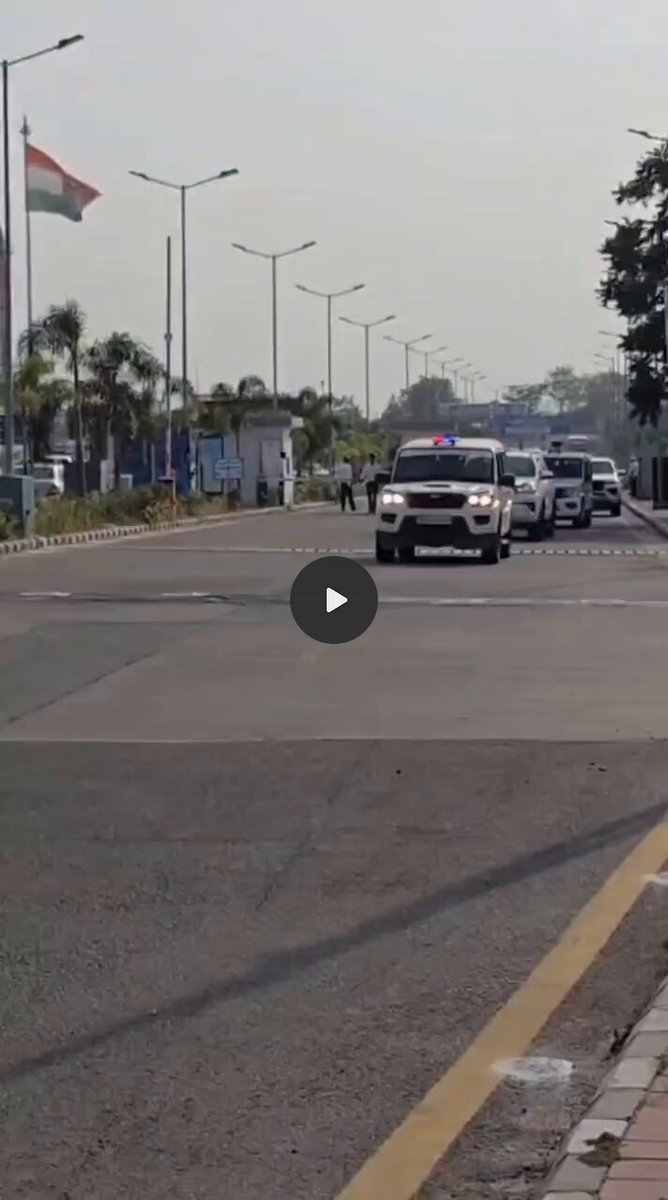
Austerity anyone? Here’s the motorcade of BJP president Nitin Nabin. No carpooling in sight…

Drawn and quartered
Grounds for hope: Ridding Dhaka of gridlock
Anybody who has been to Dhaka in the past decade knows how awful the city’s traffic can be. But an attempt is now being made to replace the Bangladeshi capital’s dysfunctional traffic management ‘system’ run manually by the police with AI-enabled traffic lights and cameras. And the results, reports Surya Mim in Counterpoint, so far are positive:
“Earlier this month, the Dhaka Metropolitan Police (DMP) deployed artificial intelligence (AI) based traffic enforcement signal systems at multiple intersections in Dhaka representing an important and long-overdue shift in policy thinking. For the first time, traffic management is shifting away from purely manual control toward data-driven automation.
“Now, 25 cameras are monitoring vehicle movement, detecting five types of traffic violations, including red-light jumping, entering closed left lanes, lane violations, wrong-way driving, and illegal parking, adapting signals according to traffic density.
“Initial observations from intersections where AI-controlled systems have been introduced appear encouraging. In the enforced intersections, traffic flow has become more organized, particularly during peak hours. Waiting times at signals have reportedly decreased, and the need for constant manual intervention by traffic police has been reduced.”
Deep dive
Kate Sullivan de Estrada, Associate Professor in the International Relations of South Asia, University of Oxford, surveys India’s mixed relationship with the US-led global order.
Prime number: 53
India has an average maternal mortality rate of 87 per one lakh live births but Madhya Pradesh fares worse at 159, and the Sidhi district in the state’s eastern tribal belt even more so at 211. In fact, 53 women here died before, during or after childbirth between April 2025 and March 2026. To get a sense of why this might be, the Indian Express‘s Anand Mohan J. travelled to Sidhi, finding a strained system in an area where many villages remain hard to reach.Opeds you don’t want to miss
Suhas Palshikar examines how the political order established in May 2014 has taken shape and explains what needs to be done to restore the vitality of democratic spirit.
Hussain Indorewala reflects on the punitive use of house demolitions, arguing that “pity the nation that makes a machine of destruction its symbol of development.”
The Supreme Court’s verdict upholding the legality of the contentious SIR is an “unqualified reaffirmation of the letter” of the law “no matter if the spirit seems stifled”, says former election commissioner Ashok Lavasa. The bench, he writes, “left the people with the impression that ‘might is right’ and all that is legal is presumed fair”, all the while being “unmindful of the wrongful exclusion of electors through the ‘logical discrepancy’ tool”.
Madan Sabnavis suggests that the economy’s “Goldilocks” phase may not last much longer. As he puts it, “With so many factors at play, the Goldilocks story seems set to change – and Cinderella’s midnight bells could chime at some point,” signalling a possible shift in economic conditions ahead.
Amid concerns around cow slaughter laws and the falling cattle population, Faizan Mustafa and Abdul Samad question whether a central, total ban on cow slaughter and cattle trade is the right approach noting that “over 20 States in India have laws prohibiting cow slaughter. Only Arunachal Pradesh, Meghalaya, Nagaland, Sikkim, Tripura, Manipur, Mizoram and Kerala do not have such laws. But what is the efficacy of these laws? Have the stringent provisions and enhanced punishments introduced over the last 12 years helped preserve cows, or could such laws ultimately contribute to their decline?”
Bans in the Persian Gulf states on hyper-nationalist Bollywood films like Dhurandhar carry a quiet warning, writes Shanthie Mariet D’Souza:
India’s remittance windfall from the region is not unconditional.
Himadri Sekhar Mistri in his essay ‘The Paper Republic: Ambedkar, Electoral Erasure, and Dalit Citizenship in West Bengal’ writes about his Namasudra kin who found her name deleted in SIR. Himadri with the help of Dr. Ambedkar’s writings analyses Bengal politics and plight of Dalits and Muslims in Bengal.
A lot of issues that take a backseat during the day-to-day political grind finally get some airtime during elections. In Kerala, says Anandan S. reflecting on his coverage of the recent assembly polls, these include the worries of its Kannada and Tamil-speaking minorities in Kasargod and Idukki respectively. He writes: “The awareness of a society’s shared realities, such as these groups’ contribution to its cultural, linguistic and economic progress, is paramount in … recognising the role they play in democratising a multi-ethnic society.”
Listen up
KPS Menon, who was India’s ambassador to the Soviet Union at the time, met Joseph Stalin at the Kremlin in February 1953 and a broad account of what they discussed is already in the public domain thanks to a declassified summary cabled to Washington by the US charge d’affairs based on what Menon himself chose to share with the American diplomat. But what did KPS Menon make of the Soviet leader and his meeting with him? The diplomat – who had also served as India’s foreign secretary – shared his experience with the BBC in 1967; they’ve now made it public as part of their Witness History series.
[Note: The BBC has erroneously misidentified KPS Menon as VK Krishna Menon and the India Cable reproduced this error in an earlier version of this item]
Watch out
The Sita Ram Haveli in Lahore, an iconic residence built in the 1930s which had long fallen to rack and ruin, has been lovingly restored by its new owner. Here’s a video of the finished product.
Over and out
Photographer Raghu Rai, who died last month at the age of eighty-three, spent his career documenting India’s post-colonial journey and its transformation over time. Taran Dugal notes that one of his best-known images, “Chaiwala, Delhi–Mumbai train,” shows a tea seller leaning out of a moving railcar as it travels through the Indian countryside
His term as India’s ruler was a short one but Sher Shah Suri was always ‘lager’ than life…


Despite having relatively low immigration, Japan has embraced Indian food in a big way, with an estimated 4,000–5,000 Indian restaurants - outnumbering McDonald’s outlets across the country. But as the Economist notes, Japan’s beloved Indian restaurant scene is now facing an unexpected threat amid the country’s growing backlash against immigration.
Indian literature has lost one of the last towering figures of modern Urdu ghazal, Dr Bashir Badr, who passed away at 91 and had been bedridden for a decade due to Parkinson’s disease and dementia. A Padma Shri awardee, his poetry moved far beyond literary circles and became part of everyday emotional language. Writing with striking simplicity, he captured broken homes, fading relationships, loneliness, communal wounds, urban alienation, and fragile hope. Perhaps no couplet captures his moral clarity more powerfully than this immortal sher, especially at times like this under the Modi government when ‘bulldozer’ is held as the new form of justice:
Log toot jaate hain ek ghar banane mein/ Tum taras nahin khate bastiyan jalane mein
(People break themselves building a single home/ Yet you feel no pity while burning entire settlements)
That’s it for today. We’ll be back with you on Monday, on a device near you. If The India Cable was forwarded to you by a friend (perhaps a common friend!) book your own copy by SUBSCRIBING HERE.