
A newsletter from The Wire | Founded by MK Venu, Pratik Kanjilal, Sidharth Bhatia, Siddharth Varadarajan, Sushant Singh, Seema Chishti, and Tanweer Alam | Contributing writers: Kalrav Joshi, Anirudh SK
If you like our work and want to support us, then do subscribe. Sign up with your email address by clicking on this link and choose the FREE subscription plan. Do not choose the paid options on that page because Stripe – the payment gateway for Substack, which hosts The India Cable – does not process payments for Indian nonprofits.
Our newsletter is paywalled but once a week we lift the paywall so newcomers can sample our content. Today is that day. To take out a fresh paid subscription or to renew your existing monthly or annual subscription, please click on the special payment page we have created – https://rzp.io/rzp/the-india-cable.
Editor’s note: This post may be cut off in your inbox due to length. Click on the title above to read it in full on Substack.
Snapshot of the day
September 25, 2026
Kalrav Joshi, Anirudh S.K., Siddharth Varadarajan
There is freedom. There is press. And there is India.
What happened in the heart of the Indian capital today suggests that the freedom the Indian press has may not go far beyond the freedom to show up. Mohammad Irfan, a special correspondent with The Wire, travelled to Jantar Mantar Road today to cover the protests against Chief Election Commissioner Gyanesh Kumar, but an officer of the Delhi police took his microphone – his medium of reportage – from his hands and broke it on the ground before detaining him and many others from the spot. Frontline’s reporter Vedaant Lakhera was also forcibly removed by the police because he asked them for names and badge numbers. He was dragged to the road and then released.
Today’s events, in which nearly 100 people were forcibly detained, makes it clear the government has learned nothing from its disastrous handling of the Cockroach Janata Party-led protest at Jantar Mantar in July – when its crackdown only led to larger numbers joining the movement.
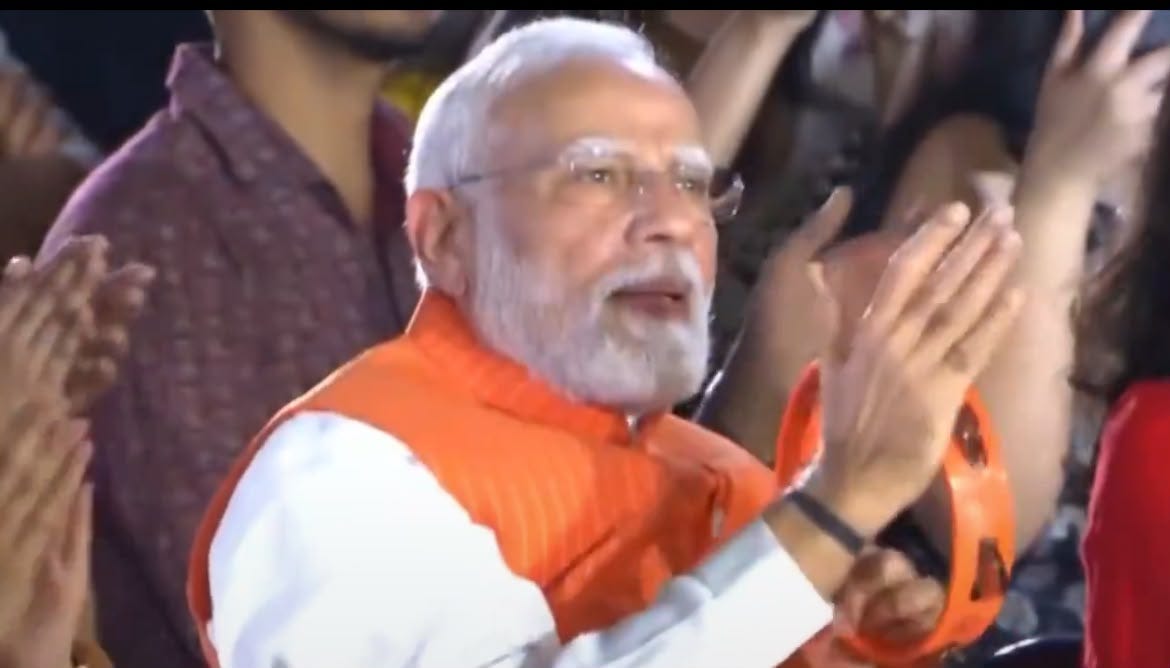
The story of Nero playing the fiddle as Rome burned may be apocryphal but it saw a parallel of sorts in Delhi today that was very much real. Hours after these grotesque scenes unfolded at the designated protest site of the capital and less than two kilometres away, Prime Minister Narendra Modi – who was once called a “modern-day Nero” by the Supreme Court for fiddling while Gujarat burned in 2002 – assumed the role of Tambourine Man at a bhajan clubbing event marking Deen Dayal Upadhyaya’s birth anniversary (of course, unlike in the Bob Dylan song, the streets of the capital around the PM were far from being empty).
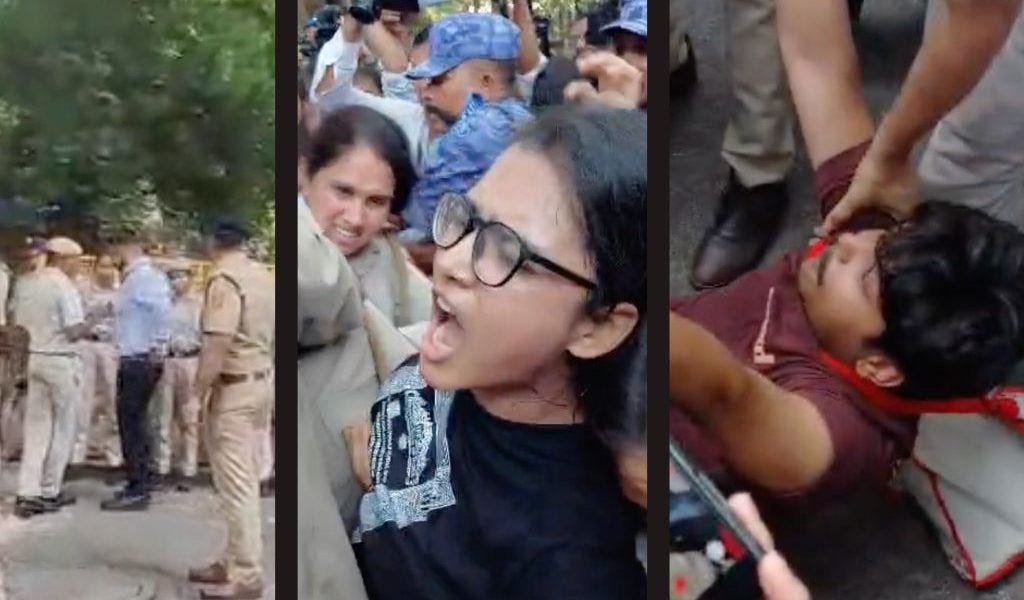
Delhi Police – which comes directly under home minister Amit Shah – manhandled and detained many of the protesters who turned up at Jantar Mantar, including reporter Irfan Khan, AISA president Neha Bora, CPI-ML general secretary Dipankar Bhattacharya, transparency activist Anjali Bhardwaj and psephologist-activist Yogendra Yadav, and took them to stations across the city before releasing them in the evening. There are also allegations that some police officers were not wearing their name tags, reminiscent of what happened in the capital during the crackdown of July 20. The Indo-Tibetan Border Police, a force primarily tasked with guarding India’s borders, was also deployed at Jantar Mantar as peaceful protesters gathered in large numbers.

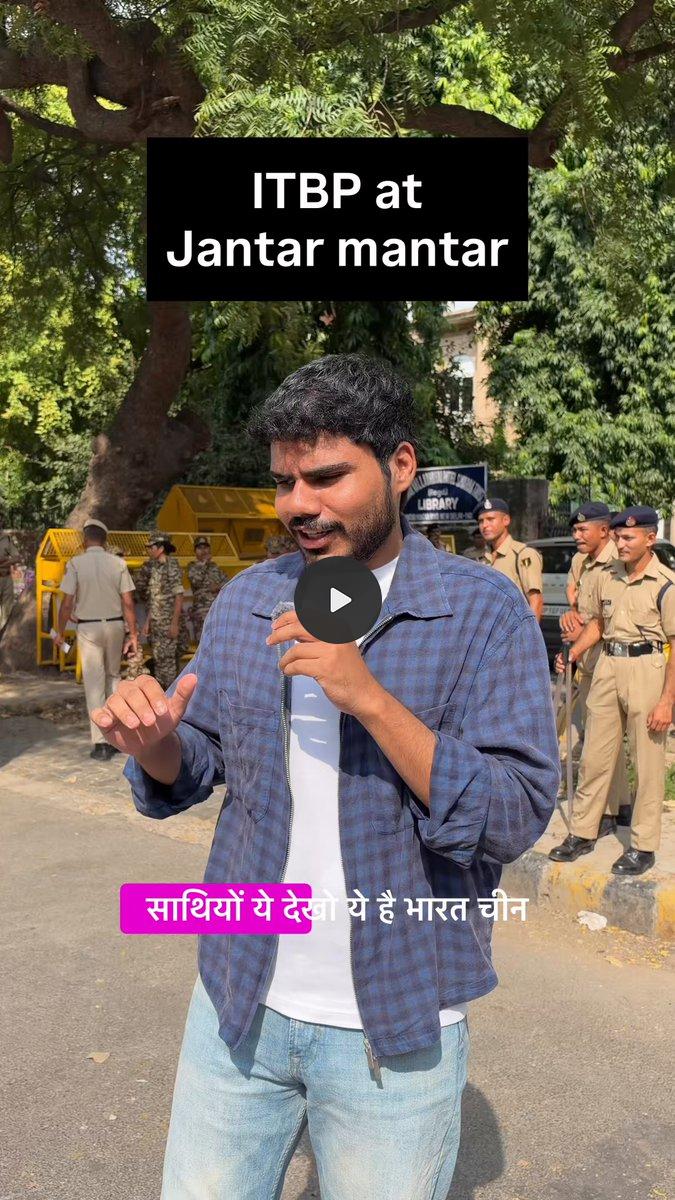
They were there to demand CEC Kumar’s resignation – and even arrest – in view of the Indian Express‘s landmark investigation uncovering discord and dysfunction at the very top echelon of the Election Commission. The newspaper’s revelations have sparked public anger and pressure from the opposition but Modi is yet to say anything.
The question the protesters want answered is more consequential than any police deployment. Bhardwaj points to an RTI appeal she filed after the Commission announced in June 2025 that a special intensive revision of electoral rolls would begin in Bihar and extend across the country. She asked for the files approving that nationwide decision. The response from the Commission’s first appellate authority, as she quotes it, said: “the Commission has so far not taken any decision on initiating a Special Intensive Revision (SIR) across the country in 2025.” If the Commission had announced a nationwide SIR exercise, Bhardwaj asks, who made the decision?
The SIR’s “logical discrepancies” are producing rather curious arithmetic in Uttarakhand. More than 95,000 of nearly 1.73 lakh Form 7 applications for deletion from the electoral rolls concern voters marked “ineligible”, according to the state CEO’s office. The cases arose after the EC’s ERONET software flagged “logical discrepancies” ranging from name and age mismatches to parents having more than six children. Voters who failed to furnish the required documents or attend hearings were marked “ineligible”, triggering the automatic generation of Form 7 for deletion.The Congress party has alleged that the deletion requests were auto-generated to flag minor errors and also worked selectively across the state’s districts to put its voters at a disadvantage.
The demands for answers are no longer coming only from the public and the opposition. Pressure is building within the NDA too. Union minister Chirag Paswan has called on CEC Kumar to publicly address questions surrounding the poll body, saying it would be “problematic if people begin to doubt” the electoral process. Other BJP allies, including the TDP and Upendra Kushwaha’s Rashtriya Lok Morcha (RLM), have also sought clarification from the body. Kumar, meanwhile, was scheduled to address two ‘electoral literacy club’ events in Uttar Pradesh today but it turns out the EC has (or had) postponed them.
For many unanswered, legitimate concerns emerging from this unconstitutional exercise, citizens are still offered claims attributed to unnamed EC sources as “exclusive” stories by the mainstream media, allegedly circulated on a broadcast group. BJP spokespersons, meanwhile, have been aggressively defending the Commission and a call for Kumar to be awarded a Padma Bhushan has entered the fray. The spectacle is bizarre if not particularly surprising, raising an obvious question about how closely the two are aligned. Why not a Bharat Ratna for the man, one might well ask.
Nepal’s Prime Minister Balen Shah made a powerful speech at the UN General Assembly today, highlighting the recent floods in his country but linking them to the urgent need for global and regional cooperation:
“Nepal contributes less than 0.1% of global greenhouse gas emissions. We did not create this crisis, yet we are paying a colossal price for it. Our glaciers are retreating, our mountain slopes are becoming unstable, our rivers are becoming less predictable, and every major disaster threatens to erase years of development.”
“The Hindu Kush Himalaya is home to nearly two billion people. These mountains provide water, ecosystem, agriculture, and livelihood to populations far beyond Nepal. The Himalayas are not peripheral to the planet. They are part of the planet’s life support system. That is why, as an urgent first step, we propose that we establish the Himalaya Climate Resilience Mechanism, led by Nepal, India, and China. Through this mechanism, let us share satellite data and expertise. Let us monitor dangerous glacial lakes. Let us strengthen joint early warning systems.”
“We have built a world with flawless logistics for war and broken logistics for food. And this is not Nepal’s private misfortune. Ask Bangladesh, ask Bhutan, ask India, ask the Maldives, ask Pakistan, ask Sri Lanka, ask any other country in our region, and you’ll hear the same account. Hit by a climate we did not warm, and again hit by the wars we did not start. This tells us there is a lot more broken than meets the eye in global cooperation.”
The Karnataka High Court held that insulting the PM does not, by itself, attract Section 352 of the Bharatiya Nyaya Sanhita without intent to provoke a breach of the peace. The court quashed the case against a shopkeeper accused of making such remarks when questioned about barricades outside his shop.
In a profession that, as Gautam Bhatia notes, pressures students to conform and defer to authority, a group at Hyderabad’s NALSAR University of Law screened Prisoner No. 626710 is Present, Lalit Vachani’s documentary on jailed activist Umar Khalid, in an act of “solidarity”.
The screening followed the cancellation of a showing at IIIT Hyderabad, where eight students associated with an independent campus platform received disciplinary warnings.
Israel has sought to commemorate the participation of Indian soldiers – as part of the British imperial military – in the 1918 Battle of Haifa (which it refers to as the ‘Liberation of Haifa’) and present this as a symbol of Indo-Israeli ties. This framing surely cannot be right, Palestine’s ambassador to India Abdullah Shawesh says, because Britain was the colonising power in this case and Israel would not even exist for 30 years after the battle. What Tel Aviv is doing, he writes, “risks becoming a desperate attempt … to court India through an artificial, exaggerated and historically unjustified narrative”.
Not that India remains to be ‘courted’. Indo-Israeli ties have expanded under Modi’s premiership, with the PM visiting Israel in spite of war clouds gathering over West Asia in February, with India abstaining from major UN General Assembly resolutions on Gaza, and with Indian police thwarting protests in solidarity with Palestinians. But Tel Aviv has come under increasing scrutiny in recent months and yesterday dozens of delegates walked out of the Assembly just as Benjamin Netanyahu began to address the gathering.
A Delhi court has permitted US national Matthew VanDyke and six Ukrainian citizens who are named in an NIA case to travel to their home countries for one month’s time. The NIA, which accuses them of providing training to militias in Myanmar and moving illegally in northeast India, had invoked the UAPA against them in its FIR but did not bring up the anti-terror law in its chargesheet submitted earlier this month. Because of that they all became eligible for bail. Its move came after US ambassador Sergio Gor reportedly brought up VanDyke’s detention with foreign secretary Vikram Misri and secretary of state Marco Rubio in Delhi in what is being described by the opposition as the Modi government’s “Masood Azhar moment” and its succumbing to international pressure. Yesterday’s court order has raised the obvious question of whether the seven will ever come back to face trial in India.
India’s National Stock Exchange made its stock-market debut yesterday, listing its shares on the Bombay Stock Exchange – the older rival it competes with for trading business. The Economist takes a look at their intensifying rivalry.
Although Tamil Nadu mining baron R. Veeramani was arrested last month on child sexual abuse charges, based on a complaint submitted in October last year, a Tamil Nadu Congress leader has come forward and said he had informed the police of allegations against the magnate in November 2024 itself. Following his allegation, the state government has shunted two senior police officers who were posted in Chennai at the time, and formed a four-member special investigation team comprising women officers to investigate the charges against Veeramani.
Subhash Srivastava has been described as the man in charge of counting donations at the Ram temple. But the 2021 letter concerning his appointment names no position at all. Read this report from Akanksha Kumar decoding the so-called authority that may not have been as powerful as is being claimed.
The New York Times reports on the rising racism against South Asians in America under the Trump administration.
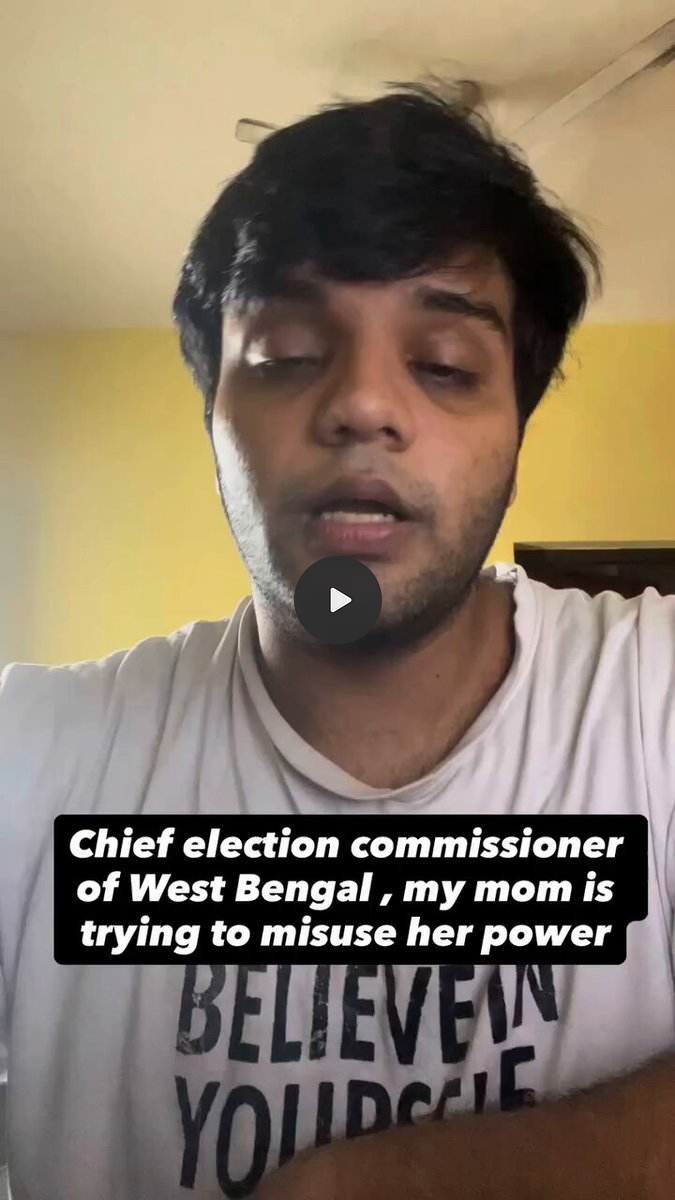
If there are any more questions about the EC and BJP, this might help resolve the matter:

Manipur continues to suffer killings
Four Naga residents of a village in Manipur’s Kamjong right next to the border with Myanmar were killed yesterday afternoon. A local Naga group has alleged that Kuki militants based in Myanmar carried out the attack, killing two of their victims near the village and abducting the others across the border before murdering them there. This incident took place a day after a Kuki power line worker was shot dead in Tamenglong district; Kuki groups have blamed Nagas (the two communities have been embroiled in a deadly ethnic conflict since February). Many Naga homes – the Ukhrul Times pegs the number at 41 based on its sources – in Kangpokpi district were also set on fire on Wednesday.
Meanwhile, the Union government has extended the Armed Forces (Special Powers) Act, 1958, in ‘disturbed areas’ of Manipur, Nagaland and Arunachal Pradesh for another period of six months with effect from October 1 – an indication that the situation in the region remains far from settled.
Christians in Chhattisgarh feel the BJP’s ‘anti-conversion’ heat
Over a thousand individuals in Chhattisgarh’s Dhamtari district have submitted ‘self-declaration forms’ to the collector saying they are attending religious meetings at churches or prayer halls of their own volition and “at their own risk”, Diamond Philus, general secretary of the Dhamtari Christian Forum, claimed to Shubomoy Sikdar. They did that in response to the BJP-ruled state’s new anti-conversion law, just as churchgoers were asked to do in Mumbai after Maharashtra passed its own law. Two churches in Dhamtari have already put up boards at their entrance saying that non-Christians who enter voluntarily do so at their own risk. Philus explained another reason for why they’re doing this:
“A meeting was called at the District Collectorate on September 15. The forum was not informed that right-wing groups would be present. When they said we should not allow people inside the church till they have converted, the government officials supported their stand.”
The big push into Bangladesh continues
Sixty-year-old Murshidabad resident Dablu Sheikh and his three sons – aged 29, 20 and 16 – were picked up by the West Bengal police last month and have been missing ever since. The police claim they were determined to be undocumented Bangladeshi nationals, sent to a detention centre and subsequently expelled. But on what basis was that determination made? Rokibuz Zaman reports that Sheikh and his eldest son had made it to Bengal’s voter rolls after the SIR, while a rights group says all four had Aadhaar and ration cards. Zaman writes that with their arrest – once again during nighttime – the number of Bengali Muslim individuals who were arrested and apparently arbitrarily sent off to detention centres over the last several weeks stands at 16. Zaman also reports that an Assam woman, also Bengali Muslim, who was traumatised by her ordeal of being expelled to Bangladesh last year has now passed away.
The Long Cable
After such knowledge what forgiveness
Badri Raina
Dear citizen, listen well to this historic expose by Reetika Chopra in the Indian Express and ask yourself the question: are we the largest democracy or the most compromised one?
Indeed, it is a question that our beloved prime minister who is so occupied in righting the woes of the world might take up for immediate attention.
Given the details of the internecine ruptures among the three Election Commissioners, two on the one side and one on the other, the two, who, according to the Express, have not once but several times put their strong observations regarding the dubious legality of steps taken by the EC often without any intimation to them in writing, may well now rethink the desirability of their continuance on the Commission .
According to the exposé, Sukhbir Sandhu and Vivek Joshi have felt obliged to take the unprecedented step of alerting the Cabinet Secretary about the goings on within the Commission.
It is to be noted that as per the terms of appointment of the three member Election Commission, the three are equals in all manner of prerogative, the Chief Election Commissioner being ceremonially first among equals.
It is also stated in those terms of appointment that no decisions can be made by the Commission except with mutual consent, or with a majority of two, and that the Chief Election Commissioner has no extraordinary authority to bypass that stipulation.
Indeed, after what has appeared, and more may be in the offing, Gyanesh Kumar might be expected by every law-abiding citizen to consider his own position.
In the meanwhile, the revelations seem already to warrant a complete rescinding of the so called Special Intensive Revision exercise which now seems to have been more a Special Rigging one, and to revert to the electoral rolls that pre-exist this dystopian endeavour of a coloured SIR.
Meanwhile, every harassed and duped citizen cannot must call upon the media as a whole to jettison greed and pusillanimity and go back to good old fashioned journalism — that is if the corporates who own them truly desire a credible democracy in addition to profit maximisation.
Some weeks ago this columnist had popped the question to the CJP that they need now to worry about the subversion of the electoral system per se if all their other efforts were to have meaning.
It is heartening that they have now taken note of this reality and called for Gyanesh Kumar to demit office within 48 hours.
(Badri Raina taught at Delhi University.)
Reportedly
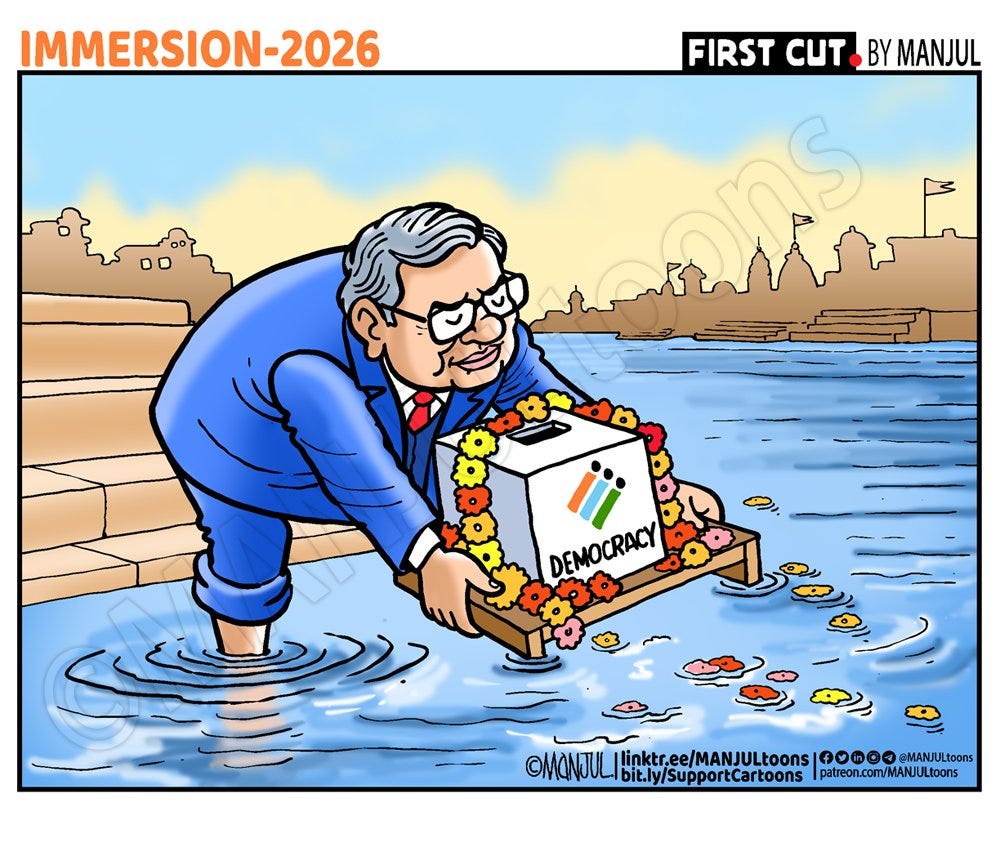
From Delhi to Varanasi, the political tide isn’t just turning. It’s making waves spectacularly, like not seen before in a while.

Drawn and quartered
Deep dive
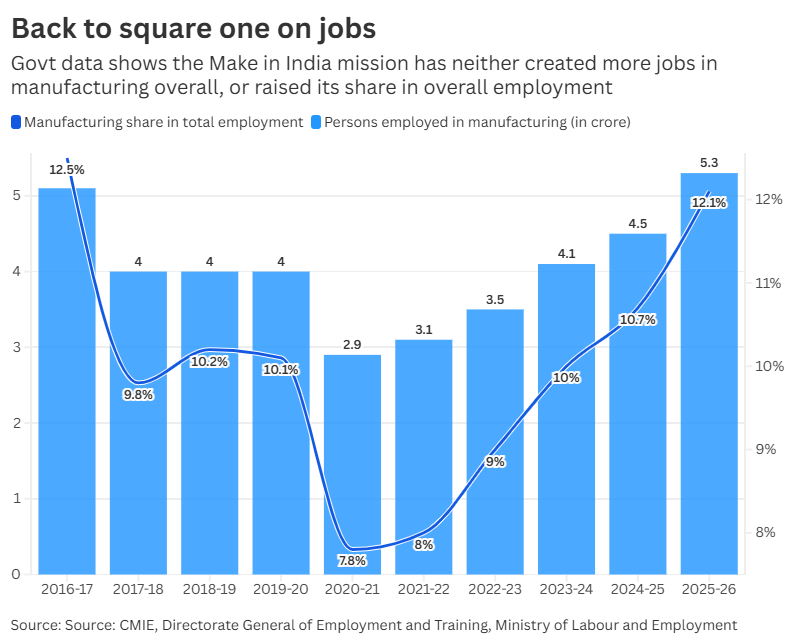
Twelve years after the launch of ‘Make in India’, how much has changed? Across 12 metrics of growth, investment, employment and exports, manufacturing’s gains have been limited and uneven. Sharad Raghavan breaks down the numbers in the Hindu. See also in his thread on X.
Perhaps the starkest finding: manufacturing employment rose from 5.1 crore in 2016–17 to just 5.3 crore in 2025–26. The sector’s share of total employment was largely unchanged over the decade.
Prime number: 99
After dismantling regional forces, allegedly with help from the Election Commission and the courts, the BJP appears to be cultivating replacements: parties regional in name, but ultimately loyal to BJP’s interest. The numbers are damning: 99 of the 111 MPs and MLAs who switched parties since 2022 joined the BJP or its allies, according to an analysis by the Association for Democratic Reforms.
Opeds you don’t want to miss
Karan Thapar has a short but essential primer on what’s wrong with the Special Intensive Revision of electoral rolls being conducted by the Election Commission – and which lies at the heart of ongoing concerns about its partiality.
The Hindu editorial reminds us that Vande Mataram’s rendition must be in the spirit of “unity in diversity”.
Ashok Lavasa raises various pressing questions about the way India’s political parties are funded, including around taxes on donations and shell parties receiving large amounts of money. The matter is serious enough to warrant a court-monitored probe in addition to an audit of all parties’ accounts by the Comptroller and Auditor General, he argues. If there’s anything that needs ‘purification’ it is this, he adds bitingly.
India-China reset has limits, writes Lg Gen HS Panag (Retd). “Negotiations on the boundary dispute must not create the illusion that it is close to settlement. The fundamental problem is that India and China continue to hold maximalist territorial positions… (and there) is little reason to believe that negotiations can reconcile such fundamentally different positions in the foreseeable future… This is where India needs a new approach: improve relations, negotiate the boundary, but manage the LAC through a strategy of denial.”
The Cockroach Janta Party’s clarion call to fix Indian schools has had politicians “frightened because the group’s message has wide appeal – both to the students caught up in the misery machine, and to the parents greasing its wheels”. But what will it take to actually fix the schools? The Economist identifies three glaring systemic issues for starters: (i) India has a highly elitist mass education system, (ii) “education has too often become a racket” and (iii) the system “has become a poor return on investment”.
Opposition parties confronting majoritarian challenges require more than electoral arithmetic, write Rahul Mukherji and Jai Pradad. “They must develop coherent ideological alternatives, manage factionalism, and cultivate durable relationships with civic actors.”
Listen up
Former Chief Election Commissioner SY Quraishi and former Elexction Commissioner Ashok Lavasa join Swaraj Abhiyan Party leader Yogendra Yadav and Karan Thapar to analyse the recent revelations about the functioning of the Election Commission. One conclusion is inescapable: if two ECs allowed themselves to be overruled by the third, i.e. Gyanesh Kumar, this must be because they believed he had the backing of the government, and of the Prime Minister and Amit Shah. And that’s not a good look for the head of what is supposed to be an indepdendent Election Commission.
Watch out
Hear from the journalist who uncovered the story. Ritika Chopra takes us behind her investigation into the EC, explaining how she followed the trail, connected the evidence and brought the reported irregularities to light.
Over and out
Indians continue to be argumentative. Amrit Dhillon reports for the Guardian on the village “debate tournaments where the discussions are respectful and no one gets personal.”
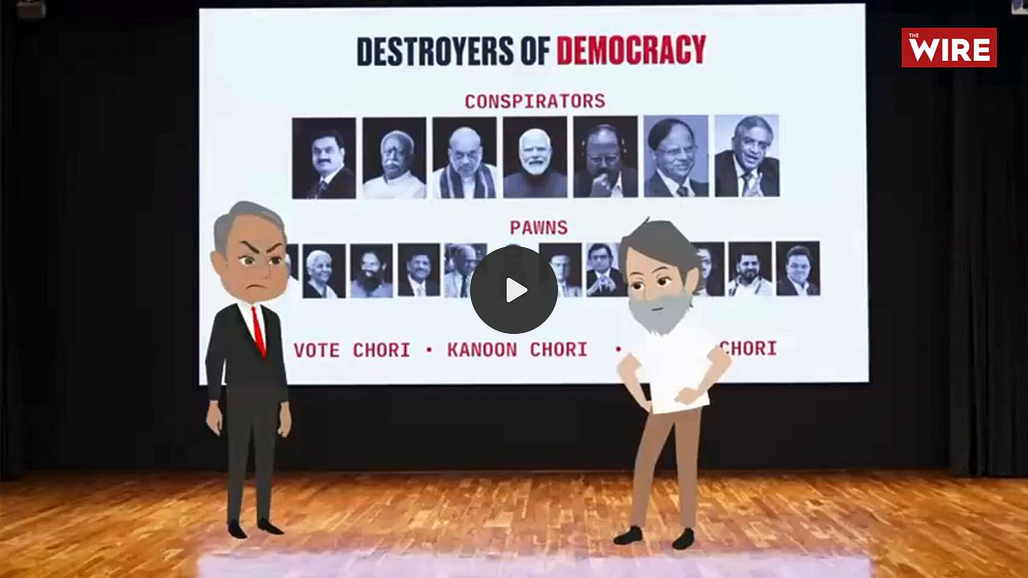
From The Wire’s Pakde Gaye Productions:

That’s it for today. We’ll be back with you on Monday, on a device near you. If The India Cable was forwarded to you by a friend (perhaps a common friend!) book your own copy by SUBSCRIBING HERE.