
A newsletter from The Wire | Founded by MK Venu, Pratik Kanjilal, Sidharth Bhatia, Siddharth Varadarajan, Sushant Singh, Seema Chishti, and Tanweer Alam | Contributing writers: Kalrav Joshi, Anirudh SK
How to subscribe to The India Cable
To subscribe for free: Click this link, enter your email address and select the FREE subscription plan.
Important: Do not select any of the paid options on Substack. Stripe, its payment gateway, does not process payments for Indian nonprofits.
To take out a paid subscription: Visit our dedicated Razorpay payment page to make your payment.
To renew an existing subscription: Use the same Razorpay payment page to renew your monthly or annual subscription.
If you have recently subscribed but are still receiving the truncated version, please write to product@thewire.in with your payment confirmation so we can resolve the issue.
Want to sample our newsletter? The India Cable is normally paywalled, but we lift the paywall once a week so that new readers can sample our content. Today is that day.
Editor’s note: This post may be cut off in your inbox due to length. Click on the title above to read it in full on Substack.
Snapshot of the day
November 27, 2026
Siddharth Varadarajan, Kalrav Joshi, Anirudh S.K.
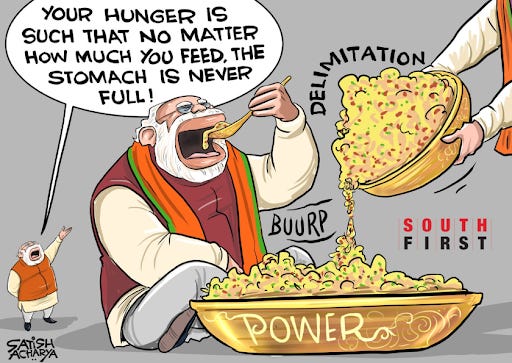
The Union cabinet has cleared the drafts of three bills including two constitutional amendments that will take the strength of the Lok Sabha up to a whopping 850 MPs, with a 50% increase in the representation of every state. In addition, there will be no attempt to change the relative distribution of seats between states on the basis of population for another 25 years.
With these two provisions, the principal rationale for the constitutional amendments as presented earlier this year – to equalise the size of constituencies in demographic terms – goes out of the window. What remains, then, is the prospect of delimitation as an exercise in gerrymandering – which is presumably the actual intent behind the exercise. The fact that Chief Election Commissioner Gyanesh Kumar will be an ex-officio member of the Delimitation Commission is the icing on the cake,
Besides further diluting parliament’s ability to function as an effective check on the executive, increasing the size of the Lok Sabha will also make the reservation of one-third of seats of women a ‘painless’ exercise for male politicians since none of them will now be asked to make way for women candidates.
New draft in hand, the Modi government is confident of winning the backing of two southern parties – the DMK of Tamil Nadu, with 22 Lok Sabha seats, and Jagan Reddy’s YSRCP of Andhra Pradesh, with 4 MPs. The NCP of Sharad Pawar, with 8 MPs, has also said it will go along with the current version of the bills. Speculation is rife that the Sharad Pawar group may ditch the INDIA grouping entirely and join the NDA, in exchange for a few plum portfolios at the centre and in Maharashtra.
The Lok Sabha’s current strength stands at 540 and two MPs – Amritpal Singh and Abdul Rashid Sheikh – are in prison. This means the number of votes required for a two-thirds majority is actually 359, assuming every other MP is present. As Sravasti Dasgupta reminds us, the constitutional amendment had received 298 votes in favour and 230 against in April, with the government falling short by 54 votes to get it passed. But since then, the BJP has gained in numbers through defections in the Trinamool Congress (TMC), Shiv Sena (Uddhav Balasaheb Thackeray) and Aam Aadmi Party (AAP). Thus, if the DMK, YSRCP and NCP support the bills, then the government comes within a hair’s breadth of the required two-thirds majority needed to pass a constitutional amendment, according to calculations by Ananya Chaba.
The Congress’s position is that the strength of the Lok Sabha should remain as is, i.e. 543, that the relative distribution of seats remain frozen for another 25 years, and that one-third of the existing seats be reserved for women.
Unamused by a lamp not being lit at the controversial stone pillar in Madurai’s Thirupparankundram on Karthigai Deepam (Tuesday) despite their interim order to do, Justices Aravind Kumar and Vipul Pancholi of the Supreme Court today slammed the Tamil Nadu authorities for their “brazen and wilful disobedience” of their directions. The bench again ordered that a lamp be lit at the pillar, which is also being referred to as a ‘deepathoon’, this time on Saturday. The court also suspended the board of trustees of the Subramaniya Swamy temple under whose auspices the lamp-lighting ceremony takes place who had decided it was not necessary to light a lamp at the disputed pillar. Show-cause contempt notices were also issued against a range of officials. This situation – where the authorities also disobeyed for a second consecutive year the Madras high court – must be dealt with an ‘iron hand’ lest we have a ‘constitutional crisis’, the apex court said.
Though the two courts had directed that a lamp be lit at the pillar, which stands near the top of the Thirupparankundram hillock – and also near a dargah – it was instead lit at the Uchi Pillaiyar temple that is situated further down the hillock, overseeing the Subramaniya Swami temple at ground level. The norm has been to light the Karthigai Deepam lamp at the Uchi Pillaiyar temple alone but Hindu groups have sought that it also be lit at the pillar near a dargah atop the hill. However, the Tamil Nadu government has argued that the pillar is not a traditional lamppost but a survey structure. Unlike last week’s order, which allowed only a small group to climb the hillock and light the ‘deepathoon’, the apex court now appears to have allowed devotees to light lamps on the hillock too.
West Bengal assembly speaker Rathindra Bose did not act impartially and neutrally when he appointed rebel Trinamool Congress leader Ritabrata Banerjee as leader of opposition in June, the Calcutta high court ruled today, setting aside Banerjee’s appointment. Justice Krishna Rao asked how the speaker could have recognised Banerjee as LoP even though the latter had been expelled from the TMC. Bose also did not give the TMC an opportunity to be heard though he provided several to the rebel faction, the judge also said. The speaker now has ten days to reconsider Banerjee’s appointment. Banerjee had led a mutiny that saw some 60 of the TMC’s 80 MLAs – following its landslide defeat to the BJP in the assembly polls – desert former CM Mamata Banerjee. As a result the party has been split into rebel and rump factions, which are now fighting over its name and symbol.
Even though the Election Commission last month told the Calcutta high court that judicial officers were yet to adjudicate on 815 cases flagged during the special intensive revision – eight months after the exercise formally ended – the electoral rolls of just 11 constituencies in one district in the state, Murshidabad, showed that over 29,000 names were still marked as ‘under adjudication’, Aparna Bhattacharya had revealed earlier this month. Now, two weeks later, Nirvachan Sadan has said that cases that judicial officers are yet to adjudicate on may be forwarded to the relevant electoral registration officer for “doing the needful”. Ironically, it had turned out that special observers selected by the EC had taken lakhs of cases that EROs had approved and sent them to judicial officers for adjudication anyway.
This isn’t the only aspect of the Bengal SIR where the state’s EROs are being overruled or sidelined. Over the last few days officers of the state police or their civilian volunteers have, in several districts, been making contact with residents whose cases are pending before the appellate tribunals that have been set up in the SIR’s wake and collecting documentary information. Bhattacharya has obtained two checklists the police are using, one of which purports that a ‘deleted voter may be considered an Indian citizen if they can give any one of the proofs below’, including land deeds and educational certificates. It seems that electoral officers like EROs and booth-level officers were either not kept in the loop or told about this mysterious drive belatedly. The police, who ordinarily have no role to play in determining residents’ electoral or citizenship status, are conducting their drive days after the Supreme Court directed Bengal’s tribunals to prioritise appeals filed by deleted residents over anti-inclusion ones (filed by the EC).
For an unknown duration of time, the EC’s website contained a security flaw that technically allowed anyone to download voters’ personal information and documents in large quantities – essentially due to a combination of this data being available at a simple right-click and because the reference IDs generated when users book calls with BLOs were highly predictable, reports Vijdan Kawoosa for Reuters. The EC closed the vulnerability yesterday, weeks after Reuters pointed it out to them.
Karnataka’s post-SIR voter rolls contain thousands of cases in which children are listed as being older than their parents, or less than 15 years younger than them, reports Rishita Khanna in The Hindu. The latter – children being less than 15 years younger than their parents – is famously one of the ‘logical discrepancies’ in electoral data that has prompted notices and hearings for swathes of voters during the SIR. But thousands of cases seem to have slipped through the cracks anyway.
The stalled trade deal between India and the US is “close to culmination”, declared commerce minister Piyush Goyal today. “The process and pathway, which was always something which held back finalising the deal, is now taking some shape,” he said at an industry conference. That’s hardly the first – or second, or third, or fourth – time the minister has expressed optimism about the state of trade talks. He has also repeatedly claimed that the deal will cross the finish line when India is assigned a competitive tariff rate relative to its peers. If indeed a deal is struck that pleases the White House and the US Trade Representative, then India’s tariff rate could be 17%, as compared to 18% for Bangladesh and Indonesia and even higher for Vietnam, but 15% for Japan, South Korea and the EU. If it’s not, the rate could be at least 25%.
Ahead of the December 1 march to Parliament, the Centre of Indian Trade Unions has announced a nationwide mobilisation of over one lakh workers, including more than 50,000 women, demanding a universal pension of Rs 21,000, a minimum wage of Rs 42,000 and a tax on super-rich families, among other measures. Addressing a press conference in New Delhi, eminent economist Jayati Ghosh said that the country is witnessing an “inequality emergency”, arguing it was worse than during the colonial period.
Amazon workers and their allies in the gig and platform sectors are striking and protesting in more than 20 countries, including India, from Black Friday to Cyber Monday, UNI Global Union has announced, which is part of the ‘Make Amazon Pay’ campaign demanding union recognition, heat safety, protection against extreme digital surveillance and better workplace facilities. In India, the Amazon India Workers Union (AIWU) and allied organisations are organising rallies at atleast 23 locations, including Delhi, Mumbai, Kolkata, Bengaluru, Ahmedabad, Jaipur, Bhopal, Chandigarh and Patna, the union said.
Akhilesh Yadav and the Samajwadi Party’s promise, made during the release of their manifesto, not to enforce law and order in a communal or casteist way if they are elected to power is a bid to shield the outfit’s Achilles’ heel: namely the perception that it will preside over a ‘goonda raj’ wherein Yadavs and Muslims dominate others. This perception – arising in part from lapses during its past rule as well as from media campaigns run by its rivals – is also being driven home by chief minister Yogi Adityanath ahead of the assembly elections. Omar Rashid writes.
Football presenter Joe Morrison has called out former president of the All India Football Federation (AIFF), Praful Patel, over his potential return, questioning the privileges attached to his roles in the Asian Football Confederation (AFC) and Fédération Internationale de Football Association (FIFA), and describing his tenure as “the worst thing to happen to Indian football in decades”.
Former CJI flags caste bias in judicial appointments
Former Chief Justice B.R. Gavai has written to President Droupadi Murmu today decrying what he calls the “complete disregard to principles of merit and inclusivity” with which appointments have been made recently – i.e. under the tenure of his successor, CJI Surya Kant – to the constitutional courts. These appointments, Justice Gavai said, have favoured candidates hailing from a particular social background at the expense of those from marginalised communities, women and even some forward communities. “It is because I know how such patterns persist through familiarity, through networks, and through unexamined ideas of who ‘looks like’ a Supreme Court judge, that I can no longer stay silent,” Justice Gavai said, also citing law ministry figures showing that some three-quarters of high court judges appointed between 2018 and March 2025 belonged to the general category (read broadly upper caste).
Justice Gavai also referred to a particular case – though he redacted the details – suggesting that a judge hailing from this favoured section of society was wrongfully elevated to a big high court at the expense of a “meritorious and hardworking chief justice”. Krishnadas Rajagopal notes that his letter comes after the collegium recommended that Tripura high court Justice M.S. Ramachandra Rao be transferred to Karnataka, and that Chief Justice Vibhu Bakhru be transferred from Karnataka to Jharkhand.
From ‘Godi Media’ to ‘Godi Tech’
The Internet Freedom Foundation pulls no punches, calling Meta ‘Godi Tech’ over its sweeping takedowns and restrictions in the country. Citing the tech giant’s transparency report, the digital rights watchdog points to “5.44 million items restricted in India from January to June 2026, up from 41,357 in the six months before,” amidst the staggering rise in takedowns and growing censorship of satirists, independent newsrooms and opposition voices.
The Great Anaemia-Mukt Bharat Bluff
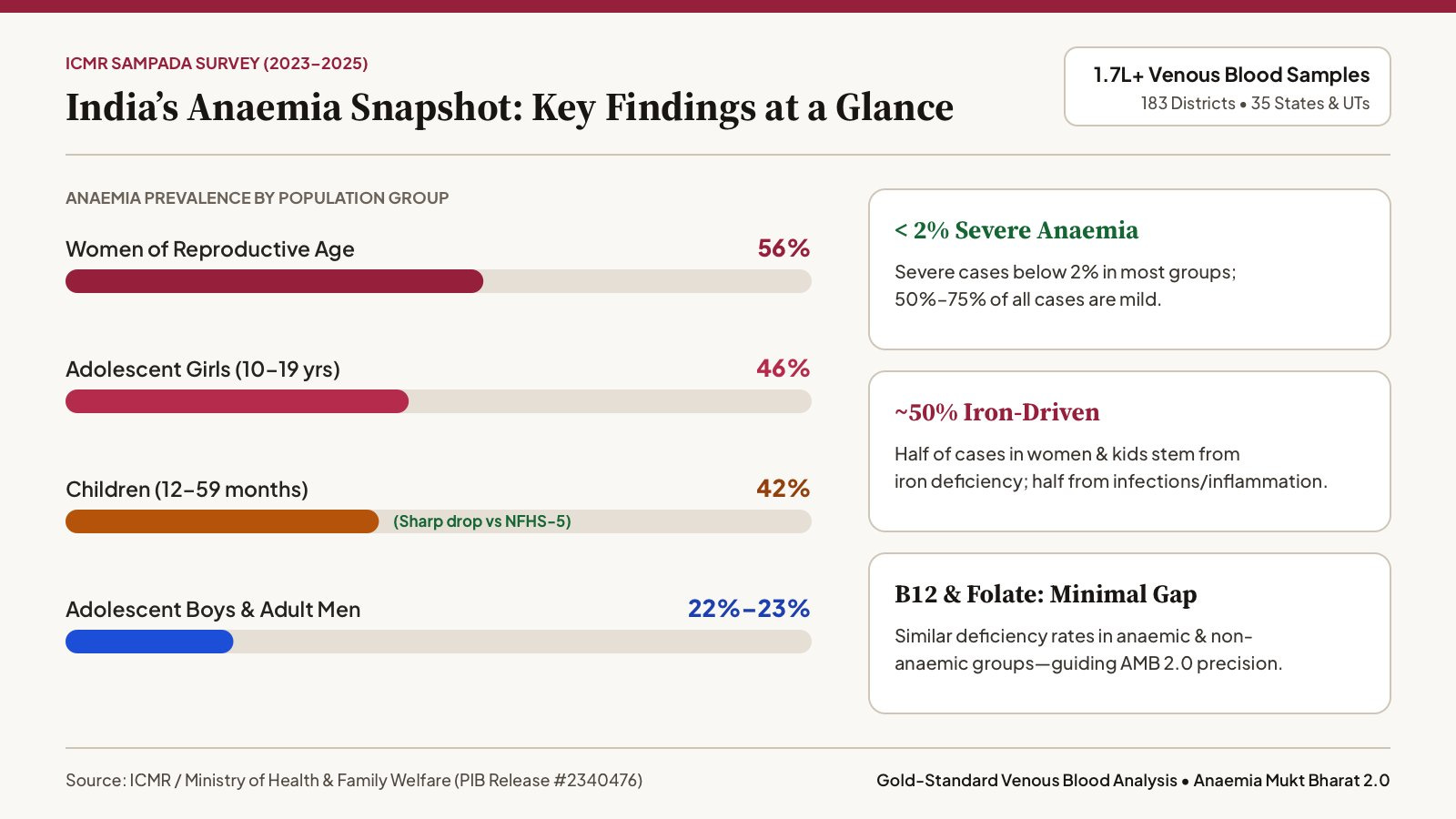
The Modi government’s Anaemia Mukt Bharat strategy, launched in 2018 to tackle anaemia among women, children and adolescents, spent just 38.93% of its Rs 809 crore allocation in 2024-25. Meanwhile, a new national survey by the Indian Council of Medical Research (ICMR) finds that 56% of women of reproductive age in the country are anaemic. The Survey for Assessment of Markers of Population Health, Activity, Diet and Anthropometry (SAMPADA), conducted between 2023 and 2025, lays bare the gap between the government’s spending and the scale of the problem.
Reportedly
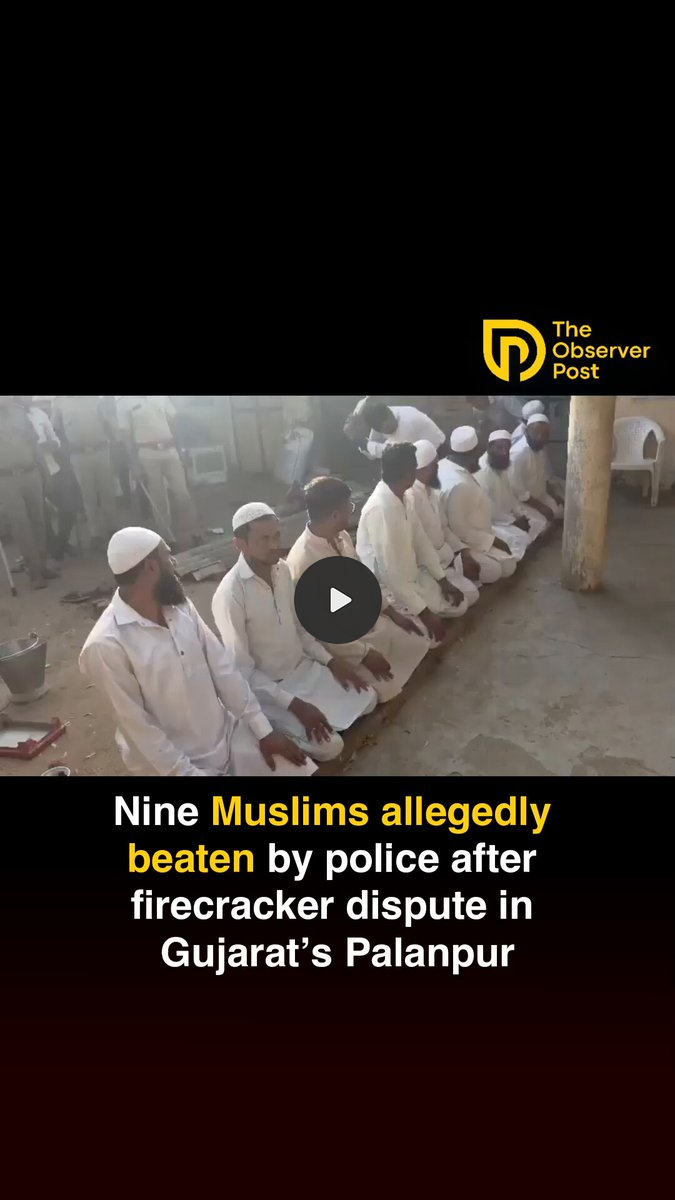
Right wing handles have gleefuly circulated a video clip of the police in Gujarat flogging nine Muslim men.

Drawn and quartered
Deep dive
What happens when the state deploys its full might to silence dissent? Read this archive of the ‘(un)making of Jantar Mantar 2.0’, documenting the MHA’s blueprint for crushing a movement through detentions, road closures, police excesses and targeted harassment on October 10, and how Delhi was brought to its knees by a vengeful state.
Prime number: 4 in 5
About 4 in 5 of the Indian Army’s first batch of roughly 19,000 Agniveers wanted to continue serving beyond their initial four-year term, even as the Modi government announced a major U-turn on the Agnipath scheme in early November, extending the service period for those initially due to leave after four years.
Opeds you don’t want to miss
Attempts to light the Madurai ‘deepathoon’ may be mala fide but the Tamil Nadu government should have taken a course of action that didn’t involve breaching the Supreme Court’s orders, argues The Hindu. “The state could have permitted the limited lighting, leaving the onus on the court, without endorsing the deepathoon claim or compromising religious amity,” it says.
Even if one grants the need for a delimitation exercise in light of India’s increased population, shouldn’t our regional parties think of the invidious way the SIR has been rolled out – especially given that CEC Gyanesh Kumar could play a role in the next delimitation commission – before extending their support to Modi’s agenda, asks M.K. Venu. If this agenda is pushed through, he warns, the public backlash could be much bigger than what we saw starting in June-July.
The Global Times of China has an unsigned commentary on why ‘India’s construction equipment localization drive should not be trapped in an anti-China narrative’.
C.P. Rajendran takes stock of the scientific ramifications of constructing the proposed – and highly contentious – Siang mega-dam in Arunachal Pradesh. Building it in an earthquake-prone region such as the eastern Himalayas is an obvious source of risk, but the dam could also cause damage downstream by trapping sediment. Ultimately,
“While the dam is intended to act as a physical buffer against China, it creates a severe ecological trade-off – one of Asia’s last wild rivers will become a heavily engineered, unstable artificial environment.”
Lieutenant General H.S. Panag (retired) proposes an ‘Agnipath 3.0’ that he says can aid the military’s modernisation and age goals but without sacrificing its combat effectiveness and esprit-de-corps. He fleshes out what this scheme would look like but in a nutshell it would be “based on a modernised Colour-Reserve system combining short-term engagement, differentiated retention as regular soldiers, a trained reserve and assured resettlement”.
Listen up
In his conversation on Energy Empire, ReNew founder and CEO Sumant Sinha explains how India scaled solar from under 3 GW in 2014 to over 160 GW, and what it will take to build a full domestic manufacturing supply chain. Listen here.
Watch out
On Piers Morgan Uncensored, British broadcaster Piers Morgan had to remind BJP spokesperson Shazia Ilmi, “You must let me finish the sentence, it’s my show” as they clashed over why CJP leader Saurav Das was barred from travelling to the UK. Das, too, reminded Ilmi that she wasn’t on Arnab Goswami. Watch for Ilmi’s inanities.
Over and out
Comedian and Youtuber Samay Raina has become the first creator globally to reach one million paid channel members on YouTube, a milestone confirmed by its Google India blog.
That’s it for today. We’ll be back with you on Monday, on a device near you. If The India Cable was forwarded to you by a friend (perhaps a common friend!) book your own copy by SUBSCRIBING HERE.