
A newsletter from The Wire | Founded by MK Venu, Pratik Kanjilal, Sidharth Bhatia, Siddharth Varadarajan, Sushant Singh, Seema Chishti, and Tanweer Alam | Contributing writers: Kalrav Joshi, Anirudh SK
How to subscribe to The India Cable
To subscribe for free: Click this link, enter your email address and select the FREE subscription plan.
Important: Do not select any of the paid options on Substack. Stripe, its payment gateway, does not process payments for Indian nonprofits.
To take out a paid subscription: Visit our dedicated Razorpay payment page to make your payment.
To renew an existing subscription: Use the same Razorpay payment page to renew your monthly or annual subscription.
If you have recently subscribed but are still receiving the truncated version, please write to product@thewire.in with your payment confirmation so we can resolve the issue.
Want to sample our newsletter? The India Cable is normally paywalled, but we lift the paywall once a week so that new readers can sample our content. Today is that day.
Editor’s note: This post may be cut off in your inbox due to length. Click on the title above to read it in full on Substack.
Snapshot of the day
November 20, 2026
Kalrav Joshi, Anirudh S.K., Siddharth Varadarajan
Nikhil Gupta, the Indian national who said he was lured into a plot to assassinate the New York-based Sikh separatist lawyer Gurpatwant Singh Pannun by an Indian government official, has been sentenced today by a US court to 235 months – i.e. nearly 20 years – in prison. Gupta was arrested in Prague more than three years ago by the Czech authorities acting on a US request. The official implicated in the plot, Vikas Yadav, formerly of the Research and Analysis Wing, was indicted by the US in 2024 but has yet to face trial. Devirupa Mitra has the full background to the story. India has yet to react to Gupta’s conviction, let alone sentencing.
While Uttar Pradesh, Rajasthan and Madhya Pradesh have moved ahead with the Special Summary Revision (SSR) of electoral rolls, West Bengal’s exercise appears to have stalled. The Chief Electoral Officer’s office has suspended the release of the SSR draft roll, citing “unavoidable circumstances”, without offering any clear explanation. This is particularly striking given that Bengal published its SIR rolls in February 2026, while other states have proceeded with the subsequent revision.
The US Commission on International Religious Freedom (USCIRF) has doubled down on its criticism of India over the SIR of electoral rolls. After its earlier warning that the exercise was targeting religious minorities, USCIRF Commissioner Gene Mills has now condemned what he called the Indian government’s “expulsion of its own citizens based on their Muslim faith”, describing it as a “shocking escalation” of tactics targeting religious minorities. Commission chair Asif Mahmood separately accused the government of “targeting Muslim citizens by removing them from voter rolls, calling them ‘foreigners’, and now illegally deporting them”.
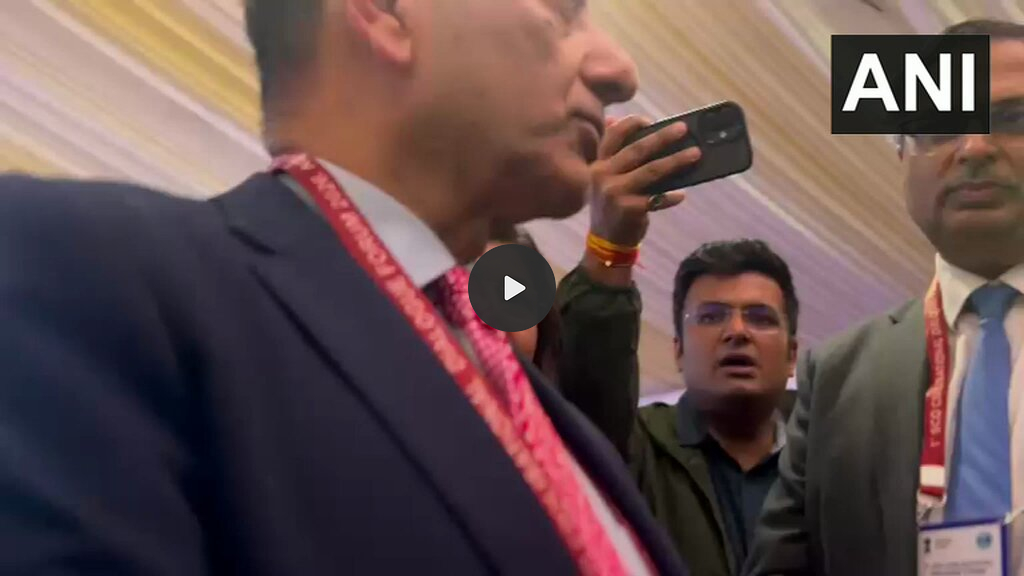
Hours after Pakistan’s climate change minister Musadik Masood Malik landed in New Delhi on Friday, the Ministry of External Affairs (MEA) put out a statement stressing that India had invited every member of the Shanghai Cooperation Organisation (SCO), including Pakistan to the first SCO Civilisation Dialogue, as the opposition continued to criticise the government. In a post on X, Congress pointed to Malik’s remark in June that Pakistan would “cut off those hands” that tried to control its waters. Malik has been among Islamabad’s sharpest voices against India over the Indus water dispute, which remains unresolved with the Indus Waters Treaty in abeyance.
Reporters who tried to get Malik to speak about that after the inaugural SCO event ended were disappointed as the minister skilfully sidestepped their questions:

India skipped the word “genocide” in its response to the landmark International Court of Justice (ICJ) ruling holding Myanmar responsible for genocide against the Rohingya Muslim minority. Instead, New Delhi reiterated its call for the safe and sustainable return of displaced Rohingya to Myanmar. The ruling, delivered yesterday, marked the first time the world court had found a state responsible for genocide. Responding on Friday, MEA spokesperson Randhir Jaiswal said India had “taken note” of the verdict and restated its position on the return of Rohingya refugees to Myanmar’s Rakhine State.
Meanwhile, Sheikh Hasina, Bangladesh’s ousted prime minister who was in office when Myanmar’s military crackdown forced hundreds of thousands of Rohingya to flee across the border, has welcomed the ICJ ruling and called it a ‘proud moment for Bangladesh’. Hasina has also asked a British barrister to approach the Bangladesh High Commission in New Delhi on her behalf for a new passport and National Identity Card (NIC). In a letter dated November 19 to Acting High Commissioner Preeti Rahm, Hasina’s legal representative, Steven Powles KC, followed up on an earlier letter of November 9, seeking a response “as a matter of urgency”. Powles said the High Commission had asked for proof that he was authorised to act on Hasina’s behalf. “I accordingly attach to this letter a signed authorisation to act on her behalf. We look forward to your reply as a matter of urgency,” he wrote. The authorisation, signed by Hasina and dated November 9, allows Powles to submit applications for a new passport and NIC to the High Commission in New Delhi.
In a separate development, former UK minister Tulip Siddiq, Hasina’s niece, has said she is considering legal action against former Bangladesh interim government chief adviser Professor Muhammad Yunus over corruption allegations that led to her resignation from the UK government last year. Speaking on Politics Unleashed, a new podcast hosted by Guto Harri and David Davis, Siddiq described the proceedings against her as a “malicious prosecution”, reports the Guardian.
With the Devendra Fadnavis government in Maharashtra renaming Dadar metro station as ‘Chaityabhoomi’ to mark the spot where Dr BR Ambedkar was cremated, Sanjay Raut of the Shiv Sena (Udhav Thackeray) faction has gone up and demanded that Nagpur be renamed Deekshabhoomi as it was the city where Ambedkar embraced Buddhism. Nagpur is also the headquarters of the RSS.
In an interim order issued today the Supreme Court has permitted, as a ‘one-time arrangement’, the lighting of the ‘deepathoon’ (lamp) atop the Thirupparankundram hillock in Madurai next Tuesday on the occasion of the Karthigai Deepam festival. However the bench, comprising Justices Aravind Kumar and Vipul Pancholi, also stayed the Madras high court Madurai bench’s finding that upheld a right to light the deepathoon as part of an essential practice. Members of the public shall not be allowed to light the deepathoon next week, no items must be placed there after it is lit, and the dargah that is 500 metres away on the hillock must not be disturbed, the apex court ordered. It also said that today’s one-time arrangement must not be cited as a precedent in future arguments.
Tamil Nadu’s government has opposed the lighting of the deepathoon, saying there has been no such custom and that a lamp at the Uchi Pillaiyar temple at the hillock’s base is usually lit on Karthigai Deepam. It has also argued that the deepathoon may actually be a survey pillar rather than a lamp-post. However the Madurai bench of the Madras high court, which has heard petitions by groups seeking to light the deepathoon, has said that preventing people from lighting it would be wrong and has rejected the state government’s argument that it is a survey pillar.
The upcoming Uttar Pradesh state elections will be a major political test, with the Economist saying that “a giant state election in India will signal whether Modi’s power is waning” adding that it “will also say much about who might succeed him in leading the BJP.”
Meanwhile, the return of senior Samajwadi Party leader Azam Khan from jail has triggered speculation over his influence on the SP’s electoral prospects. The New Indian Express reports that Khan could help “consolidate Muslim voters in western UP”, while also triggering “counter-polarisation that could benefit the BJP”. Although legal hurdles may prevent him from contesting the elections, political observers consider him a “strong polarising figure” whose return to active politics could have major implications. His influence extends beyond Rampur to districts such as Moradabad, Sambhal, Bijnor, Bareilly and Amroha, where “narrow victory margins make the consolidation of Muslim votes important for the SP”.
In a letter to the Lok Sabha secretary general, for Delhi High Court judge Yashwant Verma – the subject of impeachment proceedings in parliament over allegations that he had stashed a huge cache of currency notes at home – has said the proceedings are infructuous now that he has resigned. Verma cited a 1978 Supreme Court order and also said his “resignation was not, and cannot be treated as, an acknowledgement or admission of any allegation or finding.”
Last month Saudi Arabia displaced the UAE to become India’s second-biggest source of oil, while Russia remained at the top spot, accounting for around a third of Indian crude inflows at 1.85 million barrels per day. India’s oil imports also climbed to a record of 5.58 million bpd last month. Nidhi Verma reports.
Bengaluru-based Sarvam AI, the face for India’s aims to make AI services in Indian languages, has invited a backlash for selling access to Chinese AI models DeepSeek, Moonshot and Z.AI, reports Saritha Rai. It has cited its commercial interests and said that the infrastructure that hosts its Token Factory – which offers access to multiple AI services including the Chinese ones – is separate and run on compute that is “entirely funded by private money” (Sarvam has been a beneficiary of subsidised compute under the Modi government’s IndiaAI Mission).
Speaking of AI and its relentless pervasiveness, the Madhya Pradesh High Court has strongly criticised the “state government for its “callous and irresponsible” drafting of a reply that cited a non-existent Supreme Court judgment, which the court said was the result of the state having “blindly resorted” to AI tools,” reports the Hindustan Times.
There are brave women and girls in Afghanistan who are secretly defying the Taliban‘s inhumane restrictions. Elena Becatoros reports from Kabul of a 20-year-old woman and her teenaged sister who are quietly teaching girls what they learned in school before the Taliban banned education for girls beyond primary school. She writes of a makeup artist who illicitly runs a salon – after the authorities shut her first one down – as well as of a former football player who is now coaching boys in the courtyard of her home after her professional dreams were dashed. All of them said they took their defiant stand as a way of escaping the slough of despond they were plunged into. They do it despite being terrified of the Taliban, writes Becatoros.
Army Headquarters’ decision to once again allow brigadier and higher-ranked officers to wear regiment and arm-specific symbols is just the latest modification to the Indian Army’s uniform, which from its ‘Lal Paltan’ days two centuries ago has changed a good deal since. Rahul Bedi walks us though the uniform’s evolution which, he notes, seems to be at the behest of the Army chief.
In a state often seen as emblematic of the country’s entrenched caste hierarchies, the Gujarat government has announced a ban on displaying caste-identifying words, symbols, signs or text on private vehicles, including two-wheelers, three-wheelers, cars, buses and trucks.


Trans voters doubly hit by SIR
Vaivab Das finds that transgender voters are disappearing from electoral rolls at more than twice the overall rate during the SIR. “Across the 12 states and Union Territories examined, the number of registered transgender electors fell by approximately 30.84%, compared with an overall decline of 11.92%.”
SC sets aside Odisha land acquisition for Dalmia mine, says locals’ consent mandatory
Prior consent from a gram sabha is mandatory for land acquisition under the 2013 Land Acquisition, Rehabilitation and Resettlement Act, the Supreme Court ruled yesterday, setting aside the acquisition of land in three villages of Odisha’s Sundargarh district to enable Dalmia Cements’ mining plans. In this case, the bench said, the authorities did not even obtain pro forma consent from the gram sabha, leave alone meaningful consent; just paying compensation to those affected is not enough, it added. Justices Dipankar Datta and Satish Chandra Sharma also said that by upholding the acquisition the Orissa high court had diluted a compulsory statutory requirement.
In related news, police in Telangana’s Nalgonda are accused of detaining villagers and public representatives to prevent them from participating in a public hearing for a proposed ethanol plant. Residents are said to be worried about groundwater depletion and pollution.
‘Purification’ at play: EPIC numbers reused, deleted entries figure as is in Bengaluru’s rolls
At least 1,635 individuals in and around Bengaluru were left out of the draft rolls during the SIR on grounds of being absent, having shifted, having died or being duplicated but made it to the final rolls anyway while being assigned their old EPIC (voter ID) numbers, reveals Rishita Khanna. If they were wrongly deleted and subsequently filed Forms 6 to get back on the rolls, then they should have been issued new EPIC numbers as the form is technically for fresh electors. Meanwhile in another set of cases from the city, there are no fewer than 290 people who were deleted during the SIR but whose EPIC numbers were reassigned to other voters. The Election Commission’s handbook prohibits the reuse of an EPIC number once it is issued to someone, notes Khanna.
The Long Cable
Is Modi Losing his Corporate Backers?
Harish Khare
It was only a couple of months ago that the country was being invited to acknowledge and applaud Narendra Modi’s 25 years of ‘public service.’ From a former president of the republic to presidents of the taluka panchayats in Gujarat, everyone was pressed into service to hail Modi’s ‘transformative leadership,’ and to serenade him as ‘vikas purush’. And, of course, we were reminded that Modi was inventor of something called the ‘Gujarat model of development,’ which after 2014 got extended to the rest of the country. The sub-text of all this exaltation was: unlike in the ‘bad’ pre-2014 days when ‘entrepreneurs’ were seen by the government as greedy capitalists, here was a leader who respected ‘wealth-creators’ as partners in the national march towards unprecedented prosperity.
On Thursday, the same Modi went before a chamber of commerce and in a querulous tone ticked off India’s ‘wealth-creators’ for their insatiable appetite for policy tweaks and concessions and favours. The prime minister’s harangue at the centenary celebrations of the Federation of Indian Chambers of Commerce and Industry will be recorded by future historians as the moment when Modi’s entire political leadership model came apart.
To begin with, in front of all those captains of industry, the prime minister betrayed his profoundly inadequate understanding of modern capitalism. Like a neglected spouse, he bemoaned the fact that the private sector has not reciprocated the consideration he had shown towards industry: “There cannot be a greater historic opportunity than this. If you do not benefit from all these efforts of mine, then who will? I am doing this for you, and through you, for the nation...”
Any junior professor at the Delhi School of Economics will tell the prime minister that the corporate sector is not in the business of advancing the megalomaniacal projects of politicians like ‘Make in India.’ Nor is it interested in making the welfare state work better. Since 1991, Indian corporate honchos have had the licence to get into collusive alliances with global capital; our tycoons are now proud to hobnob with the Davos crowd. The rub is that capitalism is an impersonal enterprise, whereas for the prime minister, everything—and, that means everything—is personal.
When he is in his super-righteous zone, Modi likes to see himself as a benefactor, guardian and promoter of corporate India. Unfortunately, for him, it is the sethias who see themselves as his patron and sponsors. First, it was the Gujarat-based ‘entrepreneurial’ crowd which financed and manufactured an ecosystem that enabled chief minister Modi to create for him a pro-business image beyond Gandhinagar. Later, shrewd corporate impresarios sized him up and played to his conceits and ego. The Nano project at Sanand remains a perfect example of collusion between corporate greed and a demagogue’s vanity.
At the FICCI function, the prime minister pointedly reprimanded industry for not increasing workers’ wages. He has perhaps forgotten how only a few months ago, Noida workers protesting for better wages were dealt with brutally by the police. Not just that, trade union activists were picked up under the National Security Act; and, when the judiciary indicted the concerned district magistrate for this high-handedness, the Modi government’s legal team stepped in to protect the district administration. The prime minister knows very well how the trade unions have been defanged and how civil liberties groups have been grounded just to make it easier for big business houses to go about their business. It does not behoove a man who has spent 25 years in public office to pretend to be surprised or offended that workers’ wages have remained stagnant.
After 2014, corporate India as a whole was happy to get on the Modi gravy-train. Industrialists, big and very big, pretended to go along with the prime minister’s image-building projects. Who was out-foxing whom? A businessman is rarely taken in by the politician’s showmanship; for Indian corporate leaders Modi is not the first demanding public figure who is to be humoured and rendered toothless.
It is, in fact, Modi’s problem that he thinks of himself as different from and superior to his predecessors; but, the corporate managers, who have been his enablers and collaborators on the road to New Delhi’s gaddi, would not let themselves be browbeaten. Those who heard the prime minister’s blandishments at the FICCI function are seasoned judges of men and matters and they know—only too well and too intimately—how the Modi cult has been manufactured; they know how the crowds are collected; they are the ones who buy and ‘donate’ electoral bonds to the BJP; and, they are the ones who play the middle-man when political parties are broken up or coalitions stitched up. Which reminds us of the old adage: no man can be a hero to his valet.
And, certainly, the top Indian corporate crowd, now emboldened and empowered with global connections, is not going to give in to the prime minister’s outrageously personalised view of the Indian state. At the FICCI event, he bellowed: “My countrymen (deshvaasi) are entitled to good quality.” My citizens! Such touching immodesty. More than anyone else, the various chambers of commerce do know how a particular gentleman in Nirvachan Sadan has conjured up ‘majorities’ for the ruling party. The bazaar is the first one to smell illegitimacies of the incumbent regime.
The prime minister’s performance at FICCI can only be regarded as an inflection point. For all his pleadings—“this is a friendly government. And this government knows how to maintain friendships” – the prime minister seems to sense his regime has lost a crucial and powerful pillar of support and comfort. Not so happy days are ahead.
(Harish Khare was editor-in-chief of The Tribune.)
Reportedly
US ambasador to India Sergio Gor “is quietly positioning for his return from diplomatic exile”, reports the Daily Mail:
“He’s not just after his old turf [in the White House]. His long-term target is Marco Rubio’s job as secretary of state, should Rubio choose to step aside over the next two years. A blue-chip back-up option is ambassador to the United Nations.”
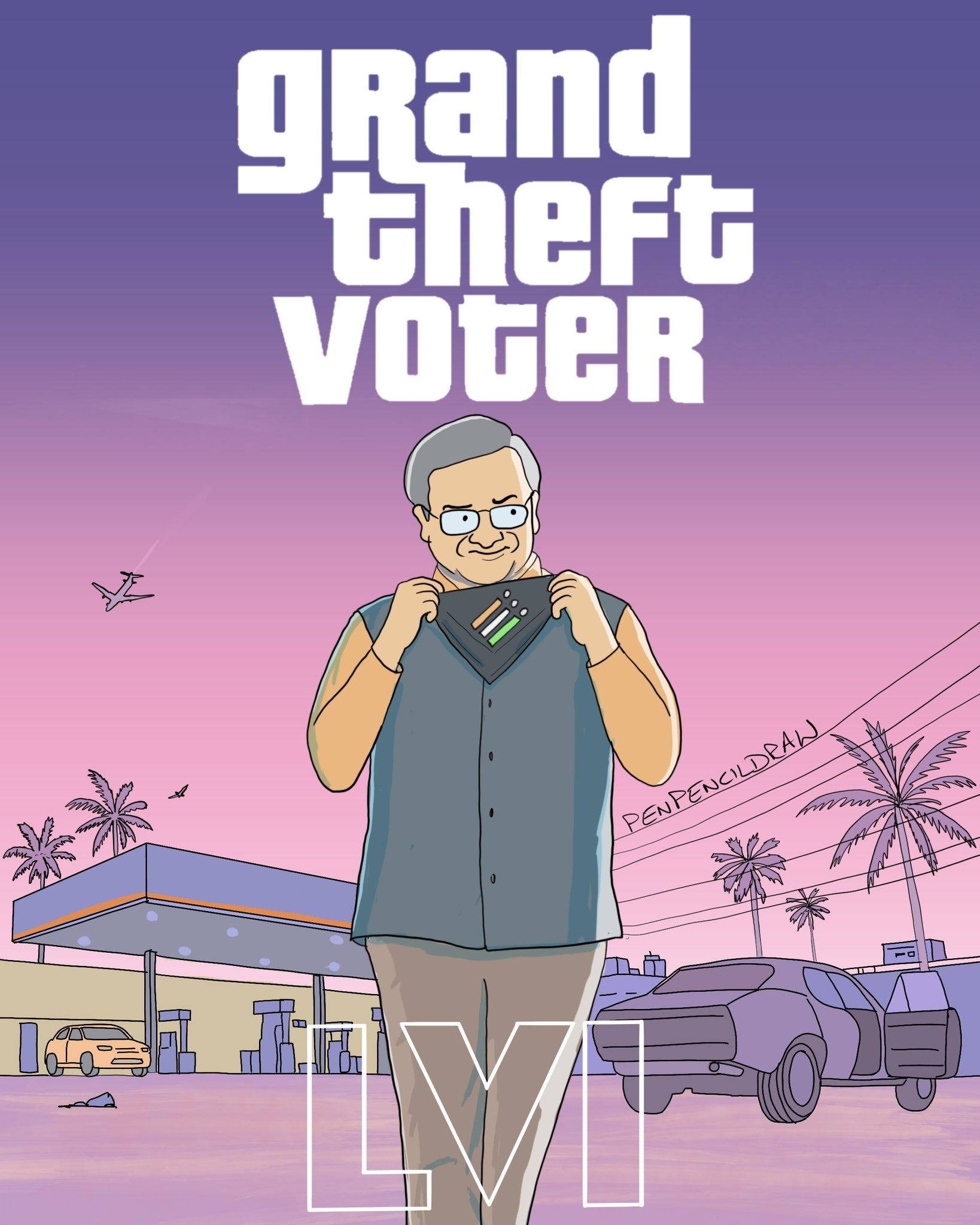
Drawn and quartered
Deep dive
Dalit Voice, the historic anti-caste political journal founded in 1981 by the late journalist V. T. Rajshekar, has been revived as a digital platform at dalitvoice.net. Apart from in-depth analysis of current topics, the site has made available the entire archive of the publication from 1981 to 2010.
Prime number: $65.8 million
There are $65.8 million worth of bulk Scotch concentrates currently stuck at Indian ports due to the dispute between importers and customs authorities over whether the goods benefit from the halving of import duties on whiskey and gin under the Indo-UK free trade deal, reports Bloomberg’s Shruti Srivastava. Reuters has previously reported that the finance ministry, to which customs authorities report, and the commerce ministry are also not on the same page on the issue.
Opeds you don’t want to miss
Now that the International Court of Justice has confirmed one of the Asia’s worst kept secrets – that the Myanmar government is guilty of committing genocide against the Rohingya – Gautam Bhatia reminds us of the Supreme Court of India’s complicity in this crime of crimes.
Pratap Bhanu Mehta writes that “the mania for cash transfers is as much a reflection of the incapacity of the state to do things as it is driven by electoral largesse. The lack of state capacity reflects on national credibility and potentially legitimacy.”
Former economic affairs and finance secretary Subhash Chandra Garg, who had prominently doubted the government’s 7.8% quarterly growth figure, notes in anticipation of the next figure for Q2FY27 that the consumer and wholesale price indices have witnessed high inflation recently. In light of this, GDP growth as well as purchasing power parity – both of them ‘important feel-good parameters for the government’ – hang in the balance, he writes.
Taking stock of an ambitious BJP’s moves in Punjab ahead of the imminent assembly polls, Rahul Bedi observes that the party is raising grievances from the 1984 anti-Sikh riots – for which punishment to Congress leaders has been woefully inadequate – as part of its campaign. “But its timing has a cynical political edge,” he writes, “given that the BJP’s own record in government since 2014 offers scant evidence of any sustained commitment to securing justice for those directly affected by the killings”.
Omair Ahmed reflects on the failure of the mainstream, pro-establishment media to read the electoral tea leaves in India in 2024 and this month in the US mid-terms:
“The role of the media is not merely to be a mouthpiece of power. Credible, on-the-ground reporting, also supplies the government necessary information about what is working and what is not. Despite the very favourable media environment – in fact, maybe because of the Godi media they now have – the Republicans catastrophically misjudged the resentment against their policies, and are now facing a complete rout. A media controlled by the masters might – in the short run – seem like a good deal for the government, but it comes with the price tag of a government unaware of what is really happening in the country.”
As M.S. Dhoni retires from the IPL, K.C. Vijaya Kumar recalls the cricketer as the media saw him over the years.
Listen up
Large-scale layoffs are impacting Indian workers not just in tech but other sectors too. But here, severance is taxable and unemployment benefits are limited. Against this background, Rahul Charkha and KR Shyam Sundar discuss on The Hindu’s InFocus podcast whether the time has come for India to reconsider what social security for such workers must look like.
Watch out
Once positioning itself as a counterweight to majoritarianism and a tool for social action via the PIL mechanism, the Supreme Court over the past 12 years has moved along a different arc: “Deference to executive power has hardened into doctrine, delay has substituted for decision and accommodation has replaced accountability”, as the scholar Ramaswamy Sudarshan puts it. He traced the exact path of this arc in a recent lecture at Heidelberg University.
Over and out
Baljinder Singh, a Dubai-based truck driver from Punjab, has won the Punjab State Dear Diwali Bumper Lottery 2026 for Rs 12 crore, that’s £978,000 or $1.3 million), with a ticket that cost him just 500 rupees. The BBC reports that he intends to continue driving trucks.
That’s it for today. We’ll be back with you on Monday, on a device near you. If The India Cable was forwarded to you by a friend (perhaps a common friend!) book your own copy by SUBSCRIBING HERE.