
A newsletter from The Wire | Founded by MK Venu, Pratik Kanjilal, Sidharth Bhatia, Siddharth Varadarajan, Sushant Singh, Seema Chishti, and Tanweer Alam | Contributing writers: Kalrav Joshi, Anirudh SK
If you like our work and want to support us, then do subscribe. Sign up with your email address by clicking on this link and choose the FREE subscription plan. Do not choose the paid options on that page because Stripe – the payment gateway for Substack, which hosts The India Cable – does not process payments for Indian nonprofits.
Our newsletter is paywalled but once a week we lift the paywall so newcomers can sample our content. To take out a fresh paid subscription or to renew your existing monthly or annual subscription, please click on the special payment page we have created – https://rzp.io/rzp/the-india-cable.
Snapshot of the day
August 26, 2026
Anirudh SK, Kalrav Joshi and Siddharth Varadarajan
A devastating flash flood at the China-Nepal border today killed 157 people, left hundreds missing and devastated settlements, bridges as well as hydropower infrastructure. Kathmandu has said that among the 400 people missing are 133 Indian tourists. According to the Kathmandu Post,
“The flood was caused after an avalanche blocked the flow of the Lhende tributary of the Bhotekoshi and first hit Timure, near Nepal’s border with China at Rasuwagadhi. Much of the settlement, home to hundreds of people, was swept away before the flood surged downstream. With no rainfall reported in the area, residents had no warning of the disaster and were going about their daily routines when the flood struck.”
Experts are also blaming an ice avalanche upstream of the Trishuli river; a 4.4-magnitude earthquake had occurred simultaneously and the role of a glacial lake outburst is being looked into. Chilling footage and images show mud and debris cascading down onto the Tibet-Nepal border crossing, and silt submerging villages. Pilgrims en route to Kailash-Manasarovar are among those struck.
Bihar and Uttar Pradesh are on alert after the National Disaster Response Force warned of a possible flood wave in the Gandak river following a sharp rise in Nepal’s Trishuli river.
India’s stock-market exceptionalism is having a difficult year. A Reuters poll of equity analysts expects Indian shares to be trading below their level at the start of 2026 even by the middle of next year – the third consecutive quarter in which analysts have cut their outlook. Indian equities are already down more than 7% this year and headed for their weakest annual performance in over a decade, even as Japan, South Korea and Taiwan post solid gains. Foreign investors, meanwhile, are increasingly taking their money elsewhere in Asia.
The student protests in Patna over alleged irregularities in the 70th Bihar Public Service Commission examination turned violent yesterday, as police used batons and water cannons to prevent demonstrators from marching towards the Bihar assembly, leaving several people injured. It was amid this crackdown that the extraordinary sight of a six-year-old ‘Gen Alpha’ boy carrying the Tricolour matters – first surrounded by helmeted, baton-wielding police and then by a forest of television microphones in Patna. “Why aren’t students getting jobs? Where did your promises of jobs and employment go, Samrat Choudhary? He should step down,” the boy was seen raising slogans over unemployment and demanding the resignation of the Bihar chief minister, prompting strong reactions from Leader of Opposition Rahul Gandhi, Cockroach Janata Party founder Abhijeet Dipke, the Aam Aadmi Party and others.

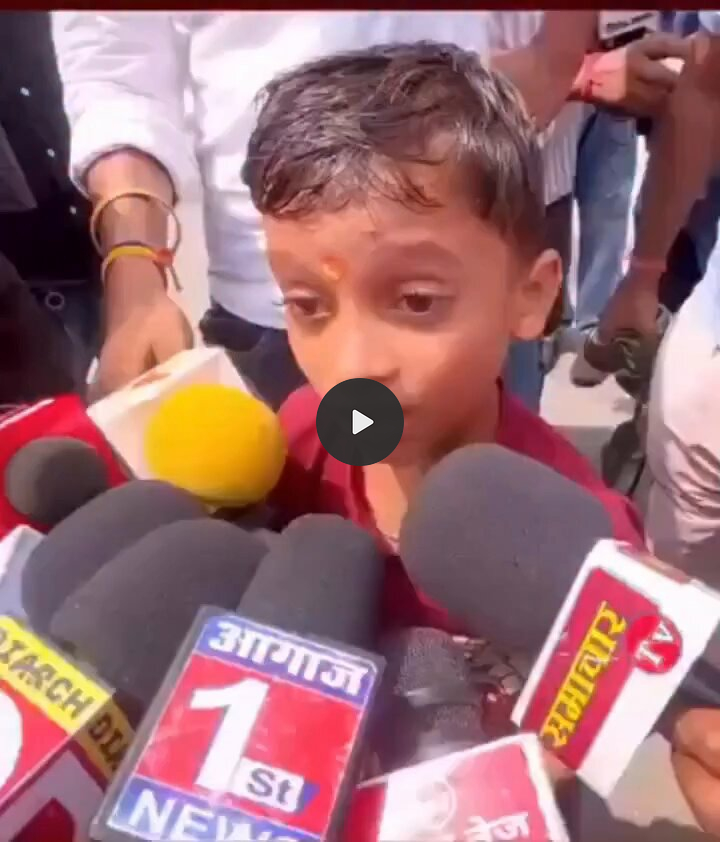
Then came the media scrum. Surrounded by more than 20 microphones – and asked, rather helpfully, whether he was being arrested – the six-year-old boy wanted to know who had given the police instructions to act against the protestors. “Aap SP ho toh kya... police ka yahi kaam hai. Aapko patrolling karne ka kahin jagah nahi mil raha tha toh aap logon ne matha phudwa diya. Half murder hai ye... aapke upar toh 307 IPC ki dhara lagna chahiye.” (So what if you are the SP? Is this what the police are supposed to do? You had nowhere to patrol,? Did you have to make people’s heads bleed? This is half murder... Section 307 of the IPC should be imposed against you.” At six, apparently, he grasped the accountability question rather faster than some of those holding the microphones.
The Bihar police, meanwhile, rejected claims that the child had been “detained”, telling PTI that he was taken to a police station for his safety and later handed over to his mother. His parents – his father a daily-wage worker and his mother a domestic worker – were reportedly advised to be “more careful with him”.
Striking a circumspect tone about Beijing’s potential assistance to Pakistan during Operation Sindoor last year, former chief of defence staff General (retd.) Anil Chauhan said it is not necessary that – and it is currently unknowable whether – China had provided real-time information to the Pakistanis. “That could be falling under the [realm] of speculation,” he said speaking at the Vivekananda International Foundation in Delhi. The presence of Chinese technical personnel, there to service imported military hardware, is “contractual obligation which we must understand”, he added. Gen. Chauhan’s cautious remarks come a month ahead of the BRICS summit in Delhi – which Chinese President Xi Jinping could attend – and after Army and MEA officials had made more direct statements about Beijing’s role.
Gen. Chauhan also clarified reports of an Indian ‘strike’ on the Kirana Hills near Sargodha – which are associated with Pakistan’s nuclear infrastructure – saying that an Indian loitering munition that was seeking radars near Sargodha “have come and hit one of those hills”. Such ‘mistakes’ cannot occur, the former CDS said.
Meanwhile Dhaka announced yesterday that it is moving forward on its plans to acquire Chinese J-10CE fighter jets partly in view of their ‘performing very well in a combat situation’, namely Operation Sindoor. “When India and Pakistan were at war, India’s Dassault Rafale(s) was downed, and it was done by a Chinese J-10. This information is now established,” said Zahed ur Rahman, an adviser to Bangladeshi PM Tarique Rahman. Though Pakistan, currently the only foreign operator of J-10s, said the platform was instrumental in taking down multiple Indian jets including Rafales, Indian officials (including the ex-CDS) have disputed that claim.
Speaking of BRICS, Sushant Singh writes on the tightrope India faces: avoiding Western agendas that could alienate Russia, China or Iran, while resisting attempts by Beijing and Moscow to turn the grouping into an explicitly anti-Western bloc. But India’s room for manoeuvre has narrowed. The Modi government may project global leadership through summit spectacle, he argues, but BRICS also exposes the limits of its claims to lead the Global South or secure India’s strategic autonomy. “His approach offers no concrete solutions to the grave security and economic challenges currently facing 1.5 billion Indians,” Singh notes. “BRICS is only the latest evidence of that glaring political failure.”
India, the world’s largest sugar consumer and second-largest producer, is suddenly importing sugar again. With prices jumping nearly 40% in two months ahead of the festive season, the Modi government has approved 1 million tonnes of duty-free imports – the first in nearly a decade – and told bulk consumers they cannot stock more than 15 days’ supply.
The weather played a part, but so did the maths. Production is now expected to be 30.6 million tonnes, 11% below the government’s earlier estimate, after New Delhi had already allowed 2 million tonnes of exports before stopping them in May. “From allowing exports at the start of the season to ending with an import of a million tonnes is a large variation on production estimates,” analyst Vikram Suryavanshi told the BBC. From exporter to importer within a season: atmanirbharta has encountered a sugar crash. The sugar situation is “a fiasco”, “total failure of policy”, Govt has been “irresponsible” says economist Ashok Gulati.
An SIT constituted on the Supreme Court’s directions sought sanction to prosecute BJP minister Vijay Shah under Section 196(1)(a) of the Bharatiya Nyaya Sanhita for his derogatory and communal remarks against Colonel Sofiya Qureshi, one of the faces of the Operation Sindoor briefings along with Wing Commander Vyomika Singh. The BJP government’s cabinet reportedly discussed the matter in secret – asking officials to leave the room – and then turned down the request of prosecuting its minister.
The Supreme Court has sought the Centre’s response to a plea from a 82-year-old US-based doctor whose Overseas Citizen of India card was cancelled over allegations of “pro-Pakistan propaganda” and activities “inimical to the sovereignty and security of India” by the Modi government. Khalid Qazi wants permission to visit Jammu and Kashmir for a family wedding, offering an undertaking that he will not engage in political activity. When his lawyer stressed that a delay could mean missing the wedding, the bench had a solution: the family could hold another function when he arrives. The matter will be heard on September 7.
A Supreme Court judge has accused Acting Chief Justice of the Rajasthan High Court Sanjeev Prakash Sharma of misusing his administrative powers ahead of his retirement next month, Bar and Bench quoted letters sent to Chief Justice of India Surya Kant as saying. Justice Sandeep Mehta alleged that Sharma manipulated the listing of cases to favour rich litigants and used his position to appoint persons close to him in administrative posts and has sought that the acting chief justice be replaced “with immediate effect”. The CJI has taken note but says he is obligated to follow due procedure when it comes to complaints against judges.
The New York Times notes: ‘India’s Summer of Youth Protests Is Boiling Over.’
Why isn’t the Uttar Pradesh government accepting the request of the 2020 Hathras gang-rape victim’s family members to be relocated either to Ghaziabad or Noida, the Allahabad high court asked earlier this week. “There appears to be an unnecessary resistance by the state to a consideration as was ordered by us vide our orders” dated September and November 2024 as well as January 2025, the bench said, directing the government to rehabilitate and relocate the family members to either of the two cities within three months. The government had offered to relocate them only to Aligarh, Etah or Kasganj.
Female cheetah Nirva has been off the radar for nearly a week in Madhya Pradesh’s Kuno National Park, prompting a search involving more than 100 forest staff, drones and CCTV cameras. Officials say heavy rains may have disrupted her radio collar – which has malfunctioned before, when Nirva effectively disappeared for 22 days in 2023.
Wildlife activist Ajay Dubey, meanwhile, has pointed out that Kuno field director Uttam Kumar Sharma recently found time to warn of ‘dimagi Naxals’ among those claiming to help wildlife – borrowing PM Modi’s latest ridiculous jibe. With Nirva missing, Dubey’s retort writes itself: perhaps fewer ‘dimagi Naxals’ to hunt and more cheetahs.
As UN panel flags instances of discrimination in India, Modi government hits out
In its latest report on India, the UN Committee on the Elimination of Racial Discrimination, which comprises independent experts, has flagged a litany of concerns including ‘police stops and identity checks targeting Rohingya and Bengali-speaking Muslims, migrants and asylum-seekers’, the lack of legal action against law enforcement personnel for arbitrarily detaining and collectively expelling them, statements made by high-level officials in West Bengal and Assam conflating Indian Muslims with undocumented immigrants, reports of Bengali Muslims being disproportionately excluded in the Bengal SIR, continuing discrimination against Dalits, and cases of tribal people being evicted for development projects.
Today the external affairs ministry said that an Indian inter-ministerial delegation led by the solicitor general “had already rejected the sweeping generalisations, unsubstantiated allegations, or tendency to exceed the Convention’s mandate during the review meeting” with the committee. “India rejects any politically motivated highly malicious references in the report with all the contempt that it deserves,” spokesperson Randhir Jaiswal said.
RSS leader’s plan to address meeting in New York triggers protest
Indian-origin New York City mayor Zohran Mamdani does not support Rashtriya Swayamsevak Sangh chief Mohan Bhagwat’s address scheduled to take place in Manhattan this Saturday. He has been ‘incredibly troubled’ to see the “rise of a movement that is predicated on an exclusionary vision” – i.e. Hindutva – because the “vision of India that I was taught by my family … was of a pluralistic society of a secular republic that believed in the belonging of each and every person who was from India”. Bhagwat arrived in New York yesterday and his address, planned by the American Hindus for Engagement and Dialogue organisation, is expected to draw 5,000 attendees.
But Mamdani, the first Muslim and ethnic Indian mayor of New York City, suggested it may not be up to him to ‘cancel’ Bhagwat’s address. Unlike in America though, such pesky issues of powers and jurisdiction wouldn’t stop an assistant sub-inspector-rank police officer from doing their job back here in the ‘mother of democracy’, as comedian Kunal Kamra points out in jest.
Another day in New India, another ridiculous outrage
Sanskar strikes again: the jewellery brand Giva has withdrawn its Rakshabandhan-themed advertisement because right wing commentators a online did not like what the actor, Kriti Sanon, was wearing in it. Sanon was compelled to point out the obvious: “When will we stop telling women what to wear?? … Culture & Traditions are in her heart, not in her neckline!” she wrote. The ‘controversy’ appears to have been created after BJP MP and actor Kangana Ranaut objected to Sanon’s dress. Some other social media users also objected to Sanon tying a rakhi to a dog. Lok Sabha leader of opposition Rahul Gandhi is among those who batted for Sanon, saying that a woman’s sartorial choices are her own to make.
The Long Cable
India is Now Ready to Move Towards a Post-Hindutva Polity
Harish Khare
Except for a very small minority of dimagi bhakts, there is a new national realisation that the Narendra Modi-led Hindutva project has run out of steam. The Gen Z protest, with its epicentre at Jantar Mantar in New Delhi, has now transmuted itself into a nation-wide resistance; and, the young have made their elders see through the structured bogusness of the entire Modi spectacle. More importantly, there is a natural authenticity to the young protesters’ resistance because Modi’s prime ministerial enterprise has sown the seeds of its own dismantlint. The resistance we see all around us is only the organic manifestation of an inescapable denouement that has been in the works for some time.
There was a certain inevitability about the Jantar Mantar eruption. Though the spark and immediate anger had to do with a very corrupt examination system operated by very corrupt Hindutva examination warriors, the Jantar Mantar resistance found a purchase in the national imagination because Modi has, over the past 12 years, lent his name and his popular mandate to an extreme distortion of national purpose.
Twelve years is too long a time in this age of communication and internet and social media for any regime to cover up the gap between rhetoric and reality. Citizens are no longer willing to give Modi the benefit of doubt when he seeks to attribute his own inefficiency and inadequacies to presumed deficiencies and infirmities introduced in our collective affairs by previous regimes. Get cracking, man.
The slogans of Vikas and Viksit Bharat do not stir any excitement because this agenda has only produced a debilitating tycoon-thekedar-thanedar nexus. This is, in fact, nepotism institutionalised. Most senior RSS and BJP functionaries are either – as perhaps Modi would put it – the labarthis of this nexus or are reconciled to it as the small price that has to be paid to ensure Hindutva rules.
Except for a very privileged elite, it was dawned upon the vast majority of Indian citizens and consumers – including those who vote and support the BJP – that the greed and avarice of this tycoon-thekedar-thanedar nexus have clogged the central arteries of our national existence. Never before has the collective well-being been so openly mortgaged to cronies among the corporates, the entire contractor class and the criminals. The Indian mind is no longer allowed to think or question the officially approved dogmas and slogans. Our once vibrant collective imagination has been reduced to shabby docility. Life has become precarious for all those sections of middle and lower middle classes who think they had escaped the trap of poverty.
What the Jantar Mantar protest managed to do was to force each one of us to connect our individual pain, dissatisfaction and frustration with similar pangs of deprivation felt by others. All authoritarian regimes try to isolate their citizens and turn them into atomized subjects, preventing them from coming together to tell their individual experiences and tales of suffering. Once dissatisfied individual voices converge, a new torrent of energy gets released. That is every authoritarian’s nightmare. And, that is precisely what was achieved at Jantar Mantar. Suddenly the Modi regime’s carefully built walls of intimidation and coercion began crumbling.
Not only has the “vikas” mantra turned into a curse, even the Hindutva coating has brought no spiritual solace nor an ease of living for the Hindu majority. The original seduction of Hindutva was the promise, first, of driving Muslims out of political space, then, forcing them out of a few positions they had in the formal employment sector. Many Hindus take satisfaction from the fact that the Modi regime has put the Muslims in “their place.” Fine.
But the marginalisation of the Muslims has not – and cannot – produce ‘acche din’ for the Hindu masses. Because the Hindus are in an overwhelming majority, it is only natural that they would be the principal victims of the tycoon-thekedar-thandedar nexus. It is the Hindu majority youth who crowd the unemployment queue. The Modi model of governance has degenerated into an extractive arrangement by the cronies as far as the majority of the Hindus are concerned.
And, since Hindutva politics has also been organised as an authoritarian arrangement, it is only logical that the Hindu majority would be the largest victim of the regime’s insatiable demand for conformity and submission. It is the Hindu majority – and especially its affluent segments – that receive threatening calls and visits from the income-tax inspector or the Enforcement Directorate officials. It is the Hindu small and medium businessman who is being driven out of the market square. And, it is the Hindu vehicle owner who is being made to buy petrol ‘adulterated’ with Ethanol, even if he can recite all the stanzas of Vande Matram. Perpetrators of economic crimes are religion-neutral.
After twelve years, our Hindutva polity is defined by a rigged economy, an increasingly violent society and a thoroughly corrupt politics. The Hindus are no longer willing to put up with these organised delinquencies. And, they have been ready for any one who will talk a different language.
That is precisely what fascinated the majority of the Hindus about the youth who congregated at Jantar Mantar. These young men and women refused to grant the Hindutva establishment a monopoly of pattiotism or deshbhakti. Suddenly the Modi regime, with its Hindutava signature tune, stood defrocked of all moral authority. Its iqbaal has evaporated in to thin air. The majority of Hindus are ready to move beyond the Hindutava polity.
This Jantar Mantar “movement” can only have a future if it remains a coherent enough force, demanding a return to constitutional values and democratic virtues. The bigoted demagogue has to be dislodged from the pulpit. As a nation ,we will need to find a new common purpose for our collective existence, beyond electoral victories and defeats. The Republic has to be reanimated with a spirit of fairness and openness. The road to a post-Hindutva polity is steep but not too difficult.
Reportedly
Kakoli Dastidar, esrstwhile MP from the Trinamool Congress is now a member of a BJP-adjacent potemkin outfit, the ‘National Citizens Party of India’. But she is so unsure of her new political address that she tags a random social media handle instead of the actual party she is supposedly defending from destruction by Mamata Banerjee.

Drawn and quartered
Deep dive
Listen to the 28th D.S. Borker Memorial Lecture by Justice S. Muralidhar, laced with humour and a vision of the India – and world – he hopes to see in 2047: one without the concentration of political power embodied by today’s strongmen, from Trump and Putin to Xi and Modi.
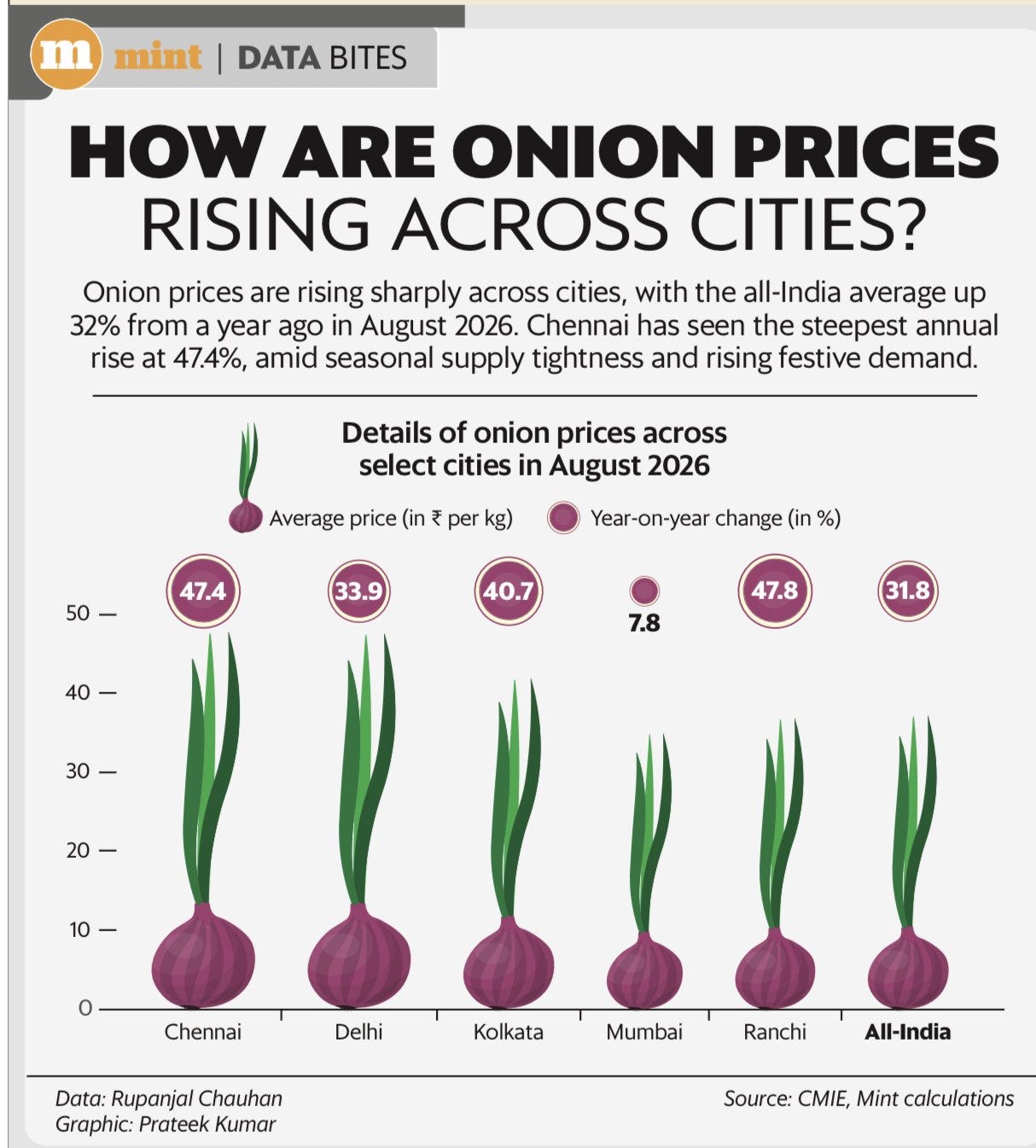
Prime number: 31.8%
Opeds you don’t want to miss
Andy Mukherjee believes the decision to tighten animal acquisition rules at Vantara – the private zoo run by Mukesh Ambani’s son, Anant – could ease investor “scrutiny of Reliance Industries, as Mukesh Ambani seeks to limit reputational risks and ensure a smooth succession”.
Ding Gang writes in the Global Times that while the China-India border talks may look much the same, the real shift is happening away from the negotiating table: the American shadow over the relationship is fading. “This shift is not the preference of any single US government; rather, it is a deeper, structural change: the transactional turn in American foreign strategy, the rise of protectionism, and an increasingly instrumental approach to allies and partners are altering global expectations about what the US can actually deliver. India, in particular, has genuinely felt this shift over the past few years across various concrete issues - tariffs, energy procurement, and technology cooperation. The “special partnership” it once placed such hope in has not always translated into substantive consideration when real interests were at stake.”
On why education has not failed Indian children everywhere, Christophe Jaffrelot points to the stark North-South divide and argues that the policies of the southern states and the reform launched by Manmohan Singh – which made school attendance mandatory for children aged 6 to 14 and required private schools to reserve 25% of their seats for “disadvantaged groups” – have shown that there is a way forward.
There are ‘more unknowns than knowns’ about what India and China have been up to vis-a-vis the border, and yesterday’s meeting in Beijing shows that both sides “are singing from the same hymn sheet in their view that revealing less is better”, says Ananth Krishnan. That may be understandable, but “in the long term, if they are serious about making meaningful progress on the boundary question … India and China are going to have to start communicating a lot more with their publics”.
“There is a particular kind of admission a government makes when it decides that the problem is not the broken toilet, but the camera that photographed it,” says Anand Teltumbde about the reaction in BJP-ruled states to the CJP’s ‘School Thik Karo’ Campaign.
Looking at the marginalisation of Muslims in judicial appointments, MR Shamshad writes that “the judges making recommendations know that many names of those coming from minority communities are stopped or delayed at the government level. The option is to recommend more names from those sections rather than not recommending them or recommending only a few to be blocked by the government. There is no paucity of eminent and well-regarded Muslim lawyers practicing in the constitutional courts, so there is no shortage of a talent pool to choose from, if the will exists.”
Colonel (R) Rajesh Kalia, who retired from the Indian Army in January 2025, writes of how a lifetime of protecting India is outweighed by the EC’s demand that he provide his identity via the SIR. “Anyone can be born in India. But it takes a special kind of endurance to survive the ultimate test of belonging initiated by the Election Commission of India (ECI). For those who have never faced this bureaucratic machinery, the grand interrogation is not a standard background check, it’s a deep-dive into your entire existence, requiring a level of ancestral detail that makes a top-secret military clearance look like a casual chat.”
Listen up
In view of a parliamentary standing committee tabling a report on chronic kidney diseases and calling for a national screening protocol for CKD – which may not show any symptoms at all until it is rather late – nephrologist Dr Rajan Ravichandran and Zubeda Hamid have done a PSA of sorts on what CKD is and who needs to be tested.
Watch out
What sort of challenge have the youth protests posed for the Modi government and what can we expect ahead of the Cockroach Janta Party’s planned march from India Gate to the Delhi police headquarters on September 5 if cases against protesters are not withdrawn? Al Jazeera spoke to Sravasti Dasgupta of The Wire as well as Uday Chandra of Ashoka University, with Shaina NC of the Shiv Sena presenting the government’s views..
Over and out
In the spirit of Hindi-Chini bhai-bhai (or buy-buy), here’s a Chinese robot breaking out into a Bollywood style dance at the opening of a shop in Ujjain Madhya Pradesh.
And in bad news for vegetarians, vegans and Jains…


That’s it for today. We’ll be back with you tomorrow, on a device near you. If The India Cable was forwarded to you by a friend (perhaps a common friend!) book your own copy by SUBSCRIBING HERE.
I quote “And, it is the Hindu vehicle owner who is being made to buy petrol ‘adulterated’ with Ethanol, even if he can recite all the stanzas of Vande Matram. Perpetrators of economic crimes are religion-neutral.”
And
“The slogans of Vikas and Viksit Bharat do not stir any excitement because this agenda has only produced a debilitating tycoon-thekedar-thanedar nexus. This is, in fact, nepotism institutionalised.”
This experiment has degraded richest Indians too, to 31/100 in social index, source Telangana caste and economic survey. It is lower than rich people of Thailand, Vietnam and Singapore. While earlier they were in better position as compared to them.