
A newsletter from The Wire | Founded by MK Venu, Pratik Kanjilal, Sidharth Bhatia, Siddharth Varadarajan, Sushant Singh, Seema Chishti, and Tanweer Alam | Contributing writers: Kalrav Joshi, Anirudh SK
If you like our work and want to support us, then do subscribe. Sign up with your email address by clicking on this link and choose the FREE subscription plan. Do not choose the paid options on that page because Stripe – the payment gateway for Substack, which hosts The India Cable – does not process payments for Indian nonprofits.
Our newsletter is paywalled but once a week we lift the paywall so newcomers can sample our content. To take out a fresh paid subscription or to renew your existing monthly or annual subscription, please click on the special payment page we have created – https://rzp.io/rzp/the-india-cable.
Editor’s note: This post may be cut off in your inbox due to length. Click on the title above to read it in full on Substack.
Snapshot of the day
October 27, 2026
Sidharth Bhatia, Kalrav Joshi, Anirudh S.K.
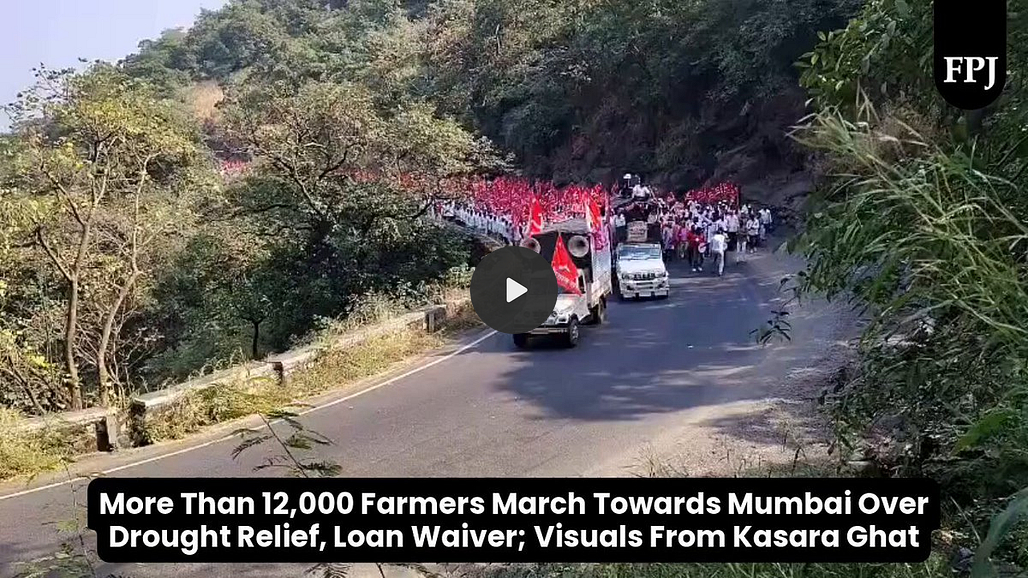
Facing mounting pressure from a massive farmers’ mobilisation in Maharashtra, BJP Chief Minister Devendra Fadnavis has been forced to open talks with an All India Kisan Sabha (AIKS) delegation as tens of thousands of farmers from more than 20 districts in large convoys march to Mumbai’s Azad Maidan. Led by the AIKS, the farmers’ wing of the Communist Party of India (Marxist), the farmers are demanding a comprehensive farm loan waiver, drought relief, compensation and the implementation of land and forest rights.
The mobilisation comes even as Maharashtra has declared 305 of its 358 talukas – around 85% – drought-affected, in the backdrop of a 19% monsoon deficit and the prospect of El Niño conditions intensifying. Before the vehicular convoy set off, a foot march was organised in Akole town, led by AIKS national president Ashok Dhawale, national general secretary Viju Krishnan, CPI(M) MLA Vinod Nikole and AIKS Maharashtra state president Yashwant Zhade.
Here are the key demands of the AIKS-led farmers march.

Elsewhere, in the business of disenfranchising citizens ‘unconstitutionally’, in what is becoming a familiar pattern, Karnataka’s final electoral roll after the Special Intensive Revision (SIR) has 99.7 lakh fewer voters than before, shrinking the electorate from 5.54 crore to 4.46 crore – a nearly 18% drop. More than 1.07 crore names had been deleted at the draft stage. Similar large-scale deletions and concerns over voter exclusion have already been reported in West Bengal, Uttar Pradesh, Delhi and other states, where citizens are being left in limbo, struggling to get their names back on the electoral rolls.
Meanwhile, Meta restricted LiveLaw’s Instagram reel about the ECI’s affidavit in the apex court, citing a “legal request”, effectively censoring reporting on a crucial constitutional matter. No details of who made this request and what it asked for.


In their counter-affidavit before the Supreme Court in several petitions challenging the SIR, the EC and all three commissioners have sought to address those aspects of the exercise and the poll panel’s functioning that have been in the spotlight over the last month, including the modification of Form 6 and the EC’s pleas to have lakhs of names struck off from West Bengal’s voter rolls. At the outset they took pains to mention that the affidavit stands approved “by a unanimous decision” of all three of them.
After it came to light that the online version of Form 6 – which is used to enroll fresh electors – was amended to include a new declaration without a gazette notification as legally required, the EC and its triumvirate has suggested that some officers (who, we are not told) effected the change so that applicants would not have to submit two OTPs, one for the form and another for the declaration. “This bonafide objective became a subject matter of deliberations and suggestions,” they said, noting that the addition had to be rolled back; they also denied
