
A newsletter from The Wire | Founded by Sidharth Bhatia, Siddharth Varadarajan, Sushant Singh, Seema Chishti, MK Venu, Pratik Kanjilal and Tanweer Alam | Contributing writer: Kalrav Joshi, with additional inputs by Anirudh SK
If you like our work and want to support us, then do subscribe. Sign up with your email address by clicking on this link and choose the FREE subscription plan. Do not choose the paid options on that page because Stripe – the payment gateway for Substack, which hosts The India Cable – does not process payments for Indian nonprofits.Our newsletter is paywalled but once a week we lift the paywall so newcomers can sample our content. Today is that day. To take out a fresh paid subscription or to renew your existing monthly or annual subscription, please click on the special payment page we have created – https://rzp.io/rzp/the-india-cable.Snapshot of the day
January 9, 2026
Sidharth Bhatia
Remember the optimism that the Indian government and US President Donald Trump had signalled over the prospect of a trade deal last year – and how it ended up amounting to nothing? Well, US commerce secretary Howard Lutnick has claimed that he “set the whole deal up” around the middle of last year, and Washington had a final demand, that Prime Minister Narendra Modi seal the deal with Trump over the phone by a deadline. However, “they were uncomfortable doing it, so Modi didn’t call”. That appears to be the reason why there was no deal despite India beginning negotiations way back in February and the two sides dropping hints of a breakthrough. Lutnick, who made the remarks on a podcast interview released Friday morning Indian time, also claimed that India insisted on the terms agreed upon before this ‘deadline’ passed, but that the White House had moved on to other countries and conveyed to New Delhi that this ship had sailed.
Triangulating the sequence of events from Lutnick’s remarks, public statements and media reports, Devirupa Mitra notes that about a month before the US’s deadline, Modi and Trump had their supposedly tense phone call where the PM rejected Trump’s claims that he precipitated the ceasefire to the India-Pakistan military conflict.
New Delhi has responded that Lutnick’s version of the events is “not accurate”. The two sides have been “close to a deal” on “several occasions” and India continues to “look forward to concluding it”. Modi and Trump had spoken over the phone eight times in 2025 about “different aspects of our wide-ranging partnership”, spokesperson Randhir Jaiswal said.
Raisina Hill is aware of US senator Lindsey Graham’s claim that Trump has ‘greenlit’ his bipartisan Bill authorising 500% tariffs on countries buying Russian oil and uranium products. “Our position on the larger question of energy sourcing is well known,” which is to “secure affordable energy from diverse sources to meet the energy security needs of our 1.4 billion people”, said Jaiswal.
He also said that India will “continue to advance” the objectives of the International Solar Alliance that Modi had proposed in 2015 and which Washington has decided to exit, and that New Delhi is “concerned” over the developments surrounding a US immigration official shooting dead a woman in Minneapolis earlier this week.
When Washington’s unprecedented tariffs on India kicked in last year the RBI introduced a loan waiver programme to help exporters cope. But this scheme has had few takers, possibly because bankers are required to submit proof of revenue loss, which many establishments were not able to do by December, Reuters reports citing a senior public sector banker. The source added that bankers have conveyed that “cash subsidies that help reduce the impact of business losses or squeezed export margins may be more helpful than loan relief”.
Uncertainty among the Bangladesh men’s cricket team over whether they will play in the T20 World Cup next month is giving them “a very difficult time” and “they are quite tense”, Atif Azam quotes an official in the Bangladesh Cricket Board as saying. The uncertainty stems from the BCB’s request to the International Cricket Council to move its fixtures in the tournament outside India due to concerns over the ‘safety and well-being’ of its players in the country after the Board of Control for Cricket in India had Bangladeshi bowler Mustafizur Rahman released from the Kolkata Knight Riders. The BCB, according to a source close to the board cited by PTI, has written a more specific second letter to the ICC. Meanwhile, former Bangladeshi captain Tamim Iqbal struck a cautionary note when speaking over the matter, prompting a top BCB official to brand him as an “Indian agent”, in turn prompting opprobrium.
The chaotic nature of Maharashtra’s civic body polls is not just limited to parties’ local units disregarding their ideological boundaries or state-level alliances: they have also been marred by the sudden exit of 68 candidates across local bodies on the last day for nominations to be withdrawn, leading to parties of the ruling Mahayuti alliance informally winning some elections unopposed. Opposition parties have alleged that large bribes were moved to facilitate exits, but some candidates said their party bosses inexplicably shunted them to unfamiliar constituencies at the last minute. Sukanya Shantha reports.
Arguing his case in Delhi’s Karkardooma court, Sharjeel Imam on Thursday sought to distance himself from Umar Khalid and others accused in the Delhi riots ‘larger conspiracy’ case. Imam, who has been in jail for close to six years now and was denied bail by the Supreme Court on Monday, said that according to the prosecution he quit the anti-Citizenship Amendment Act agitation “after seeing the direction in which the protest was going”. Plus, his lawyer said again citing the prosecution, his co-accused said he was giving the protests a ‘communal colour’ and “withdrew from the movement by January 2 [2020]”, reports Arnabjit Sur.
Nine kilometres away, in the Supreme Court, Sonam Wangchuk and his wife Gitanjali Angmo’s lawyers argued that the authorities in Ladakh deliberately failed to factor in his remarks calling for an end to the violence that rocked Leh amid pro-statehood protests in September before he was detained. “Is it not the duty of the local authorities to hand over the videos to the detaining authority? … It is settled law that even material in favour of the detainee be considered before passing a detention order,” advocate Kapil Sibal argued, reports Krishnadas Rajagopal.
As the BJP and the ADMK prepare to contest the Tamil Nadu assembly elections together later this year, they are still trying to hammer out a consensus on projecting a power-sharing agreement, E.T.B. Sivapriyan reports. The BJP, particularly Union home minister Amit Shah, has insisted that they will share power if elected and that the “NDA has to come out with a strong narrative against the DMK, especially on corruption”. On the other hand, ADMK chief E. Palaniswami has said his party will form a government alone. It argues that announcing a power-sharing agreement at this stage would give ammunition to the DMK to portray its arch-rival as ‘weak’, Sivapriyan reports citing sources.
Even after three years, heavy military security is still needed to keep hostile groups apart in Manipur, stifling development and making reconciliation harder. Though the crisis may seem distant to many in India, it is a warning for the entire country, reminds The Economist’s Essential India newsletter. It reflects key failures of the past 11 years of the Modi government: deepening divisiveness, poor governance, absent political leadership, weak security, inadequate humanitarian relief, and geopolitical missteps.
Oxford University Press (OUP) India has issued an apology to Udayanraje Bhosale, 13th descendant of Chhatrapati Shivaji Maharaj, over certain “unverified statements” made about the legendary Maratha king in a book published more than two decades ago. The book, Shivaji: Hindu King in Islamic India, was authored by American author James Laine and was published in 2003. In a public notice in a newspaper, OUP acknowledged that some statements in the book were ‘unverified’. When it was published, over 150 activists from Sambhaji Brigade ransacked the prestigious Bhandarkar Oriental Research Institute in Pune claiming it had helped the author.
Mamata Banerjee files FIRs against ED, CAPF after raids on I-PAC, its chief Pratik Jain
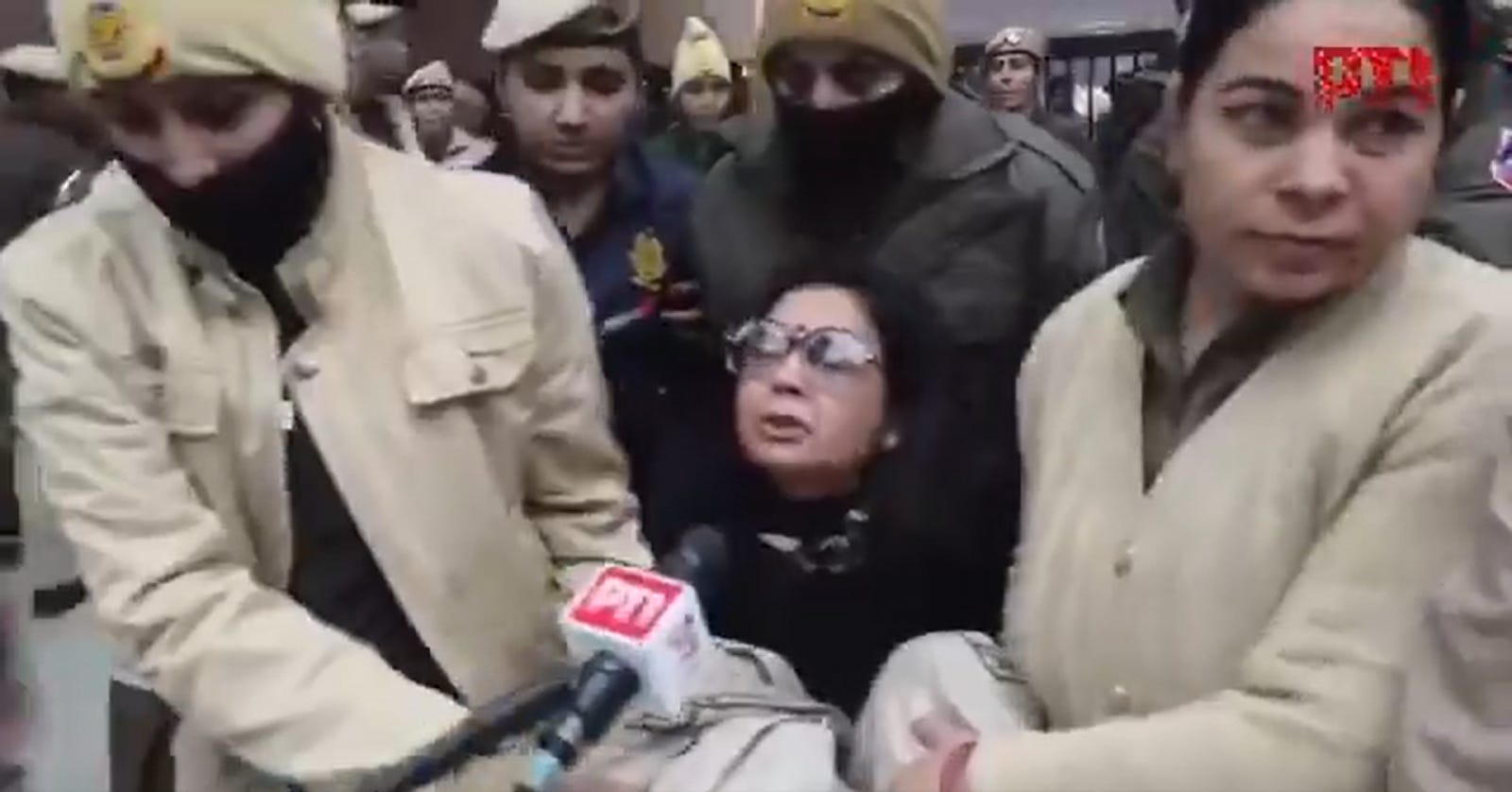
In a rare instance – where a sitting Chief Minister has herself approached the police as a complainant – West Bengal Chief Minister Mamata Banerjee on Thursday lodged dual complaints following the raids at the office of Indian Political Action Committee (I-PAC) and its director Pratik Jain. The complaint alleges that unknown persons claiming to be Enforcement Directorate (ED) ‘illegally’ entered the residence of an I-PAC director in Kolkata and accessed sensitive political data, including material linked to the Special Intensive Revision (SIR) process. The complaints, coupled with the TMC’s petition in the Calcutta High Court against the ED, is believed to have taken the confrontation between the two sides a notch higher, after Kolkata witnessed dramatic scenes of the Chief Minister landing up at the search operation venues and allegedly removing “key documents” and electronic devices from the sites.
Meanwhile, eight TMC MPs – Derek O’Brien, Satabdi Roy, Mahua Moitra, Bapi Haldar, Saket Gokhale, Pratima Mondal, Kirti Azad and Dr. Sharmila Sarkar – were allegedly detained by Delhi police on Friday after staging a protest outside Home Minister Amit Shah’s office.
CAG flag issues in Modi govt’s skilling scheme
A performance audit by the Comptroller and Auditor General (CAG) of India of the Modi government’s flagship scheme Pradhan Mantri Kaushal Vikas Yojana (PMKVY) to provide industry-relevant skill training and certification has found serious lapses in its implementation. This includes 94.53% of bank account details of beneficiaries across states entered as zero, left blank, or not available, duplication of photos and invalid or repeated mobile numbers. The report also noted lack of objective assessment of market demand for specific job roles and training effort aligned to it, with the overall placement rate at only 41%.
Increasing landslides on the Chardham roads in Uttarakhand
Remember an expert committee had warned that widening Chardham roads would make the mountains unstable and increase the risk of landslides? But the BJP-led Uttarakhand government ignored the warning. Read this report from Vaishnavi Rathore who travelled 300 km and geotagged a landslide every 2 km.
The Long Cable
Nehru’s call for a robust and independent foreign policy has been undermined by Modi
S.N. Sahu
US President Donald Trump’s remarks that India’s Prime Minister Modi sought time to meet the former by asking, “Sir, may I see you,” and Modi not rebutting this claim, amounts to inflicting humiliation not just on Modi himself but on India as whole. The implication is clear—it was a submissively asked question. Trump also claimed that the Modi regime’s decision to substantially reduce its purchases of Russian oil to address Washington’s concerns reflected Modi’s actions to “make me happy.”
Outsourcing foreign policy
The utterances of Trump have never been contradicted by Modi and the External Affairs Ministry. Unequivocally such remarks are nothing but an egregious affront on India and its people and so are unacceptable. There is no such ugly precedent during the tenure of any other Prime Minister before Modi. The humiliation has been compounded beyond measure when it was revealed that the Indian Embassy in Washington hired a US lobbying firm SHW Partners LLC, led by a former adviser to US President Donald Trump, for an annual fee of $150,000/- to provide support to the Indian government on US policy matters including arranging meetings, phone calls and email exchanges with officials from the US State Department and the National Security Council. The firm also helped coordinate senior-level visits by Indian officials to Washington DC.
Nehru’s vision
Such outsourcing of India’s foreign policy and diplomacy has no parallels during post-independence period when the architecture of our foreign affairs was shaped based on Prime Minister Jawaharlal Nehru’s vision brilliantly articulated in his article “A Foreign Policy for India” written in 1927, twenty years before India was liberated from colonial rule on August 15, 1947.
In that article, Nehru wrote in the beginning itself that “To some of us in India it may appear a foolish waste of time to indulge in fancies about a foreign policy for India”. And yet he asserted for an independent foreign policy when he wrote,
“We must understand world movements and politics and fashion our own movement accordingly. This cannot mean that we have to subordinate our interests or our methods of work to those of any other country or organisation.”
Those articulations of Nehru expressed as far back in 1927, to underscore India’s might and majesty two decades before our independence have been shattered by the Modi regime by scripting a foreign policy not to protect our national interest but to keep Donald Trump happy. Nehru’s vision that Indians would not subordinate her interests or her methods of work to those of any other country or organisation always remained central to India’s foreign policy right since our independence. That has now been upended.
It is worthwhile to quote Nehru who wrote that India should not “….expect any help from outside or slacken our efforts at home” and added that “… we should gradually train a body of men and women who can be relied upon to serve Indian interests abroad when the power for doing this comes into our hands”.
The power came to the hands of Indians in 1947 and India’s interests have been served well by successive Prime Ministers. But Modi has emerged as an exception in weakening India’s foreign policy and its stature at the global level.
On February 10, 1947 in a message Nehru wrote, “In a world where there are still so many bloodshot eyes we have to be clear-eyed and while being practical must also keep our ideals in view”.
Nehru’s usage of the words “bloodshot eyes” in the world of 1947 assumes greater salience in the context of Donald Trump’s humiliating statements and so the imperative need Nehru underlined to remain clear eyed resonates today to salvage India’s image and stature.
People count in foreign policy
On October 19, 1954 in a conversation with Mao Tse Tung of China, Nehru said, “There is no reason why Europe or the Americas should be considered the pivots of the modern world and Asia should be ignored. Asia is inevitably going to be one of the big centres of international affairs in the future and the sooner this is recognised and given effect to the better”.
When Mao asked Nehru why India was not following America which possessed so much strength and wealth the latter answered, “India was not afraid of any country in the world. The one thing that India’s great leader Mahatma Gandhi had taught Indians was not to be afraid and it was this fearlessness that enabled Indians to win their freedom from British imperialism”. He went on to assert that “ India was not afraid and followed her own policy, what she considered right and just”. He claimed that slowly Western nations had to realise that it was not so much money that counted and proceeded to add, “Both India and China together had about 1000 million people of the world and human beings counted”.
Mao agreed with Nehru and said that human beings counted the most.
Prime Minister Modi who claims ad nauseum about the human resources of India and its one billion plus population has caved in to the dictates of Trump and compromised India’s foreign policy to such an extent it has hurt the people and image of our country. India’s image can now only be salvaged by anchoring the foreign policy on Nehru’s vision which has always upheld India’s stature in global affairs.
(S.N. Sahu served as Officer on Special Duty to former President K.R. Narayanan.)
Reportedly
The CNBC TV 18 group owned by Mukesh Ambani has abruptly postponed its marquee annual event, India Business Leadership Award scheduled for Jan 10. Amit Shah was much publicised as the chief guest but he cancelled it just 48 hours before it was to be held. The buzz is that Shah’s cancellation comes after the Centre announced it would take Mukesh Ambani’s RIl to global arbitration, claiming $30 billion in damages for allegedly damaging the KG basin oil fields in the Bay of Bengal which Reliance and British Petroleum had explored jointly two decades ago. After the initial claim that the proven reserves had 10 trillion cubic feet of gas, the actual extraction was less than one third of that. The Modi govt believes RIL damaged the fields because of the methods adopted.
Amit Shah cancelling his engagement last minute reflects the souring relations between Modi and the Ambani group. Coincidentally, just a few days ago RIL had to issue a press release that it was not buying any crude from Russia any more. Centre is yet to make any statement on these lines. Mukesh Ambani, Noel Tata, Kumarmangalam Birla, Sunil Mittal and many top industrialists had confirmed their attendance to the Leadership Award event to interact with the home minister.
Drawn and quartered
Deep dive
61% of viral political misinformation in 2025 was pro-BJP in nature. And the most targeted politician was Leader of Opposition and Congress leader Rahul Gandhi. Oishani Bhattacharya and Ankita Mahalanobish’s analysis of all 590 stories by Alt News from last year shows how political narratives were rigged and by whom.
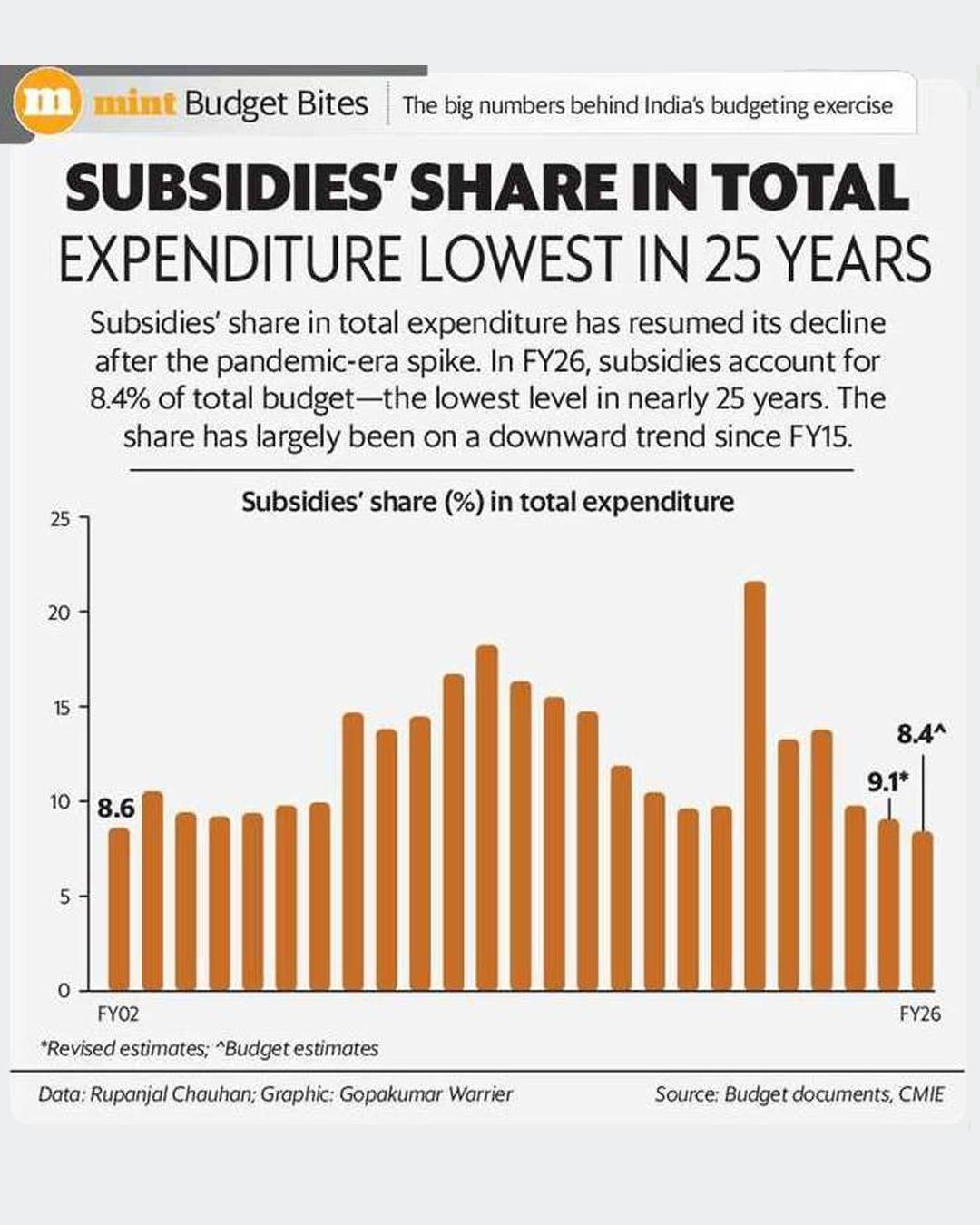
Prime number: 8.4%
Opeds you don’t want to miss
The image of being a principled and independent leader that Narendra Modi tried to build for himself has been shattered, writes Bharat Bhushan. He points to three recent factors–India’s “inability to condemn the kidnapping of Venezuelan President Nicolas Maduro, Donald Trump’s claim that Modi reduced the import of Russian oil “to make me happy”, and India having to hire lobbying firms for diplomatic access in Washington DC.”
Ashish Kothari pays tribute to an ecological colossus - Professor Madhav Gadgil.“The need to challenge India’s development trajectory and the centralisation of decision-making power in the State were aspects that made him a significant ally for ecological and social justice movements. In this, he mentored generations of young people into breaking through the shackles of academia.”
Successive pay commissions have served to aggravate the civil-military asymmetry, says ex-Chief of Naval Staff Admiral Arun Prakash (retd). “A clear definition of the status of the armed forces as being on a par with the All-India Services and spelling out the role and functions of the military hierarchy will lead to smooth and harmonious civil-military functioning in the MoD and the inclusion of a Service officer as a constituted member of the 8th CPC will raise the military’s morale and bolster national security.”
Burhan Majid writes on the grammar of epistemic and legal violence against Muslims in India, expanding on the construction of Muslim as suspect through the Tablighi Jamaat prosecutions during the Covid-19 period.
Shrabana Chatterjee grew up in Kolkata but had never been to Sonagachi, the city’s as well as Asia’s largest red-light area. She writes about how she went from feeling out of depth to realising first-hand that “no one owes us their story” to seeing how the women she spoke to
“are not just sex workers. That is just their occupation, like every other member of society who is offering their labour for bread and butter. They are humans of flesh and blood. They have families. Many of them go to school, hold protest marches, run sexual health awareness drives, win awards, pray to god, buy their favourite make up at the local stores, and play with children, much like any of us.”
Listen up
Given their success across the US’s corporate sector, the professions and academia, the Indian-American community has long been viewed as a ‘model minority’, but have they become too complacent? Thus argues journalist and author Salil Tripathi, who points to the various reasons of discontent against the community, such as their noisy celebrations, the perception that they are gaming the H-1B visa system and recent tensions in bilateral relations. Listen in on his conversation with Sidharth Bhatia in The Wire Talks podcast.
Watch out
While the Election Commission’s special intensive revision of Uttar Pradesh’s voter rolls reduced the size of the state’s electorate from 15.4 crore to 12.6 crore names, the state election commission’s own revision exercise indicates there are 16.1 crore voters – “exactly matching the adult population”, says Yogendra Yadav. “Two methods. Two numbers. One truth staring us in the face,” he wrote on X.


Over and out
In the age of ragebait chest thumping filmmaking, beards and biceps, Ikkis is a timely, welcome battlecry for humanity and empathy. Director Sriram Raghavan was attracted to the story not only for Arun Khetarpal’s bravery but also because of his father’s journey to Pakistan 30 years later, he tells in a riveting interview with Nandini Ramnath.
That’s it for today. We’ll be back with you on Monday, on a device near you. If The India Cable was forwarded to you by a friend (perhaps a common friend!) book your own copy by SUBSCRIBING HERE.