
A newsletter from The Wire | Founded by MK Venu, Pratik Kanjilal, Sidharth Bhatia, Siddharth Varadarajan, Sushant Singh, Seema Chishti, and Tanweer Alam | Contributing writers: Kalrav Joshi, Anirudh SK
If you like our work and want to support us, then do subscribe. Sign up with your email address by clicking on this link and choose the FREE subscription plan. Do not choose the paid options on that page because Stripe – the payment gateway for Substack, which hosts The India Cable – does not process payments for Indian nonprofits.
Our newsletter is paywalled but once a week we lift the paywall so newcomers can sample our content. To take out a fresh paid subscription or to renew your existing monthly or annual subscription, please click on the special payment page we have created – https://rzp.io/rzp/the-india-cable.
Snapshot of the day
May 19, 2026
Sidharth Bhatia
Why should Norway trust the Modi government given its human rights record? And when will Prime Minister Narendra Modi start taking critical questions back home in India (or anywhere for that matter)? Asked these questions by Norwegian journalist Helle Lyng – whose attempt to directly ask them to the Indian PM yesterday were thwarted by his adamant refusal to participate in press conferences – the external affairs ministry’s secretary (west) Sibi George’s non-answer was that India can be trusted for reasons including the Modi government’s handling of the COVID-19 pandemic, India’s vaccine and pharmaceutical exports and that yoga originated here. No response was forthcoming on Lyng’s question about Modi’s aversion to the press. Lyng, who has predictably been trolled by the IT cell on social media, has pointed out that she is just doing her job:
“Journalism is sometimes confrontational. We seek answers. If any interview subject, especially with power, do not answer what I asked, I will try to interrupt and get a more focused response. That is my job & duty. I want answers and not just talking points.”
And the fact that journalists back in India is not allowed to do this job has worrying implications for democracy, as this editorial in The Wire notes:
“Democracy is not about voting once and then being asked to zip it. It is an ongoing affair, expected to last through any government’s tenure. The press is understood to be the cable, or the vehicle for those questions to the highest offices of the land. It is the ‘media’. It must be allowed to do its job.”
With Norway – home to one of the world’s largest sovereign wealth funds – scrutinising human rights closely, the episode, particularly the online harassment of the journalist who simply asked the question, is only likely to intensify global attention on India’s rights record.
As the cartoonist behind Sanitary Panels acidly puts it, Indian officials seem to morph into “white hippies visiting Goa” the moment they face a tough question from the international press.
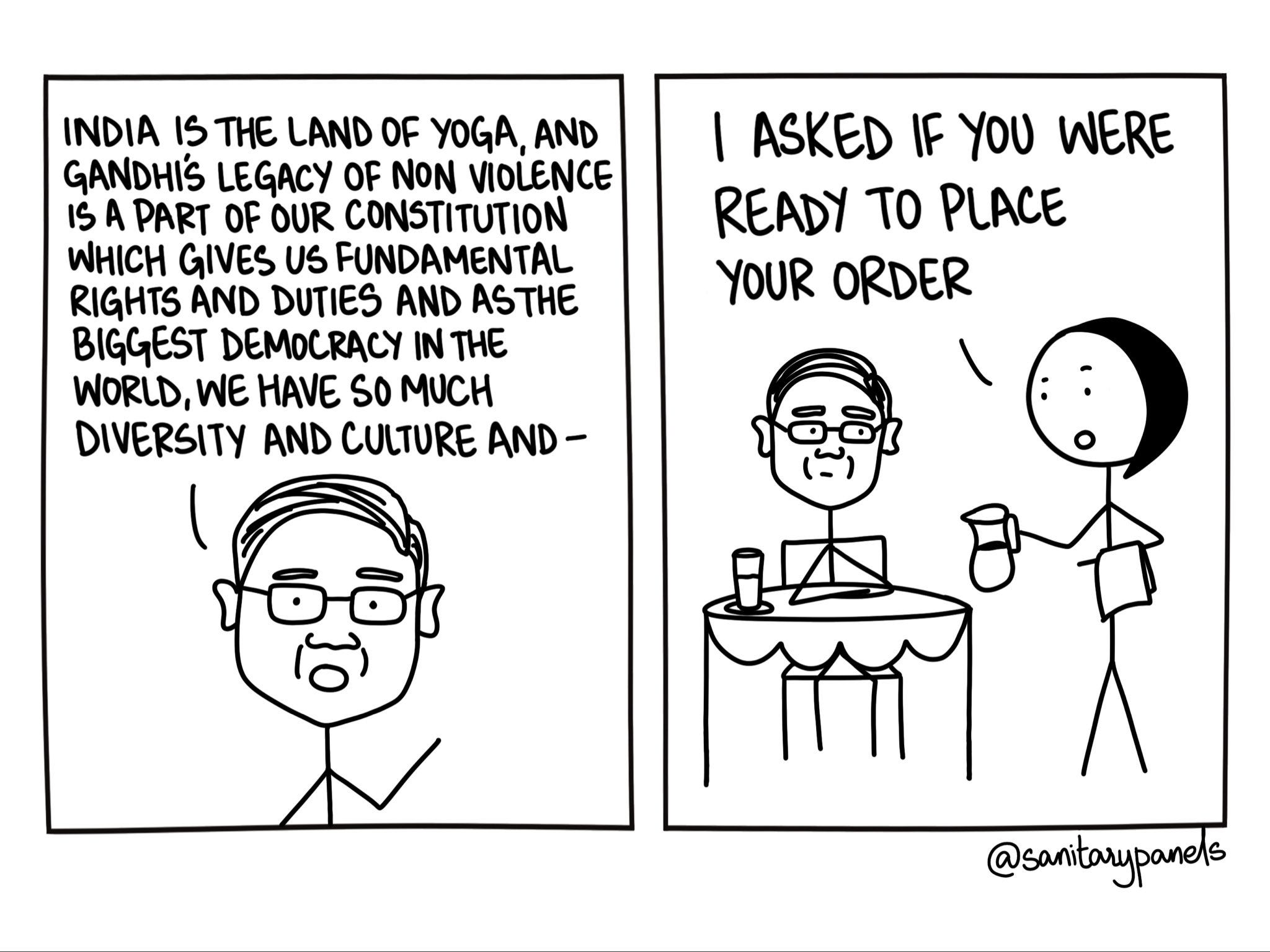
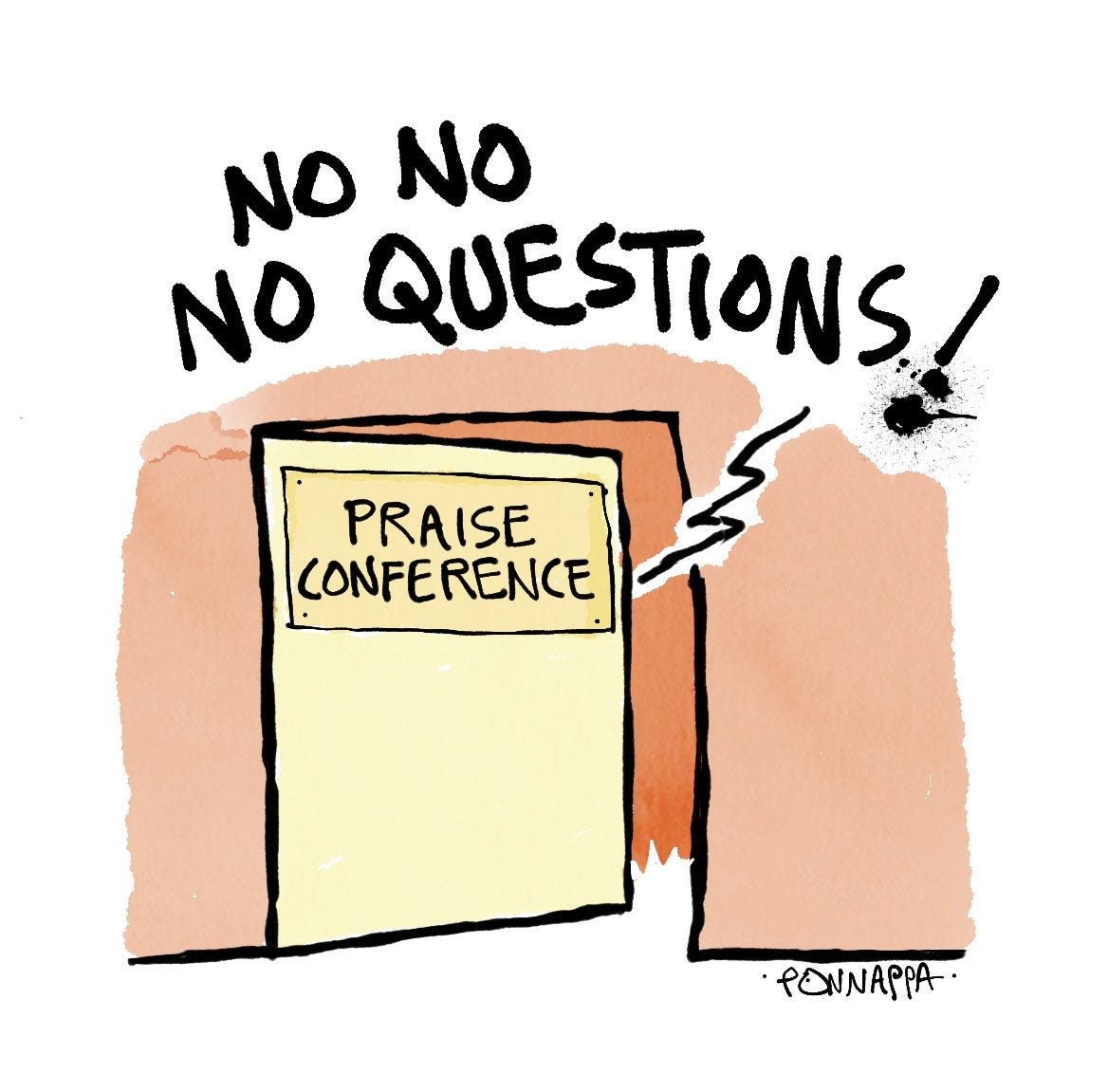
And their attitudes towards journalism and the ‘press’ back home too are being lampooned in the wake of Lyng’s questioning:
Appearing for the Delhi police, additional solicitor general S.V. Raju told the Supreme Court today that he will probably oppose yesterday’s ruling by Justices B.V. Nagarathna and Ujjal Bhuyan holding that prolonged incarceration is grounds for bail even in UAPA cases. The idea as laid down in section 43d(5) of the UAPA that “the presumption of innocence of the accused takes a backseat … has been lost” due to yesterday’s verdict – where the bench said that Justices Aravind Kumar and N.V. Anjaria’s denial of bail to Umar Khalid and Sharjeel Imam in the Delhi riots ‘conspiracy case’ violated “judicial discipline” – said Raju. He has
