
A newsletter from The Wire | Founded by Sidharth Bhatia, Siddharth Varadarajan, Sushant Singh, Seema Chishti, MK Venu, Pratik Kanjilal and Tanweer Alam | Contributing writers: Kalrav Joshi, Anirudh SK
If you like our work and want to support us, then do subscribe. Sign up with your email address by clicking on this link and choose the FREE subscription plan. Do not choose the paid options on that page because Stripe – the payment gateway for Substack, which hosts The India Cable – does not process payments for Indian nonprofits.Our newsletter is paywalled but once a week we lift the paywall so newcomers can sample our content. Today is that day. To take out a fresh paid subscription or to renew your existing monthly or annual subscription, please click on the special payment page we have created – https://rzp.io/rzp/the-india-cable. The price is as low as Rs 200 per month.Snapshot of the day
March 20, 2026
Siddharth Varadarajan
With the US-Israeli war against Iran now entering its fourth week, two Indian-flagged liquefied petroleum gas (LPG) tankers – Pine Gas and Jag Vasant – are still anchored off Sharjah according to the latest shipping industry data though there are reports they may be preparing to sail through the Strait of Hormuz in the coming days. Al Jazeera cites market assessments to suggest that no crude oil tankers have departed the strait in the past 24 hours. Lloyds List says that “multiple governments including India, Pakistan, Iraq, Malaysia and China are all understood to be discussing vessel transit plans directly with Tehran, where officials within the Islamic Revolutionary Guard Corps have established a nascent ship registration system for “approved” vessels to agree safe passage.” Despite assurances and bluster from US President Donald Trump, the Strait, through which roughly 20% of the world’s oil flows, remains effectively blocked for energy shipments barring ships that get prior clearance from Iran.
Tumbling by over 1%, the rupee breached the 93-mark for the first time, setting a historic low as the West Asia war carries on. After clocking in at 93.735 to the dollar on Friday it settled at 93.71, besting its previous record of 92.63 hit two days ago; if the conflict continues, the rupee could breach the 95-mark too, Jaspreet Kalra writes, noting that intervention by the RBI has managed to slow the currency’s fall. “The latest oil shock has dragged Indian shares to the weakest level in about a year, lifted bond yields and triggered worries over widening fiscal and current account deficits,” he notes.
A further wrinkle: Russia has accumulated huge rupee reserves since India has been settling part of its purchase of Russian oil over the past three years in its own currency. Some of this has been deployed in local equity markets but a lot of it is not being used productively, slightly unnerving Indian regulators.
The conflict has claimed another Indian life, an unidentified individual whom the Indian embassy in Riyadh said passed away on the 18th – it did not say how they were killed, attributing their death only “to recent events”.
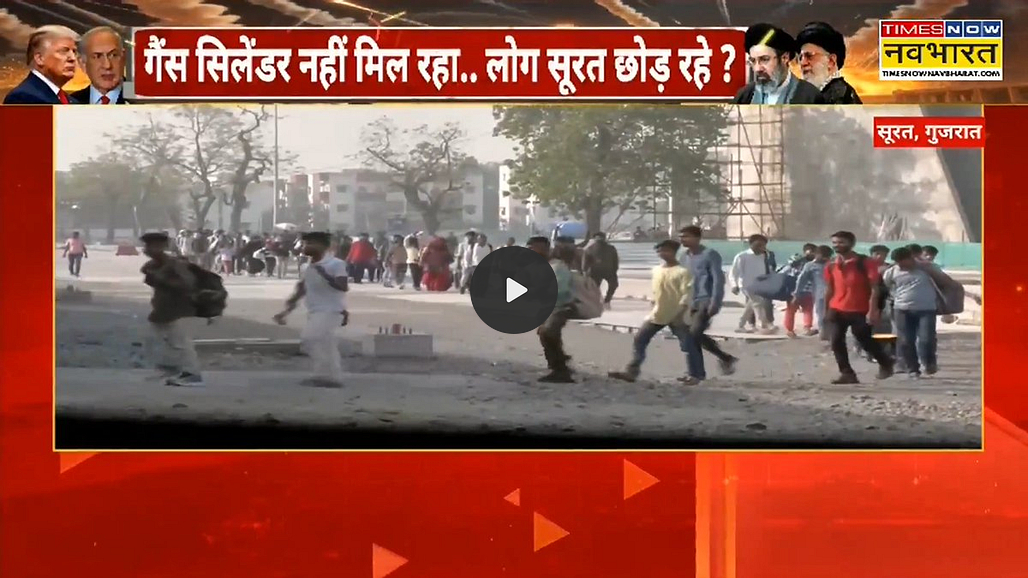
Meanwhile, another migrant crisis in the making

Amidst criticism that Sri Lanka’s delay in letting Iranian ships dock at its ports left the IRIS Dena vulnerable to the eventual US attack that sunk it, President Anura Kumara Dissanayake revealed in parliament today that the country had also denied a request from the US to land two of its fighter jets in Mattala as well. “Sri Lanka maintained neutrality by refusing the two requests by both the US and Iran,” he said, according to The Daily Mirror Online. The announcement comes a day after US Special Envoy Sergio Gor met with Dissanayake.
India is considering introducing real-time foreign-exchange settlements in euros at its sole international financial hub, according to sources, a step that would deepen financial ties as the EU-India trade deal progresses, reports Bloomberg.
The latest Annual Threat Assessment (ATA) by the US intelligence community credits Donald Trump with helping de-escalate the four days of clashes between India-Pakistan last May, noting that neither side currently shows intent to return to open conflict. But the reassurance comes with a familiar caveat. The Office of the Director of National Intelligence, in its March 18 report, flags South Asia as an enduring flashpoint, with the risk of escalation between two nuclear-armed neighbours never too far below the surface.
Past confrontations, the report notes, have shown how quickly things can spiral – especially after high-casualty militant attacks. It points to the terrorist attack near Pahalgam, which killed 26 civilians, as having “demonstrated the dangers of terrorist attacks sparking conflict” between India and Pakistan. Interestingly, this assessment comes even as Trump has claimed over 70 times, in speeches, social media, and interviews, that he personally brokered the May 10 ceasefire by threatening 200% tariffs and averting a nuclear war. Indian officials have denied this but the government of India has been reluctant to make an issue of this.
After Kabul and Islamabad both declared a pause to their renewed fighting in view of Eid, the Tehreek-e-Taliban Pakistan on Thursday also announced a three-day-long ceasefire. Thursday saw the first break in the fighting since the earlier truce was broken late last month. The latest lull comes after the Taliban said that a Pakistani airstrike on a drug rehabilitation centre killed over 400 people and hurt more than 260 others. Pakistan has denied striking a medical facility. Significantly, in his Nowruz message, Iran’s new supreme leader appealed to Afghanistan and Pakistan to settle their differences peacefully.
A Delhi court on Thursday held that the prosecution failed to prove that two Kashmiri youths, Parvaiz Lone and Jamshed Paul, were linked to ISIS, and also pointed to glaring lapses in the Delhi police special cell’s investigation in the matter. The duo, whom the court has acquitted of their UAPA and Arms Act charges, was arrested at a bus stop near the Red Fort in September 2018. In breathless reporting, we were told at the time that the Delhi Police had foiled a major terror plot. It was claimed that pistols and cartridges were recovered from the two but no witnesses from that place were invited to the investigation, the Patiala House court said. The seizure memo and other documents bore the FIR number in the case, “seriously [reflecting] upon the veracity of the prosecution version”, judge Amit Bansal said. Their mobile phones were seized but they remained in the investigating officer’s custody for some two months in an unsealed state, raising doubts about tampering.
Five and a half years and lakhs of rupees in legal fees later, even though Lone has been acquitted “the weight of these years seems to have caught up” with his father Abdul Rashid, Jehangir Ali reports from the family’s home in Kashmir’s Shopian. “He had a bright future ahead of him but we had no idea that lightning was going to strike us all … Who will answer for the loss of these 13 years?” he asked, referring also to Parvaiz’s engineering education that became frozen by the case. Nearby, at the Pauls’ home, his mother Shahzada said: “How does it matter how we spent these years? The important thing is that my son is returning home. That is all I care for.”
Days after she was filmed washing the feet of a controversial astrologer – he has now been arrested for rape – Maharashtra’s Women Commission head Rupali Chakankar has resigned, citing ‘personal reasons’.
In a significant development that marks a shift from the bitter diplomatic row of 2024, Royal Canadian Mounted Police (RCMP) Commissioner Mike Duheme has said there is no current evidence linking the Government of India to clandestine activities or transnational repression on Canadian soil. “In the files that we have that involve transnational repression, we’re not seeing any connection right now with any foreign entity, based on the criminal information, the investigations that we have presently,” he told CTV Question Period host Vassy Kapelos in the interview.
The Adani group managed to trump Vedanta with its bid for the distressed Jaypee Group despite quoting a lower price but even if the government run entity which cleared the deal had valid financial reasons, the real story is the the underpricing of Jaypee’s underlying assets. This tweet thread by @aakancivedi explains the structuring of the deal, including the massive haircut India’s public sector banks had to take when the Jaypee Group went belly up a few years ago.
The Uttarakhand High Court on Friday refused to quash an FIR against a gym owner in Uttarakhand, Deepak Kumar, filed over a January incident in which he had confronted Hindu right-wing activists who were harassing a Muslim shopkeeper over the name of his shop; instead, the bench has passed a gag order against him, reports Bar and Bench. Justice Rakesh Thapliyal also restrained Deepak from commenting on social media regarding the cases filed against him. However, the bench recorded the assurance given by the State Police that the investigation would follow the Supreme Court’s guidelines laid down in the Arnesh Kumar judgment, which provides safeguards in cases involving offences punishable with imprisonment of up to seven years. The Hindutva thugs who Kumar confronted have yet to be charged.
Underlining the fact that “the process is the punishment,” the Delhi High Court on Friday finally quashed lookout circulars issued by the Central Bureau of Investigation against former NDTV promoters Prannoy Roy and Radhika Roy, nearly seven years after they were first imposed in 2019. The circulars had barred the couple from leaving the country, a measure typically used to monitor individuals wanted by law enforcement. The court’s order brings an end to a prolonged period during which the Roys remained under investigation without a final resolution.
Alok Rajput reports that the present Jawaharlal Nehru University (JNU) Vice-Chancellor, Santishree Dhulipudi Pandit, had previously been found guilty of misconduct and moral turpitude. Yet, within a short span, she went on to be appointed as the head of one of India’s most prestigious universities in the country.
An Air India flight to Vancouver took a U-turn mid-air over China and came back to Delhi on Thursday after the airline deployed a B777 aircraft variant that did not have regulatory clearance to operate on the route, according to aviation industry sources. However, this is not the first time Air India has flown a plane without the requisite documents and permissions.
The Indian Premium League (IPL), often projected as the gold standard of franchise cricket, appears to lag when it comes to player rights and welfare. The World Cricketers’ Association has ranked it third among 10 leagues with a score of 62.6 – solid, but not quite leading the pack. England’s The Hundred tops the list at 75.2, followed by South Africa’s SA20 at 68, both scoring better on player conditions. For all its financial clout and global influence, the IPL’s standing suggests it still has ground to cover beyond the spectacle.
L. Sivaramakrishnan has quit the BCCI’s panel of commentators, alleging he has been neglected by the board for two decades. Asked whether racism had played a part, the former spin bowler said yes.
Streisand Effect 101: The Modi government’s censors blocked a reel posted by an Instagram content creator mocking the Prime Minister’s style of laughing and hugging when meeting foreign leaders. Enter other content creators, notably Dhruv Rathee. His repost of the reel has garnered 1.6 million views in a few hours.
Modi’s censors don’t want Indians to see Oscar-nominated film on Israeli killing of Palestinian child
Nick Vivarelli reports that the Indian release of the Oscar-nominated feature “The Voice of Hind Rajab,” originally slated for March, “is being blocked by the country’s Central Board of Film Certification (CBFC) for political reasons, according to the film’s local distributor.”
The film’s Indian distributor, Manoj Nandwana, told Variety that
“he screened “The Voice of Hind Rajab” for the CBFC in February, when he submitted the film for censorship approval, and was planning a March 6 Indian release “because we thought it was a good date ahead of the March 16 Oscars.” Instead, the film has not been cleared for release and he was told by a CBFC member that “if it gets released it would break up the India-Israel relationship,” Nandwana said.”
Written and directed by Kaouther Ben Hania, the film chronicles the killing in January 2024 of a young Palestinian girl, Hind Rajab, as she and her family tried to flee Israel’s bombardment of Gaza City.
Tatsam Mukherjee writes:
“For a film that ends by stating Hind Rajab’s car had over 300 bullet holes and the ambulance was found with shell fragments from an Israeli tank, it’s understandable why Ben Hania’s film might never release in India in the given circumstances. In a world of universal deceit, Ben Hania’s film lays out the unvarnished truth a bit too succinctly. As Malhees [one of the actors] wrote on Instagram, after being denied a US visa to attend the Oscars because of his Palestinian passport – you can block a passport, you can’t block a voice. Similarly, you can delay or prevent the release of a film, but the CBFC can’t stop the voice of Hind Rajab from being heard around the world.”
Chhattisgarh makes its anti-conversion law more stringent
Chhattisgarh’s BJP-majority assembly passed a new ‘anti-unlawful conversion’ Bill on Thursday as the opposition boycotted the proceedings while calling for a review of the legislation. This law, reports Shubhomoy Sikdar, makes it illegal to convert someone
“by use or practice of glorification, misrepresentation, force, undue influence, coercion, allurement, by physical or digital means”
and differs from an existing state law by requiring individuals to submit a declaration to the district collector or a government official appointed by them in order to change their religion. Mass conversion, which means conversion of two or more people, may be punished with a prison term extending to life. What happens to the so-called ghar vapsi ceremonies then, you ask, in which Hindutva missionaries seek to convert Christians to Hinduism? “Reconversion to one’s ancestral religion will not be treated as conversion under the law,” Sikdar notes.
Police bias in handling Nagpur communal violence
Almost a year ago, on March 17, 2025, there was deadly communal violence in Nagpur after Hindutva groups allegedly burned a cloth bearing verses from the Quran and demanded the removal of Aurangzeb’s tomb in Marathwada. Two FIRs were lodged: one in connection with the violence and the other with the Hindutva groups’ demonstrations. A year later, the former FIR against 87 Muslim accused has been followed up with a chargesheet, but in the latter case the state government is yet to grant approval to the chargesheet that was prepared nine months ago now, the Indian Express‘s Ankita Deshkar reports. Meanwhile, people on the ground await compensation, reel from losses due to the violence and persist with their unmet demands of the administration, the newspaper finds.
The Long Cable
Without an Engine in Sight, India’s Sixth-Gen Fighter Talk Rings Hollow
Rahul Bedi
When India’s Chief of Defence Staff (CDS) General Anil Chauhan speaks of India pursuing a sixth-generation fighter, as he did recently, it is hard to ignore the strategic dissonance. The ambition is striking — but so is the gap between aspiration and capability.
At a time when India is nowhere near fielding a fifth-generation platform and continues to grapple with the long-delayed maturation of the indigenous Tejas Mk1/1A/2 light combat aircraft programme, all and any talk of leapfrogging into a 6th-generation ecosystem is little more than fanciful ambition detached from technological reality and existing capability.
The CDS had recently informed the Parliamentary Standing Committee on Defence that the Indian Air Force (IAF) was actively evaluating participation in emerging 6th generation fighter programmes and could align with one of two competing global efforts: the Global Combat Air Programme (GCAP), led by the UK, Italy, and Japan, or the rival Franco-German Future Combat Air System (FCAS).
Gen Chauhan’s remarks indicate that while India remains committed to locally developing the Advanced Medium Combat Aircraft (AMCA), the complexity, cost and timelines associated with sixth-generation technologies— from artificial intelligence (AI), advanced propulsion and unmanned-unmanned teaming – make international collaboration increasingly unavoidable.
He is believed to have emphasised that any such decision would be guided by strategic autonomy, access to technology and long-term industrial benefits, rather than mere procurement. At the same time, his comments implicitly acknowledged the limits of India’s current aerospace ecosystem in independently delivering next-generation capabilities in the foreseeable future.
A cross-section of aviation industry officials argued that showcasing such advanced concepts without first consolidating the basics was not an illustration of strategic vision but a “feeble and impotent” attempt at projecting capabilities that do not yet exist domestically. The issue, they stressed, was not about thinking ahead – every major air power is already conceptualising sixth-generation platforms that integrate AI, unmanned teaming, advanced sensors, and network-centric warfare – but about demonstrable capability, not aspirational projection.
The fundamental constraint lies in the foundational technologies that give these elaborate ideas expressed by Gen Chauhan operational meaning.
At the core of this challenge are aero-engines — the most complex, expensive and technologically demanding element of any combat aircraft. Without a reliable, high-performance indigenous power plant, all ambitions of next-generation fighters risk remaining conceptual, exposing a widening gap between design aims and the hard engineering reality that ultimately determines combat capability.
India’s continued dependence on imported engines underscores this gap. The Hindustan Aeronautics Limited (HAL) Tejas relies on the US-origin General Electric F404IN20 power packs, while the proposed advanced multi-role AMCA is expected to be powered, at least initially, by the more advanced General Electric F414. This is because decades of atamnirbharta or indigenous efforts to develop an alternative have yet to yield a viable engine, leaving India exposed to supply constraints, cost escalations, and technology denial regimes that handicap its aerospace ambitions.
Efforts to bridge this propulsion gap have led the Ministry of Defence to explore collaboration with France’s Safran to domestically co-develop a high-thrust indigenous engine. The proposed partnership aims to leverage Safran’s expertise in advanced materials, turbine technology and design processes, while building domestic capability over time.
Yet, even this stresses the harsh reality: after decades of effort, India still requires external assistance for the most critical aerospace technology, highlighting both the scale of the challenge and the cost and time involved in this endeavour.
India’s harrowing experience with the Tejas programme should, by now, have instilled a measure of humility, but it has not. Conceived in the 1980s as a replacement for the ageing Soviet-era MiG-21s, it took nearly four decades to reach even initial operational status and continues to face persistent handicaps – engine dependency, production bottlenecks, and evolving operational design changes. Above all, scaling up Tejas production and delivering its improved variants on schedule remains a work in progress.
Alongside, India’s 5th-generation aspirations remain largely notional. The AMCA programme is still in its incipient developmental stages, with timelines that extend well into the next decade and even beyond. Critical technologies — stealth materials, advanced engines, sensor fusion and others — are nowhere near being realised indigenously. The imprudent decision to exit the Fifth Generation Fighter Aircraft (FGFA) programme with Russia in 2017-18, despite having invested $295 million in it, only delayed India’s entry into this technologically advanced domain.
Furthermore, invoking 6th-generation fighters against this backdrop creates a credibility gap that is hard to ignore. At a time when the IAF is grappling with declining fighter squadron numbers, ageing combat fleets and persistent gaps in maintenance and production capacity, signalling interest in technologies that are themselves still evolving globally appears misdirected.
However, this is not a new pattern. India’s overall defence planning has long displayed an attraction to “gold-plated” solutions — platforms burdened with expansive, often unrealistic requirements rather than designed for operational efficiency. The consequential result has been repetitively familiar: interminable delays, cost overruns, and stalled programmes. The turn towards 6th-generation rhetoric fits uncomfortably into this history — an instinct to reach for the cutting edge without first securing the fundamentals.
What industry officials believe is badly needed instead is discipline, clear thinking, realistic timelines and a ruthless focus on execution. Programmes like the AMCA must be delivered before being overshadowed by fanciful projects like 6th-generation fighters.
Ultimately, the question is not whether India should aspire to 6th-generation capability, but whether it has built the foundations to get there — and at present, the answer is plainly no, as even the transition from 4th to 4.5-generation fighter capability is still incomplete. In such circumstances, the priority should be technological consolidation, not premature escalation. Ambition untethered from capability is not strategy. It is expensive, time-consuming – and ultimately tragic – theatre.
Reportedly
While Modi has been reaching out to foreign counterparts to extend Eid greetings, developments in his own parliamentary constituency have drawn attention after authorities prepare to send 14 young men to jail for 10 years for allegedly breaking their Ramzan fast on a boat on the Ganges. Realising that the original allegation – of “disrespecting Hindu sentiments” would not fly very far, the more serious charge of ‘extortion’ has been conjured up.

Drawn and quartered
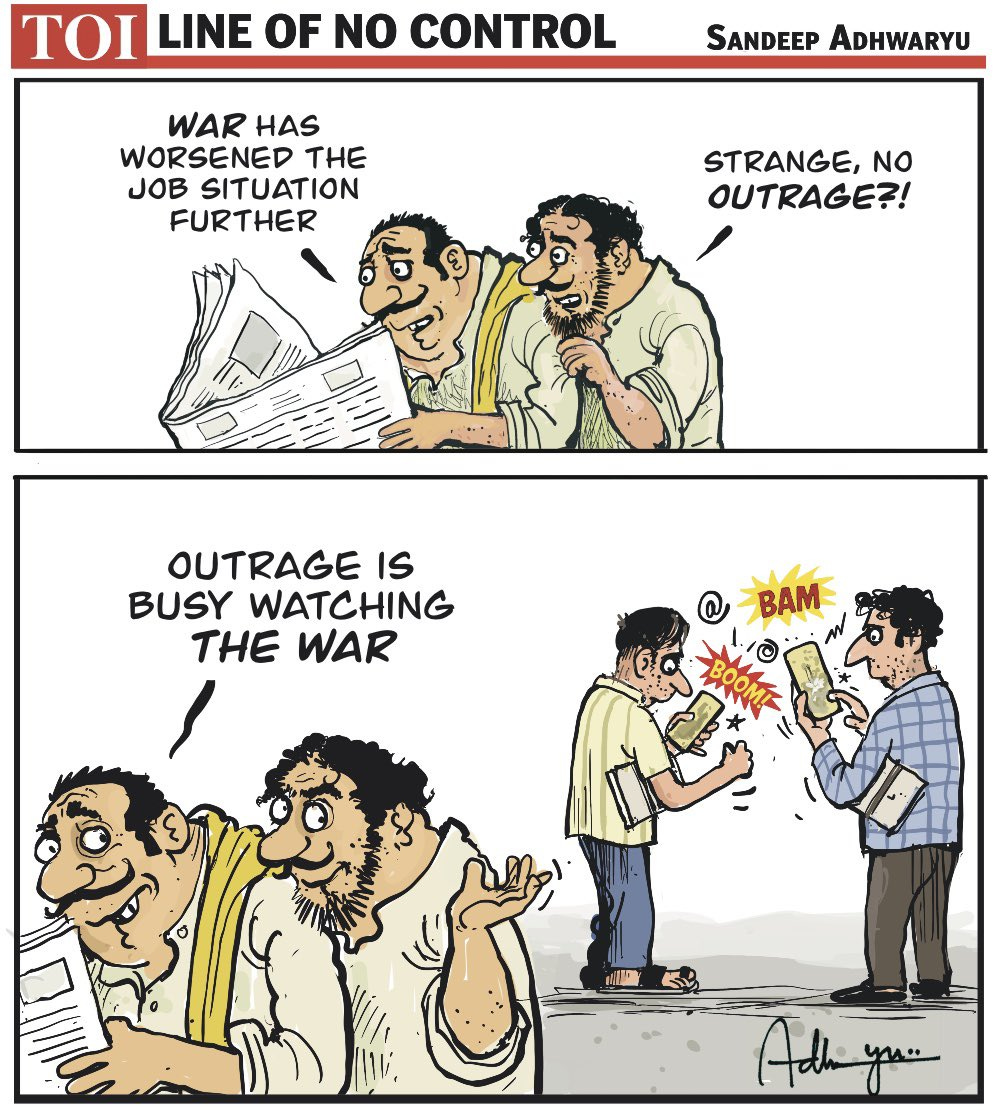
Deep dive
If you ever needed a reality check on AI-led “efficiency,” look no further. Google-backed facial recognition systems used in welfare delivery are now effectively rationing food – with pregnant women and nursing mothers being denied emergency rations because their current appearance doesn’t match old ID photos, reports Hera Rizwan. For all the talk of seamless tech, the consequences are far from abstract. Bodies change, algorithms don’t – and those most in need are being locked out by design.
Prime number: 40% of x
Twenty-four states and Union territories have earmarked allocations under their 40% share of the new and contentious VB-G RAM G Act that has replaced MGNREGA. This is even as the Modi government has not revealed how it will calculate the ‘normative allocation’ to the states and UTs – based on yet-unknown “objective parameters” – under the Act, Sobhana Nair reports. The cumulative value of the 24 states and UTs’ allocation that is based on their past spending under MGNREGA totals around Rs 31,000 crore.Opeds you don’t want to miss
“The Modi government has traded India’s historical spine for a brand of personalised transactionalism that has rendered 1.4 billion Indians vulnerable,” Sushant Singh writes, arguing that the US-Israel attack on Iran and the ensuing crisis have only made it clearer what is wrong with Modi’s foreign policy and why India now needs a change.
What is happening in West Asia marks a test of India’s self-proclaimed strategic autonomy. In order to come out on top, says former Navy chief Admiral Arun Prakash, India must seriously encourage R&D and innovation, but perhaps more importantly, in a decaying ‘rules-based’ world order it should
“consider breaking its traditional mould to resume leadership of the Global South. Capable of engaging all sides, India is uniquely positioned to act as a bridge across these deepening divides [between the West and the South]. By spearheading initiatives in energy diplomacy, maritime security and climate justice, New Delhi can transform “strategic autonomy” from a defensive posture into a proactive leadership role that stabilises a fractured global landscape, while retaining its ethical moorings.”
The opposition’s motions to remove the Lok Sabha speaker and the chief election commissioner point to the broader problem of a trust deficit between citizens and institutions, Suhas Palshikar writes. Read his essay to understand how he arrives at the conclusion that behind this trust deficit lies the following fact:
“… Through the three features – delegitimising the opposition, misreading electoral outcomes as a mandate for regime change and occupation of the entire social sphere by the ruling establishment – we are witnessing a regime change. It requires that pre-existing institutions be made irrelevant and the idea of truncated democracy be superimposed.”
Himanshu writes about how the US-Israel war on Iran has exposed India’s many vulnerabilities in agriculture.
Chief Election Commissioner Gynaesh Kumar has a tall order before him in conducting the West Bengal elections: “after the seven-phase 2024 elections, delivering a two-phase, violence-free one that satisfies political participants and voters alike – some of them still waiting for confirmation on their right to vote – is a daunting task” indeed, Shikha Mukherjee notes.
Ninety-nine years ago today Ambedkar and thousands of Dalits defied untouchability by drinking water from a public tank in Mahad. Sanjay Hegde makes the case for a year-long commemoration of the Mahad Satyagraha lasting until March 20, 2027, contrasting it with the more popular Dandi March by Gandhi that took place in March 1930: “there is a historical imbalance that needs correcting … The Dandi March gave India the aspiration for Swaraj. Mahad gave India the grammar of equality.”
Listen up
Southern regional representative with the National Council for Transgender Persons Kalki Subramaniam says the Modi government – which constituted her organisation – did not consult it before introducing the contentious Transgender Persons Amendment Bill 2026. Discussing everything that is dangerous about the Bill with Ragavi M. on InFocus, Subramaniam says she is “prepared to resign if this Bill becomes law” and calls on MPs to reject the legislation.
Watch out
Internally and economically India today is perhaps stronger than ever before yet “we are poorer in the eyes of the world”. Even so, the establishment thinks the world sees India as a power broker. “We still possess that intrinsic strength and probably have much more of it, but you are not able to make people see how we stand and where we have the weight to pull,” former national security adviser M.K. Narayanan told Karan Thapar in this interview.
Over and out
When Sujit John, the business editor for the Times of India‘s Bengaluru bureau, visited Tehran four months ago he got the sense that “socially Iran is far from what most of us imagine”. He saw that most women did not sport a hijab or even a headscarf, visited an open-air food court at night where the vibe was no different than in San Francisco or Bengaluru, heard about how safe women are in public and was told by Indian diplomats that Iran is perhaps less religious today than India is. But US sanctions have indeed visibly “had a severe impact on the economy”, he notes.
Karthik Balachandran profiles Aneesur Rahman, the Hyderabad-born physicist who is “perhaps the only Indian to “create” an intersectional branch of science”
That’s it for today. We’ll be back with you on Monday, on a device near you. If The India Cable was forwarded to you by a friend (perhaps a common friend!) book your own copy by SUBSCRIBING HERE.
Feels like the harder question is not what we aim for, but how seriously we deal with the basics before moving ahead. How do you see India building credibility in its long-term defense goals when core dependencies like engine technology still rely so heavily on external partners, and what would need to change first for that to shift in a meaningful way?